What Should Be Done When The Pump Vibrates
Jun 17, 2025
What should be done when the pump vibrates
Vibration is an important indicator for evaluating the operational reliability of water pump units.
The hazards of excessive vibration mainly include:
① Vibration causes the pump unit to malfunction;
② Causing vibration of the motor and pipelines, resulting in damage to the machine and injury to personnel;
③ Causing damage to bearings and other components;
④ Causing loose connecting components, foundation cracks, or motor damage;
⑤ Causing loose or damaged fittings or valves connected to the water pump;
⑥ Forming vibration noise, etc

The causes of pump vibration are multifaceted:
① The pump shaft is generally directly connected to the drive motor shaft, so that
② The dynamic performance of the pump and the dynamic performance of the motor interfere with each other;
③ There are many high-speed rotating components, and the dynamic and static balance cannot meet the requirements;
④ Components that interact with fluids are greatly affected by water flow conditions;
⑤ The complexity of fluid motion itself is also a factor that limits the dynamic and active stability of pumps.
Self inspection for troubleshooting pump vibration faults
1, Mechanical aspect
1. First, check if the foundation is fixed and if the machine base bolts are loose;
2. Is the impeller lock nut loose; 3. Is the coupling well aligned;
3. Is the spindle bent; 5. Whether the pump and motor bearings are running on the outer ring, that is, whether the bearing seat holes are worn or have excessive clearance;
4. Is there any foreign object in the impeller;
5. Is the bracket unstable and causing pipeline vibration;
6. In addition, it also depends on the condition of the material, whether the viscosity is too high;
7. Whether the suction pipe or filter screen is blocked;
8. Is the suction pipe too shallow into the liquid level.

2, Hydraulic aspect
Uneven flow velocity and pressure distribution at the inlet and outlet of the water pump, pressure pulsation, liquid flow, deviation and detachment of the working fluid at the inlet and outlet of the pump, non rated operating conditions, and cavitation caused by various reasons are common causes of pump unit vibration.
The sudden changes in pressure and water hammer in the water pipeline caused by dynamic transition processes such as pump start-up and shutdown, valve opening and closing, changes in operating conditions, and emergency shutdown in accidents often lead to vibration in the pump room and units.
3, Electrical aspect
The motor is the main equipment of the unit, and the magnetic imbalance inside the motor and the imbalance of other electrical systems often cause vibration and noise.
During the operation of asynchronous motors, the radial alternating magnetic pulling force between the stator and rotor generated by the interaction of harmonic magnetic flux between the stator and rotor teeth, or during the operation of large synchronous motors, the magnetic center of the stator and rotor is not consistent or the air gap difference in all directions exceeds the allowable deviation value, may cause periodic vibration and noise of the motor.
Check if the three phases of the motor are balanced during operation and if the power frequency is stable.
4, In terms of hydraulic engineering
Unreasonable design of the inlet channel of the unit or mismatch with the unit, improper submergence depth of the water pump, and unreasonable start-up and shutdown sequence of the unit can all deteriorate the inlet conditions, generate vortices, induce cavitation or aggravate the vibration of the unit and pump room.
When starting a unit that uses a broken siphon vacuum cutoff, if the air in the hump section is difficult to carry and the siphon time is too long;

The design of the tapping door for the unit that cuts off the flow is unreasonable, constantly hitting the tapping door seat with intermittent opening and closing;
Uneven settlement or poor rigidity of the foundation supporting the water pump and motor can also cause vibration of the unit.
5, In terms of craftsmanship
1. Check if the pump is operating under the design department: head, flow rate, water temperature, vacuum suction height, etc. (if there are conditions of cavitation).
2. Check if the inlet and outlet valves of the pump are intact.
3. Check if there is any air or other gas carried in the water.
4. Check if there is any incomplete air discharge on the pump outlet pipeline.
5. Check if there is any air leakage at the pump inlet.
Methods to eliminate water pump vibration
Eliminating vibration from the design and manufacturing process
1. Issues to be noted in mechanical structure design
1) Axis design.
Increase the number of support bearings for the transmission shaft, reduce the support spacing, reduce the shaft length within an appropriate range, increase the shaft diameter appropriately, and increase the shaft stiffness;
When the pump shaft speed gradually increases and approaches or is an integer multiple of the natural vibration frequency of the pump rotor, the pump will vibrate violently. Therefore, in design, the natural frequency of the drive shaft should avoid the angular frequency of the motor rotor;
Improve the manufacturing quality of the shaft, prevent quality eccentricity and excessive form and position tolerances.
2) Selection of sliding bearings.
In chemical pumps such as liquid hydrocarbons, sliding bearing materials should be made of materials with good self-lubricating properties, such as polytetrafluoroethylene;
In deep well hot water pumps, the guide liner is filled with materials such as polytetrafluoroethylene, graphite, and copper powder, and its structure is designed reasonably to ensure reliable fixation of the sliding bearings;
Friction pairs with low friction coefficients, such as M20lK graphite material and steel, are used at the impeller sealing ring and pump body sealing ring; Limit the maximum speed; Improve the bearing capacity of the bearing shell and the stiffness of the bearing seat.
3) Use a stress relief system.
For pumps that transport hot water, the design should release the structural stress between the connecting parts caused by the deformation of the pump body, such as adding bolt sleeves on the pump body anchor bolts to avoid direct contact between the pump body and the highly rigid foundation.
2. Precautions for hydraulic design of water pumps
1) Reasonably design the impeller and flow channel of the water pump to minimize cavitation and flow separation inside the impeller;
Reasonably select parameters such as blade number, blade outlet angle, blade width, and blade outlet displacement coefficient to eliminate the hump of the head curve;
The distance between the outlet of the pump impeller and the tongue of the snail shell is believed to be one tenth of the outer diameter of the impeller, and the pulsating pressure is minimized;
Tilt the outlet edge of the blade at an angle of about 20 degrees to reduce impact;
Ensure the clearance between the impeller and the volute; Improve the working efficiency of the pump.
At the same time, optimize the design of the pump's outlet channel and other related channels to reduce vibration caused by hydraulic losses.

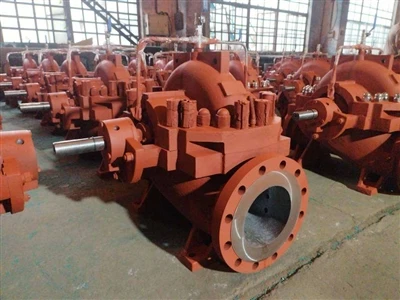
Reasonably designing the suction chamber at the inlet section of various pumps, as well as the mechanical structure of the compression stage, can reduce pressure pulses, ensure stable flow field, improve pump efficiency, reduce energy loss, and also enhance the stability of pump vibration dynamic performance.
2) Cavitation vibration is an important part of pump vibration.
In order to ensure that there is no air accumulation in the suction pipe or pressure pipe, no part of the suction pipe should be higher than the inlet of the water pump. In order to reduce pressure pulsation at the water inlet, the diameter of the suction pipe should be one size order of magnitude larger than the diameter of the pump mouth, so that the water flow can have a certain degree of contraction at the pump mouth and the velocity distribution can be relatively uniform. At the same time, there should be a straight pipe in front of the pump mouth, with a length not less than 10 times the diameter of the pipe.
Pay attention to creating good inlet conditions, and ensure that the water flow in the inlet pool is smooth and even to eliminate the vibration associated with the Karman vortex.
3) Basic design.
The weight of the foundation should be at least three times the total weight of mechanical components such as pumps and motors; The foundation of the water tank should have considerable strength; It is best to make the motor bracket and foundation integrated or in surface contact; Install vibration isolation pads or isolators between the pump and the bracket. In addition, using vibration reducing materials to connect between pipelines can reduce pipeline layout and eliminate vibrations caused by elastic contact and hydraulic losses.
Eliminate vibration during installation and maintenance process
1. Shaft and shaft system.
Before installation, check whether the water pump shaft, motor shaft, and transmission shaft are bent, deformed, or have eccentric mass. If so, they must be corrected or further processed; Check whether the drive shaft in contact with the guide bearing is subjected to stress due to bending and friction with the bearing or liner. If monitoring indicates that the shaft has actually bent, correct the pump shaft. At the same time, check the end clearance value of the shaft. If the value is too large, it indicates that the bearing is worn and needs to be replaced.
2. Impeller. Whether the dynamic and static balance is qualified.
3. Coupling. Is the spacing between bolts good.
The combination of elastic pins and elastic rings should not be too tight;
Is the fit between the inner hole of the coupling and the shaft too loose? If it is too loose, methods such as spraying can be used to reduce the inner diameter of the coupling until it reaches the required size for transition fit, and then fix the coupling on the shaft.
4. Sliding bearings.
Whether the gap value meets the standard; Whether the lubrication is good everywhere; Improve the maintenance technology level of pump bearings, strictly follow the cycle procedure of first scraping the bearings, then grinding, and then scraping the bearings, and ensure that the contact area between the bearings and the shaft neck meets the specified standards:
① The clearance value between the pump shaft neck and the bearing is achieved through methods such as replacing the front and rear bearings, grinding, scraping, and adjusting.
② The clearance value between the pump bearing body and the spherical top of the bearing box is qualified.
③ The contact points and angles between the lower bearing of the pump shaft and the pump shaft neck: According to the standard, the contact area between the lower bearing back and the bearing seat should be at least 60%. The density of contact points on the sliding contact surface at the shaft neck should be maintained at 2-4 points per square centimeter, and the contact angle should be maintained at 60-90 degrees.
5) Bracket and base plate.
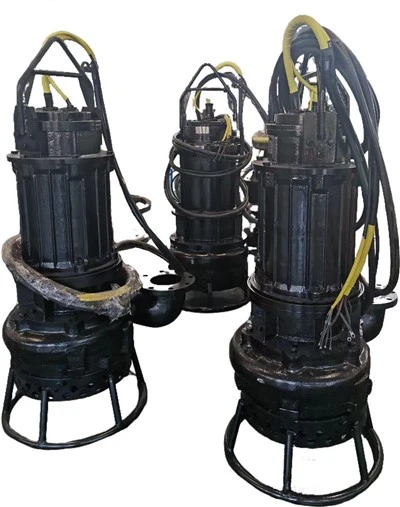


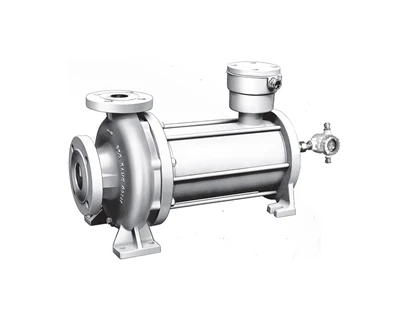
Timely detect the fatigue situation of vibrating support components to prevent a decrease in natural frequency due to a decrease in strength and stiffness.
6) Gap and vulnerable parts.
Ensure that the clearance between motor bearings is appropriate; Adjust the gap between the impeller and the volute appropriately; Regularly inspect and replace wear-resistant parts such as impeller mouth rings, pump body mouth rings, inter stage bushings, and baffle bushings.
Eliminate vibration caused by improper pump selection and operation
The parallel connection of two pumps should ensure that the pump performance is the same.
The pump performance curve should be a gradual decrease type, without any hump.
Attention should be paid when using: eliminate factors that cause water pump overload, such as channel blockage.
Appropriately extend the start time of the pump, reduce disturbance to the transmission shaft, minimize collision and friction between rotating and stationary parts, and the resulting thermal deformation.
For water lubricated sliding bearings, sufficient pre lubrication water should be added during the start-up process to avoid dry start-up, and water injection should be stopped only after the water pump has discharged water; Regularly inject an appropriate amount of oil into the bearings that require it; For long axis submersible centrifugal pumps, due to torsional vibration in the shaft system, if thrust pads are used, the main damage will be to the thrust pads. At this time, the viscosity of the lubricating oil can be appropriately increased to prevent damage to the liquid dynamic pressure lubricating film. Finally, to prevent excessive amplitude of the pump, measurement and analysis of vibration conditions can also be used to determine the optimal operating parameters of the pump.