Hey there! As a supplier of Bronze Pump Impeller, I often get asked whether a bronze pump impeller can be used in marine applications. Well, let's dive right into this topic and explore the ins and outs of using bronze pump impellers in the salty and sometimes harsh marine environment.
The Basics of Marine Applications
Marine applications are no joke. The conditions out there are tough. Saltwater is highly corrosive, and the constant movement of water can cause a lot of wear and tear on equipment. Plus, there are often other factors like temperature variations, debris in the water, and the need for reliable operation in remote locations. So, any component used in marine applications has to be up to the task.
Why Bronze?
Bronze is an alloy made primarily of copper and tin, with other elements sometimes added to enhance specific properties. It's been used for centuries in various applications, and for good reason. One of the main advantages of bronze is its corrosion resistance. In a marine environment, where saltwater is everywhere, corrosion is a major concern. Bronze forms a protective layer on its surface when exposed to the elements, which helps prevent further corrosion.
Another great thing about bronze is its strength. It's strong enough to withstand the forces exerted on a pump impeller during operation. Whether it's the centrifugal forces generated as the impeller spins or the pressure of the water being pumped, bronze can handle it. And let's not forget about its machinability. Bronze is relatively easy to machine, which means we can create precise and efficient pump impellers.
Comparing with Other Materials
Now, let's take a look at how bronze stacks up against other common materials used for pump impellers, like Cast Iron Pump Impeller and Stainless Steel Pump Impeller.
Cast iron is a popular choice because it's inexpensive and has good casting properties. However, it's not as corrosion-resistant as bronze. In a marine environment, cast iron can rust relatively quickly, which can lead to reduced performance and a shorter lifespan for the pump impeller.
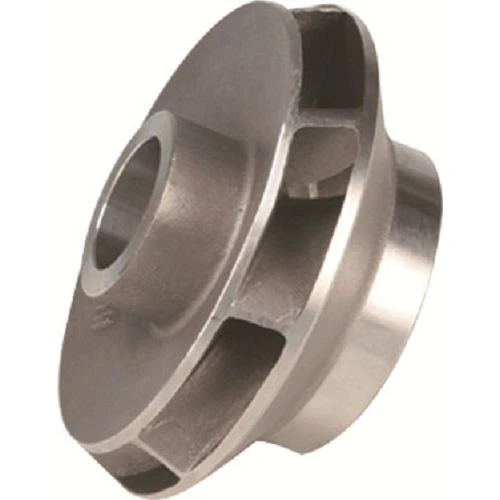
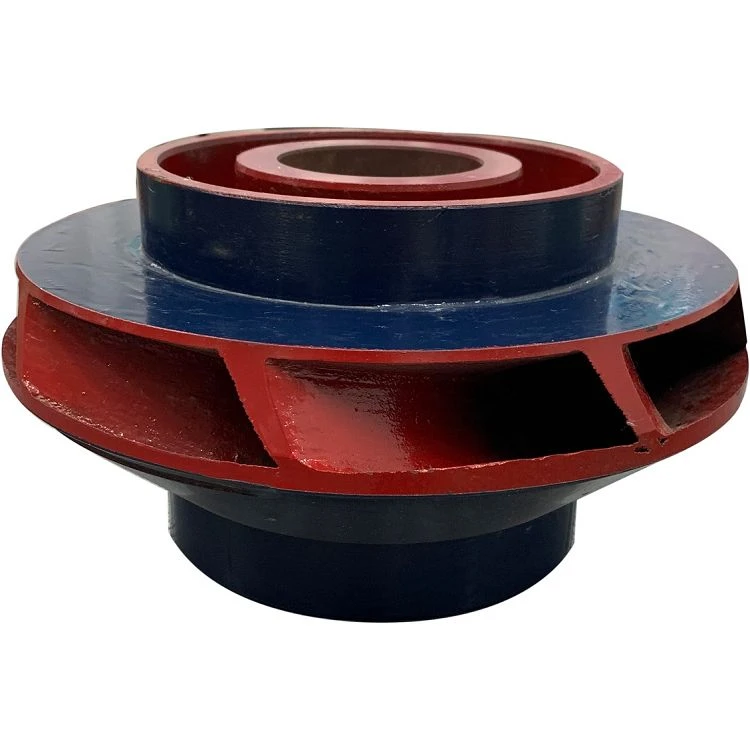
Stainless steel, on the other hand, is known for its excellent corrosion resistance. But it can be more expensive than bronze, and in some cases, it may not be as strong or as easy to machine. Plus, certain grades of stainless steel can be susceptible to pitting corrosion in saltwater, which can also affect the performance of the pump impeller.
Real-World Performance
In real-world marine applications, bronze pump impellers have proven to be a reliable choice. They're used in a wide range of pumps, from small bilge pumps to large seawater cooling pumps. For example, in a boat's bilge pump system, a bronze impeller can keep the bilge dry by efficiently pumping out any water that collects. And in a ship's seawater cooling system, a bronze impeller can circulate the water needed to cool the engines, even in the harsh marine environment.
But it's not just about performance. Maintenance is also an important factor. With a bronze pump impeller, maintenance is relatively straightforward. The protective layer that forms on the surface of the bronze can be maintained with regular cleaning and inspection. And if there's any damage, bronze is often easier to repair than other materials.
Limitations and Considerations
Of course, no material is perfect, and bronze is no exception. There are some limitations and considerations when using bronze pump impellers in marine applications.
One limitation is the potential for galvanic corrosion. If a bronze impeller is used in a system with other metals, especially if they're in direct contact, galvanic corrosion can occur. This happens when two different metals are in an electrolyte (like saltwater) and form a galvanic cell, which can cause one of the metals to corrode. To prevent this, proper insulation and material selection are important.
Another consideration is the cost. While bronze is generally more affordable than some high-end stainless steels, it can still be more expensive than cast iron. So, cost is something that needs to be weighed against the benefits when choosing a pump impeller for a marine application.
Conclusion
So, can a bronze pump impeller be used in marine applications? Absolutely! With its corrosion resistance, strength, and machinability, bronze is a great choice for many marine pumping needs. While there are some limitations and considerations, with proper design and maintenance, a bronze pump impeller can provide reliable performance in the tough marine environment.
If you're in the market for a pump impeller for your marine application, I'd be more than happy to help. Whether you have questions about bronze, cast iron, or stainless steel impellers, or you're ready to place an order, feel free to reach out. We can discuss your specific requirements and find the best solution for you.
References
- ASM Handbook, Volume 2: Properties and Selection: Nonferrous Alloys and Special-Purpose Materials.
- Corrosion Handbook, Second Edition by H. H. Uhlig.
- Pump Handbook, Fourth Edition by Igor Karassik.