Corrosion is a natural process that can have significant implications for pump suction components. As a supplier of pump suction parts, I've witnessed firsthand the various effects that corrosion can have on these critical components. In this blog, I'll delve into the different aspects of how corrosion impacts pump suction components and discuss the importance of addressing this issue.
Understanding Corrosion in Pump Suction Components
Corrosion occurs when a metal reacts with its environment, typically through an electrochemical process. In the context of pump suction components, the environment can include the fluid being pumped, the surrounding atmosphere, and any contaminants present. The most common types of corrosion that affect pump suction parts are uniform corrosion, pitting corrosion, crevice corrosion, and stress corrosion cracking.
Uniform corrosion is the most straightforward type, where the entire surface of the metal is gradually worn away at a relatively constant rate. This can lead to a reduction in the thickness of the pump suction component, weakening its structural integrity over time. Pitting corrosion, on the other hand, is more localized. It forms small pits or holes on the metal surface, which can penetrate deeply and cause sudden failures. Crevice corrosion occurs in narrow gaps or crevices, such as between flanges or gaskets, where the flow of the fluid is restricted. Stress corrosion cracking combines the effects of mechanical stress and corrosion, leading to cracks that can propagate rapidly and cause catastrophic failure.
Effects on Performance
One of the most immediate effects of corrosion on pump suction components is a decrease in performance. As the metal surface deteriorates, the smooth flow of the fluid through the suction is disrupted. This can lead to increased turbulence, which in turn causes higher energy consumption. The pump has to work harder to maintain the same flow rate, resulting in higher operating costs.
Corrosion can also cause blockages in the pump suction. Pits and holes can collect debris and sediment, which can accumulate over time and reduce the effective cross - sectional area of the suction. This restricts the flow of the fluid into the pump, leading to a decrease in the pump's capacity. In some cases, the blockage can become severe enough to cause the pump to stall or fail completely.
Another performance - related issue is the loss of efficiency. The rough surface created by corrosion increases the friction between the fluid and the pump suction walls. This additional friction requires more energy to move the fluid, reducing the overall efficiency of the pump. As a result, the pump may not be able to deliver the required flow rate or pressure, which can have a significant impact on the entire system's operation.
Effects on Structural Integrity
The structural integrity of pump suction components is also severely affected by corrosion. As mentioned earlier, uniform corrosion can reduce the thickness of the metal, making it more susceptible to deformation and failure. The weakened structure may not be able to withstand the normal operating pressures and forces, leading to leaks or even complete collapse.
Pitting and crevice corrosion can create weak points in the metal. These localized areas of damage can act as stress concentrators, increasing the likelihood of crack initiation and propagation. Stress corrosion cracking is particularly dangerous as it can occur even under relatively low stress levels. Once a crack forms, it can quickly spread through the material, compromising the entire component.
In addition to the direct effects on the pump suction itself, corrosion can also affect the connections and seals. Corroded flanges and gaskets may not form a proper seal, leading to leaks. This not only results in the loss of the pumped fluid but can also introduce contaminants into the system, further exacerbating the corrosion problem.
Material - Specific Considerations
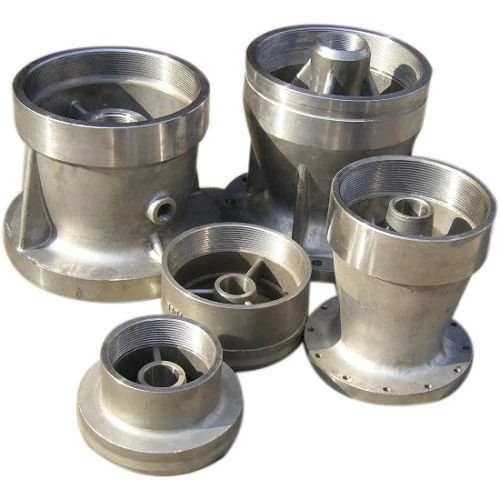
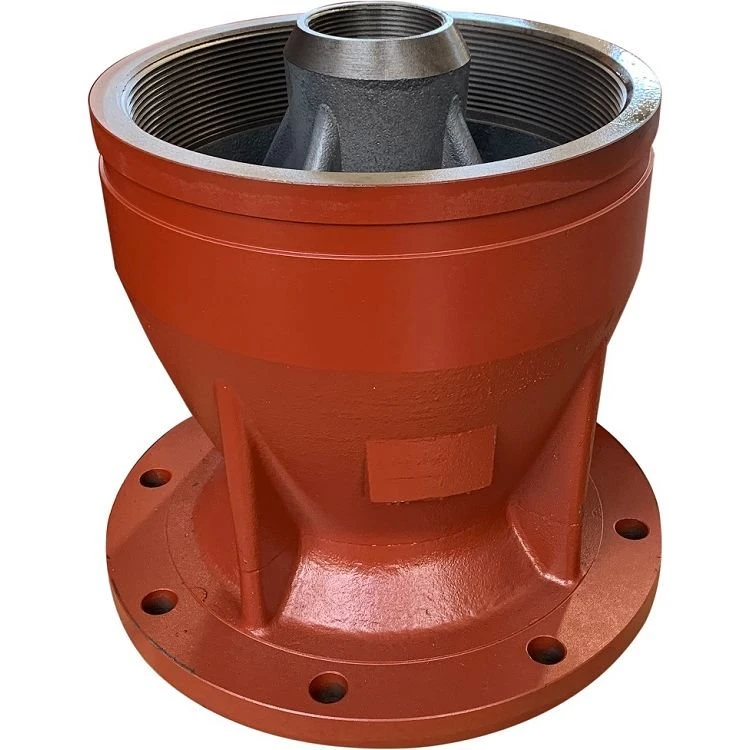
Different materials used for pump suction components have varying degrees of resistance to corrosion. As a supplier, we offer a range of materials, including Stainless Steel Pump Suction and Cast Iron Pump Suction.
Stainless steel is known for its excellent corrosion resistance. It contains chromium, which forms a passive oxide layer on the surface of the metal. This layer protects the underlying metal from further corrosion. However, stainless steel is not completely immune to corrosion. In environments with high levels of chloride ions, such as seawater, it can be susceptible to pitting and crevice corrosion.
Cast iron, on the other hand, is more prone to corrosion. It has a relatively high carbon content, which can make it more reactive with the environment. Cast iron pump suction components are often coated or lined to improve their corrosion resistance. However, if the coating is damaged or worn, the underlying metal can be exposed to corrosion.
Preventive Measures
To mitigate the effects of corrosion on pump suction components, several preventive measures can be taken. One of the most effective ways is to select the appropriate material for the specific application. Understanding the properties of the fluid being pumped, such as its pH, temperature, and chemical composition, is crucial in choosing the right material.
Coatings and linings can also be applied to the pump suction components to provide an additional layer of protection. These coatings can act as a barrier between the metal and the environment, preventing direct contact and reducing the risk of corrosion. Regular maintenance and inspection are essential to detect and address any signs of corrosion early. This can include visual inspections, non - destructive testing, and monitoring of the pump's performance.
Importance of Addressing Corrosion
Addressing corrosion in pump suction components is not only important for the performance and longevity of the pump but also for the safety and reliability of the entire system. A failed pump can cause disruptions in the operation of a plant or facility, leading to significant financial losses. In addition, leaks and spills can pose environmental and safety hazards.
As a supplier, we understand the importance of providing high - quality pump suction components that are resistant to corrosion. We work closely with our customers to understand their specific needs and recommend the most suitable materials and solutions. By taking proactive measures to prevent corrosion, we can help our customers avoid costly repairs and downtime.
Conclusion
Corrosion has a wide range of effects on pump suction components, from performance degradation to structural failure. As a pump suction supplier, we are committed to providing our customers with the best possible solutions to combat corrosion. By choosing the right materials, applying appropriate coatings, and implementing regular maintenance, we can ensure that pump suction components operate efficiently and reliably for an extended period.
If you are facing issues with corrosion in your pump suction components or are looking for high - quality pump suction parts, we invite you to contact us for a detailed discussion. Our team of experts is ready to assist you in finding the most suitable solutions for your specific application.
References
- Fontana, M. G. (1986). Corrosion Engineering. McGraw - Hill.
- Uhlig, H. H., & Revie, R. W. (1985). Corrosion and Corrosion Control. Wiley.
- ASM Handbook, Volume 13A: Corrosion: Fundamentals, Testing, and Protection. ASM International.