As a trusted Pump Shaft supplier, I am excited to delve into the intricate world of machining processes for pump shafts. In this blog, we will explore the various steps involved in creating high-quality pump shafts that meet the demanding requirements of different applications.
Material Selection
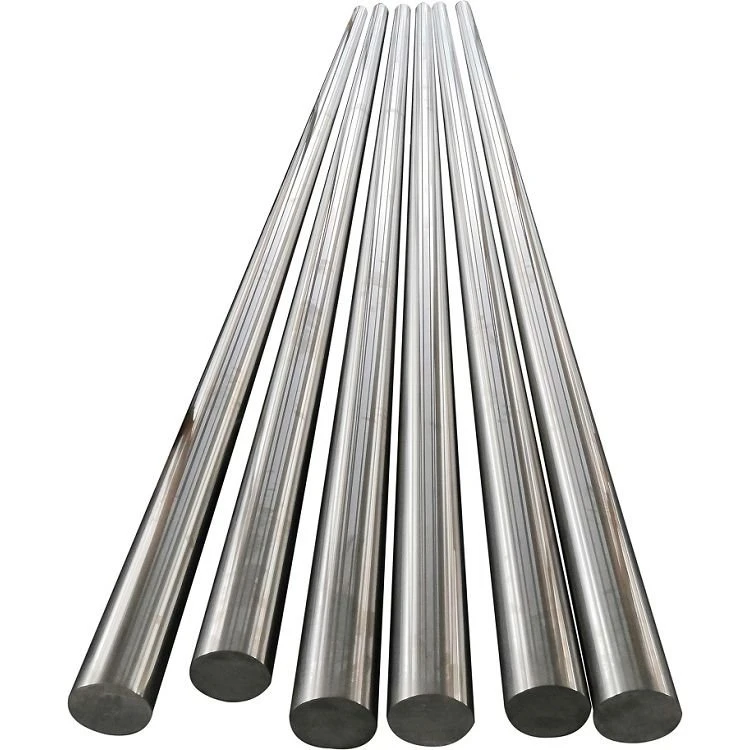
The first crucial step in machining a pump shaft is selecting the appropriate material. The choice of material depends on several factors, including the type of pump, the operating conditions, and the fluid being pumped. Common materials used for pump shafts include stainless steel, carbon steel, and alloy steel.
Stainless steel is a popular choice due to its excellent corrosion resistance, making it suitable for applications where the pump is exposed to corrosive fluids such as seawater. Carbon steel is known for its high strength and durability, making it ideal for heavy-duty applications. Alloy steel combines the properties of different metals to provide enhanced strength, toughness, and wear resistance.
Turning
Turning is one of the primary machining processes used to shape the pump shaft. In this process, the shaft is rotated on a lathe while a cutting tool removes material from the surface to achieve the desired diameter and length. Turning can be performed on both the external and internal surfaces of the shaft.
External turning is used to create the main body of the pump shaft, while internal turning is used to create the bore or hole in the center of the shaft. The cutting tool is carefully controlled to ensure precise dimensions and a smooth surface finish. Multiple passes may be required to achieve the desired accuracy.
Milling
Milling is another important machining process used to create complex features on the pump shaft, such as keyways, flats, and grooves. In this process, a rotating cutting tool is moved across the surface of the shaft to remove material. Milling can be performed using a variety of cutting tools, including end mills, face mills, and slot mills.
Keyways are used to secure the impeller or other components to the pump shaft, while flats and grooves are used for alignment and mounting purposes. Milling allows for precise control over the shape and dimensions of these features, ensuring a proper fit and function.
Grinding
Grinding is a finishing process used to achieve a high level of surface finish and dimensional accuracy on the pump shaft. In this process, a grinding wheel is used to remove a small amount of material from the surface of the shaft. Grinding can be performed on both the external and internal surfaces of the shaft.
External grinding is used to improve the roundness and straightness of the shaft, while internal grinding is used to achieve a precise bore diameter and surface finish. Grinding is a critical step in ensuring the proper performance and longevity of the pump shaft.
Heat Treatment
Heat treatment is often performed on pump shafts to improve their mechanical properties, such as hardness, strength, and toughness. There are several types of heat treatment processes, including annealing, quenching, and tempering.
Annealing is a process used to soften the material and relieve internal stresses. Quenching is a rapid cooling process used to harden the material, while tempering is a subsequent heating process used to reduce the brittleness and improve the toughness of the material.
The specific heat treatment process used depends on the material and the desired properties of the pump shaft. Heat treatment can significantly enhance the performance and durability of the pump shaft, making it suitable for demanding applications.
Surface Coating
Surface coating is often applied to pump shafts to provide additional protection against corrosion, wear, and friction. There are several types of surface coating processes, including electroplating, powder coating, and thermal spraying.
Electroplating is a process used to deposit a thin layer of metal onto the surface of the shaft, providing a protective barrier against corrosion. Powder coating is a process used to apply a dry powder to the surface of the shaft, which is then cured to form a durable coating. Thermal spraying is a process used to apply a molten or semi-molten material onto the surface of the shaft, providing a thick and hard coating.
The choice of surface coating depends on the specific requirements of the application. Surface coating can significantly extend the lifespan of the pump shaft and improve its performance in harsh environments.
Quality Control
Quality control is an essential part of the machining process for pump shafts. Throughout the manufacturing process, various inspection techniques are used to ensure that the pump shafts meet the required specifications and standards.
Inspection techniques include dimensional measurement, surface finish analysis, hardness testing, and non-destructive testing. Dimensional measurement is used to ensure that the pump shaft has the correct diameter, length, and other critical dimensions. Surface finish analysis is used to evaluate the smoothness and roughness of the surface. Hardness testing is used to determine the hardness of the material, while non-destructive testing is used to detect any internal defects or flaws in the shaft.
Any pump shafts that do not meet the required specifications are rejected or reworked to ensure that only high-quality products are delivered to the customers.
Conclusion
In conclusion, the machining processes for a pump shaft involve a series of complex steps that require precision, expertise, and advanced equipment. From material selection to surface coating, each step plays a crucial role in ensuring the quality and performance of the pump shaft.
As a Pump Shaft supplier, we are committed to providing our customers with high-quality pump shafts that meet their specific requirements. Our state-of-the-art manufacturing facilities and experienced team of engineers and technicians enable us to produce pump shafts with exceptional precision and reliability.
If you are in the market for high-quality Pump Shaft or Sea Water Pump Parts, we invite you to contact us for more information or to discuss your specific needs. Our team of experts will be happy to assist you in finding the right solution for your application.
References
- ASM Handbook, Volume 14A: Metalworking: Bulk Forming
- Machining Fundamentals: An Introduction to Manufacturing Processes and Materials
- Manufacturing Engineering and Technology, 7th Edition