What is the overload capacity of a submersible motor? Well, let me tell you as a supplier of Submersible Motors. First off, it's super important to understand what overload capacity means in the context of these motors.
The overload capacity of a submersible motor refers to its ability to handle loads that are greater than its rated power for a certain period. You see, in real - world applications, submersible motors often face situations where they have to deal with more power demands than what they're nominally designed for. For example, when a Submersible Slurry Pump is trying to move thick, viscous slurry, or a Submersible Sewage Pump has to push through a blockage, the motor might need to work harder.
A motor with a good overload capacity can handle these extra loads without immediately burning out or suffering serious damage. It gives a bit of a safety net in those unexpected situations. But how do we measure this overload capacity?
Typically, it's measured in terms of a percentage of the motor's rated power and the time it can sustain that extra load. For instance, a submersible motor might be rated to handle 120% of its rated power for 10 minutes. This means that if the motor's rated power is 10 kilowatts, it can operate at 12 kilowatts for up to 10 minutes without major issues.
Now, several factors affect the overload capacity of a submersible motor. One of the key factors is the motor's design. Motors with better cooling systems tend to have higher overload capacities. When a motor is overloaded, it generates more heat. If the heat can't be dissipated effectively, the motor will overheat quickly and fail. So, motors with advanced cooling mechanisms, like water - cooled or oil - cooled designs, can handle more overload.
The insulation class of the motor also plays a big role. Higher insulation classes can withstand higher temperatures. So, a motor with a Class F insulation, for example, can operate at higher temperatures than one with a Class B insulation. This allows it to handle more overload without the insulation breaking down.
Another factor is the type of load. Different applications place different demands on the motor. A Submersible Motor used in a constant - flow application, like a small water supply system, might have different overload requirements compared to one used in a more variable - load application, such as a dredging operation.
In dredging, the motor might have to deal with sudden increases in load as it encounters thick mud or debris. In such cases, a motor with a high overload capacity is crucial to keep the operation running smoothly.
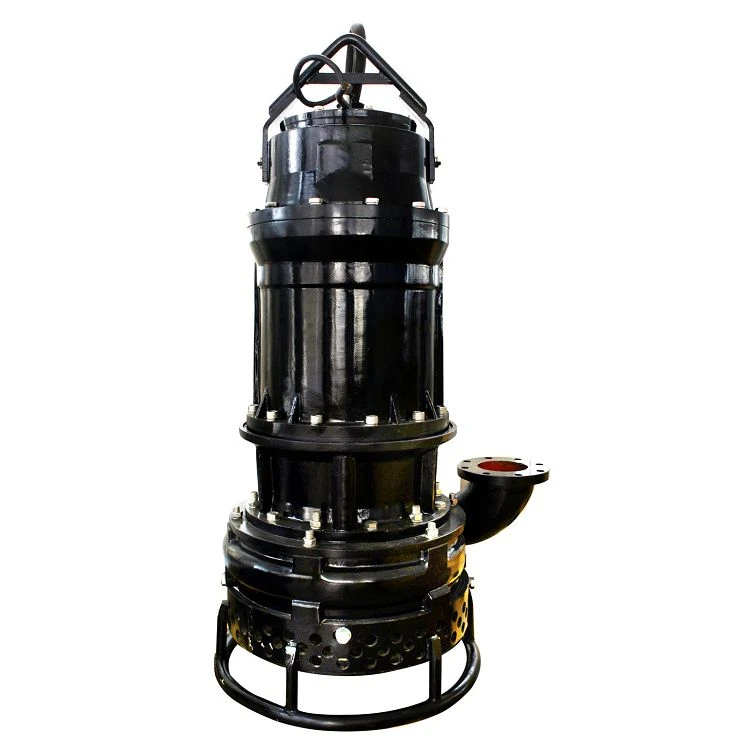

Let's talk about the benefits of having a submersible motor with a good overload capacity. Firstly, it improves the reliability of the pumping system. When unexpected load spikes occur, the motor can handle them without shutting down. This is especially important in critical applications, like sewage treatment plants or deep - well water pumping for a community.
Secondly, it can save costs in the long run. A motor with a high overload capacity is less likely to fail due to short - term overloads. This means fewer motor replacements and less downtime for maintenance. And let's face it, downtime in industrial or municipal pumping systems can be extremely costly.
However, it's not all rosy. There are some trade - offs. Motors with high overload capacities usually cost more upfront. The advanced cooling systems, better insulation, and more robust design all add to the manufacturing cost. But if you consider the long - term savings in terms of reliability and reduced maintenance, it might be worth the investment.
As a supplier, I've seen firsthand how important it is to match the right motor with the right application. We work closely with our customers to understand their specific needs. For example, if a customer is looking for a motor for a new sewage treatment plant, we'll analyze the expected load profiles, the type of sewage they'll be dealing with, and the environmental conditions. Based on this analysis, we can recommend a submersible motor with the appropriate overload capacity.
We also provide after - sales support to ensure that the motors are installed and maintained correctly. This includes training for the operators on how to monitor the motor's performance and what to do in case of an overload situation.
So, if you're in the market for a submersible motor, don't just focus on the rated power. Pay close attention to the overload capacity. It could make a huge difference in the performance and longevity of your pumping system.
If you're interested in learning more about our submersible motors and how our products can meet your specific overload requirements, we'd love to hear from you. Whether you're involved in a small - scale water supply project or a large - scale industrial pumping operation, we have the expertise and the products to help you. Get in touch with us to start a discussion about your procurement needs. We're here to provide you with the best solutions for your pumping challenges.
References:
- "Handbook of Electric Motors" by Irving L. Kosow
- "Pump Handbook" by Igor J. Karassik et al.