Hey there! As a pump discharge supplier, I often get asked about how the pump discharge capacity changes at different speeds. It's a super important topic, especially for those in industries that rely on pumps for various operations. So, let's dive right in and explore this together.
First off, what exactly is pump discharge capacity? Simply put, it's the volume of fluid that a pump can move in a given amount of time. This capacity is crucial as it determines how well a pump can meet the demands of a particular system. Whether you're dealing with water supply, industrial processes, or even in a sewage system, the right pump discharge capacity is key to smooth operation.
Now, let's talk about speed. The speed of a pump has a direct impact on its discharge capacity. In most cases, as the speed of the pump increases, so does the discharge capacity. This is because a faster - spinning pump can move more fluid through its system in a shorter period.
Let's take a look at the basic relationship between pump speed and discharge capacity. According to the affinity laws, which are fundamental rules in the pump industry, the discharge capacity (Q) of a pump is directly proportional to its speed (N). Mathematically, it can be expressed as Q1/Q2 = N1/N2, where Q1 and Q2 are the discharge capacities at speeds N1 and N2 respectively.
For example, if you have a pump running at a speed of N1 and it has a discharge capacity of Q1, and you increase the speed to N2, you can easily calculate the new discharge capacity Q2 using the above formula. This relationship holds true for centrifugal pumps, which are some of the most commonly used pumps in various industries.
But it's not always that simple. There are other factors that can affect the relationship between speed and discharge capacity. One of the main factors is the pump's efficiency. As the speed changes, the efficiency of the pump can also change. At very low speeds, the pump might not be operating at its optimal efficiency, which means that the increase in discharge capacity might not be as significant as expected. On the other hand, at extremely high speeds, the pump might face issues like cavitation. Cavitation occurs when the pressure in the pump drops below the vapor pressure of the fluid, causing bubbles to form. These bubbles can then collapse, causing damage to the pump and reducing its efficiency and discharge capacity.
Another factor to consider is the system resistance. The system in which the pump operates has its own resistance to the flow of fluid. As the pump speed increases, the pressure it generates also increases. If the system resistance is high, the pump might not be able to push as much fluid as expected, even at higher speeds. This is why it's crucial to match the pump to the specific requirements of the system.
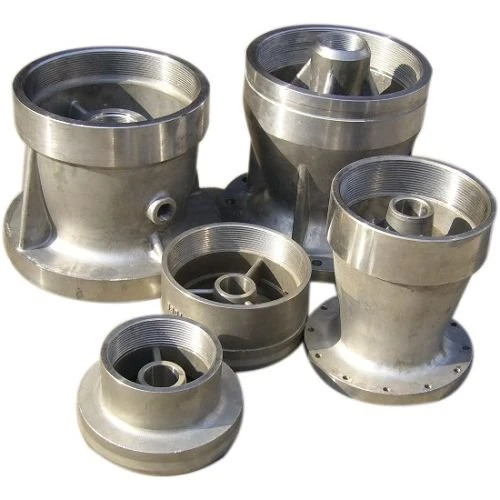
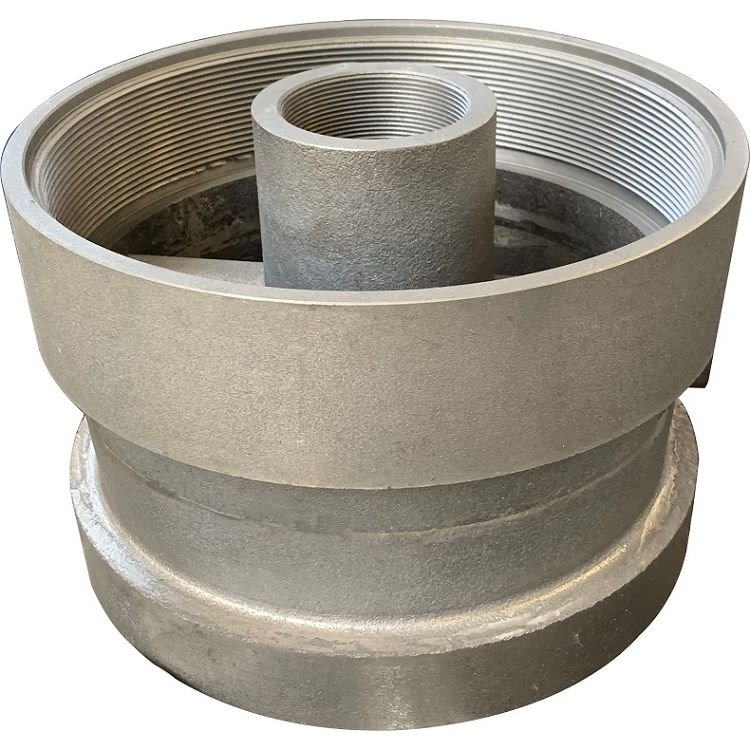
Now, let's talk about the different types of pump discharges we offer as a supplier. We have Cast Iron Pump Discharge and Stainless Steel Pump Discharge. Cast iron pump discharges are great for applications where cost - effectiveness is a priority. They are durable and can handle a wide range of fluids. However, they might not be suitable for highly corrosive environments.
On the other hand, stainless steel pump discharges are more resistant to corrosion. They are ideal for applications where the fluid being pumped is corrosive, such as in chemical processing plants or in marine environments. The material also gives them a longer lifespan, which can save you money in the long run.
When choosing a pump discharge, it's important to consider the speed requirements of your application. If you need a high - discharge capacity, you might need a pump that can operate at higher speeds. But remember to also take into account the factors we discussed earlier, like efficiency and system resistance.
In some cases, you might need to adjust the speed of the pump to achieve the desired discharge capacity. This can be done using variable frequency drives (VFDs). VFDs allow you to control the speed of the pump motor, which in turn controls the pump speed. By adjusting the speed, you can optimize the pump's performance and ensure that it meets the specific requirements of your system.
Let's take a real - world example. Suppose you have a water supply system for a small community. The demand for water varies throughout the day. During peak hours, you need a higher discharge capacity to meet the needs of the residents. By using a VFD to adjust the pump speed, you can increase the discharge capacity during these peak hours and reduce it during off - peak hours. This not only helps in meeting the demand but also saves energy as the pump is not running at full speed all the time.
In conclusion, understanding the relationship between pump discharge capacity and speed is crucial for anyone involved in pump selection and operation. As a pump discharge supplier, we are here to help you make the right choice. Whether you need a Cast Iron Pump Discharge or a Stainless Steel Pump Discharge, we have the expertise to guide you through the process.
If you're interested in learning more about our products or need help in choosing the right pump discharge for your application, don't hesitate to reach out. We're always happy to have a chat and discuss your specific requirements. Let's work together to ensure that your pump system operates at its best.
References
- "Pump Handbook" by Igor Karassik et al.
- Various industry standards and guidelines on pump operation and selection.