A centrifugal pump is a widely used mechanical device in various industries, designed to transfer fluids by converting rotational kinetic energy into hydrodynamic energy. At the heart of this complex machinery lies a crucial component: the pump impeller. As a trusted pump impeller supplier, I am excited to delve into the role of a pump impeller in a centrifugal pump and explore its significance in ensuring efficient and reliable fluid transfer.
Understanding the Basics of a Centrifugal Pump
Before we discuss the role of the pump impeller, it's essential to understand the basic working principle of a centrifugal pump. A centrifugal pump consists of a casing, an impeller, a shaft, and a motor. The motor drives the shaft, which in turn rotates the impeller inside the casing. When the impeller rotates, it creates a centrifugal force that pushes the fluid outward from the center of the impeller towards the casing. This movement of the fluid increases its velocity and pressure, allowing it to be discharged through the outlet of the pump.
The Role of the Pump Impeller
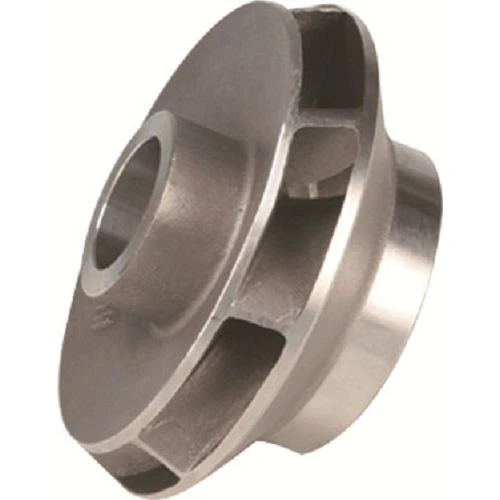
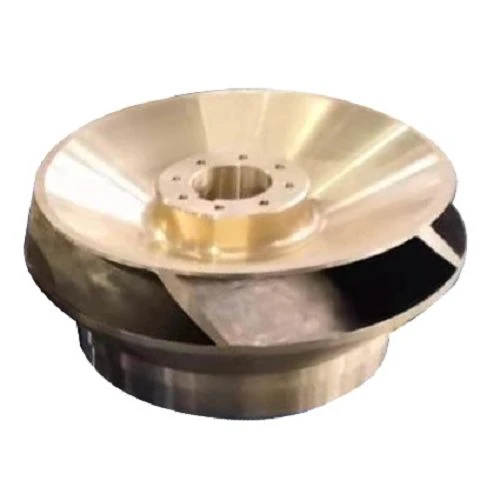
The pump impeller is the key component that generates the centrifugal force required to move the fluid through the pump. It is a rotating disk with curved blades that are designed to impart kinetic energy to the fluid. The shape, size, and number of blades on the impeller can vary depending on the specific application and the type of fluid being pumped.
Energy Transfer
One of the primary roles of the pump impeller is to transfer energy from the motor to the fluid. As the impeller rotates, the blades push the fluid radially outward, increasing its velocity. This increase in velocity results in an increase in the kinetic energy of the fluid. According to the principle of conservation of energy, this kinetic energy is then converted into pressure energy as the fluid moves through the casing and towards the outlet of the pump.
Fluid Movement
The impeller also plays a crucial role in moving the fluid through the pump. The curved blades of the impeller create a flow path that guides the fluid from the inlet of the pump towards the outlet. The shape of the blades is designed to minimize turbulence and ensure a smooth and efficient flow of the fluid. By creating a high-velocity flow at the impeller outlet, the impeller helps to overcome the resistance of the piping system and move the fluid to the desired location.
Pressure Generation
In addition to transferring energy and moving the fluid, the pump impeller is responsible for generating the pressure required to overcome the resistance of the piping system and deliver the fluid to the desired destination. The pressure generated by the impeller is a function of its rotational speed, the diameter of the impeller, and the number and shape of the blades. A larger impeller with more blades and a higher rotational speed will generally generate a higher pressure than a smaller impeller with fewer blades.
Types of Pump Impellers
There are several types of pump impellers available, each designed for specific applications and fluid characteristics. Some of the most common types of pump impellers include:
Closed Impellers
Closed impellers have shrouds on both sides of the blades, which enclose the fluid within the impeller. This design helps to prevent leakage and improve the efficiency of the pump. Closed impellers are commonly used in applications where high pressures and high efficiencies are required, such as in industrial processes and water treatment plants.
Open Impellers
Open impellers do not have shrouds on the sides of the blades, which allows the fluid to flow freely over the blades. This design is simpler and more cost-effective than closed impellers, but it is also less efficient and more prone to clogging. Open impellers are commonly used in applications where the fluid contains solids or where the pump is required to handle large volumes of fluid at low pressures, such as in sewage pumping and irrigation systems.
Semi-Open Impellers
Semi-open impellers have a shroud on one side of the blades, which provides some of the benefits of a closed impeller while still allowing for some flexibility in the design. Semi-open impellers are commonly used in applications where the fluid contains some solids or where the pump is required to operate at moderate pressures and efficiencies.
Materials Used in Pump Impellers
The choice of material for a pump impeller depends on several factors, including the type of fluid being pumped, the operating conditions, and the required durability and corrosion resistance. Some of the most common materials used in pump impellers include:
Stainless Steel
Stainless steel is a popular choice for pump impellers due to its excellent corrosion resistance, high strength, and durability. Stainless steel impellers are commonly used in applications where the fluid is corrosive or where the pump is required to operate in harsh environments. You can find high-quality Stainless Steel Pump Impeller on our website.
Bronze
Bronze is another commonly used material for pump impellers, especially in applications where the fluid is water or a non-corrosive liquid. Bronze impellers are known for their good corrosion resistance, low friction, and high wear resistance. Bronze Pump Impeller is a great option for many industrial and commercial applications.
Cast Iron
Cast iron is a cost-effective material for pump impellers, especially in applications where the fluid is not corrosive and the pump is required to operate at low pressures. Cast iron impellers are commonly used in applications such as water supply systems, irrigation systems, and sewage pumping. Check out our Cast Iron Pump Impeller for reliable performance.
Importance of Choosing the Right Pump Impeller
Choosing the right pump impeller is crucial for ensuring the efficient and reliable operation of a centrifugal pump. A poorly designed or mismatched impeller can result in reduced pump performance, increased energy consumption, and premature pump failure. When selecting a pump impeller, it is important to consider the following factors:
Fluid Characteristics
The type of fluid being pumped, its viscosity, density, and temperature, can all have a significant impact on the performance of the pump impeller. For example, a viscous fluid may require a larger impeller with more blades to ensure efficient flow, while a corrosive fluid may require an impeller made of a corrosion-resistant material.
Operating Conditions
The operating conditions of the pump, such as the flow rate, pressure, and temperature, can also affect the performance of the pump impeller. It is important to select an impeller that is designed to operate within the specified range of operating conditions to ensure optimal performance and reliability.
Pump Design
The design of the pump, including the size and shape of the casing, the type of impeller, and the number of stages, can also influence the performance of the pump impeller. It is important to select an impeller that is compatible with the pump design to ensure efficient and reliable operation.
Contact Us for Your Pump Impeller Needs
As a leading pump impeller supplier, we offer a wide range of high-quality pump impellers designed to meet the specific needs of our customers. Our experienced team of engineers and technicians can help you select the right pump impeller for your application and provide you with the support and expertise you need to ensure the efficient and reliable operation of your pump.
If you are interested in learning more about our pump impellers or would like to discuss your specific requirements, please contact us. We look forward to working with you to provide you with the best pump impeller solutions for your needs.
References
- Karassik, I. J., Messina, J. P., Cooper, P. W., & Heald, C. C. (2008). Pump Handbook. McGraw-Hill Professional.
- Stepanoff, A. J. (1957). Centrifugal and Axial Flow Pumps: Theory, Design, and Application. John Wiley & Sons.
- Idelchik, I. E. (1994). Handbook of Hydraulic Resistance. Begell House Inc.