Hey there! As a pump impeller supplier, I often get asked about the specific speed of a pump impeller. So, I thought I'd take a few minutes to break it down for you.
First off, let's talk about what a pump impeller is. It's a crucial part of a pump that helps move fluid by converting mechanical energy into hydraulic energy. Picture it like a fan blade, but instead of moving air, it moves liquids. The impeller spins inside the pump casing, creating a centrifugal force that pushes the fluid outwards and into the pump's discharge pipe.
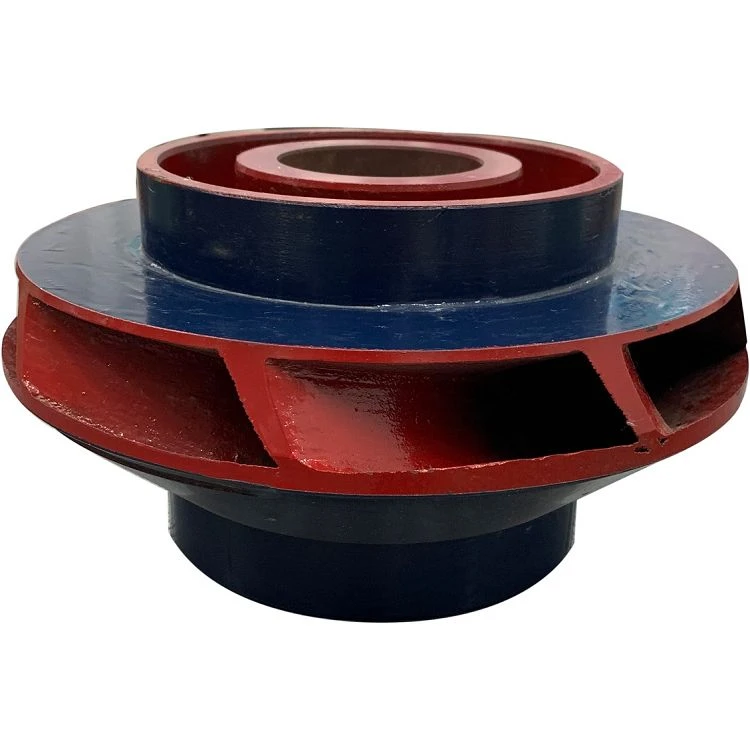
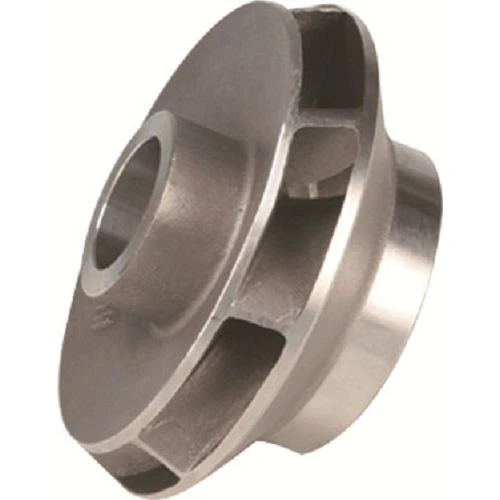
Now, onto the main topic: specific speed. The specific speed of a pump impeller is a dimensionless number that helps us understand how the impeller is designed and how it performs. It's calculated using a formula that takes into account the pump's flow rate, head, and rotational speed.
The formula for specific speed (Ns) is:
Ns = (N * √Q) / (H^(3/4))
Where:
- N is the rotational speed of the impeller in revolutions per minute (RPM)
- Q is the flow rate of the pump in gallons per minute (GPM)
- H is the head of the pump in feet
The specific speed gives us an idea of the shape and type of the impeller. Different specific speeds are associated with different impeller designs, each with its own advantages and disadvantages.
Low Specific Speed Impellers
Impellers with low specific speeds (usually less than 500) are typically radial flow impellers. These impellers have a relatively small diameter and a large number of blades. They're great for applications that require high head and low flow rate, like in a boiler feed pump or a high-pressure water jet. The radial flow design allows the impeller to generate a lot of pressure, but it's not very efficient at moving large volumes of fluid.
Medium Specific Speed Impellers
Medium specific speed impellers (between 500 and 4000) are often mixed flow impellers. These impellers have a combination of radial and axial flow characteristics. They're a good compromise between high head and high flow rate. You'll often find them in applications like irrigation pumps or some types of industrial pumps. They can handle a decent amount of fluid while still generating a reasonable amount of pressure.
High Specific Speed Impellers
High specific speed impellers (greater than 4000) are usually axial flow impellers. These impellers have a large diameter and a small number of blades. They're designed to move large volumes of fluid at low head. Axial flow impellers are commonly used in applications like flood control pumps or large cooling water pumps. They're very efficient at moving a lot of water quickly, but they're not suitable for applications that require high pressure.
Why Specific Speed Matters
Understanding the specific speed of a pump impeller is crucial for several reasons. First, it helps pump designers select the right impeller design for a particular application. If you need a pump for a high-pressure application, you'll want an impeller with a low specific speed. On the other hand, if you need to move a large amount of fluid at low pressure, a high specific speed impeller is the way to go.
Second, specific speed affects the efficiency of the pump. Using an impeller with the wrong specific speed for an application can result in poor performance and increased energy consumption. By choosing the right impeller based on the specific speed, you can ensure that your pump operates at its optimal efficiency.
Our Pump Impeller Offerings
As a pump impeller supplier, we offer a wide range of impellers made from different materials to suit various applications. For example, we have Stainless Steel Pump Impeller. Stainless steel impellers are corrosion-resistant and suitable for applications where the fluid being pumped is corrosive, like in a chemical processing plant or a seawater desalination facility.
We also have Cast Iron Pump Impeller. Cast iron impellers are strong and durable, making them a popular choice for general-purpose applications. They're often used in water supply systems, wastewater treatment plants, and agricultural pumps.
And then there's our Bronze Pump Impeller. Bronze impellers are known for their excellent resistance to wear and corrosion. They're commonly used in marine applications, as well as in some types of food and beverage processing pumps.
How to Choose the Right Impeller
When choosing a pump impeller, it's important to consider the specific requirements of your application. Here are some factors to keep in mind:
- Flow Rate and Head: Determine the required flow rate and head of your pump. This will help you narrow down the range of specific speeds that are suitable for your application.
- Fluid Properties: Consider the properties of the fluid being pumped, such as its viscosity, corrosiveness, and temperature. This will help you choose the right material for the impeller.
- Operating Conditions: Think about the operating conditions of your pump, such as the rotational speed, the type of pump casing, and the suction and discharge conditions. These factors can also affect the performance of the impeller.
If you're not sure which impeller is right for your application, don't hesitate to reach out to us. Our team of experts is here to help you make the best choice.
Conclusion
In conclusion, the specific speed of a pump impeller is a key factor in determining its design and performance. By understanding the concept of specific speed and how it relates to different impeller designs, you can choose the right impeller for your application and ensure that your pump operates efficiently.
Whether you need a low specific speed radial flow impeller for high-pressure applications or a high specific speed axial flow impeller for high-flow applications, we've got you covered. We offer a wide range of pump impellers made from different materials to meet your specific needs.
If you're interested in purchasing pump impellers or have any questions about our products, please feel free to contact us. We're always happy to help you find the perfect solution for your pumping needs.
References
- "Pump Handbook" by Igor Karassik et al.
- "Centrifugal Pumps: Design and Application" by Heinz P. Bloch and Fred K. Geitner.