Can a pump control panel be customized?
As a supplier of Pump Control Panel, I often encounter customers asking whether pump control panels can be customized. The answer is a resounding yes! In fact, customization is one of the key features that sets our pump control panels apart from off - the - shelf solutions.
Why Customization Matters
In various industries, pumps are used for a wide range of applications, from water supply and sewage treatment to chemical processing and oil and gas extraction. Each application has its own unique requirements in terms of pump operation, control logic, and safety features. A one - size - fits - all pump control panel may not be able to meet these diverse needs effectively.
For example, in a large - scale water treatment plant, multiple pumps need to be coordinated to ensure a continuous and stable water supply. The control panel may need to be customized to manage the start - stop sequence of pumps based on water level sensors, flow meters, and pressure gauges. It may also require advanced features such as remote monitoring and control, so that operators can manage the pumps from a central control room.
In the chemical industry, pumps are used to transfer corrosive or hazardous chemicals. The control panel in this case needs to be customized with explosion - proof enclosures, special wiring, and control algorithms to prevent leaks and ensure the safety of the entire system. Customization allows us to tailor the control panel to the specific chemical properties and process requirements of the application.
Customization Options
Electrical Configuration
One of the most basic aspects of customization is the electrical configuration. We can design the control panel to accommodate different voltage levels, phase numbers, and current ratings according to the pump motor specifications. For example, if a customer has a high - power pump motor that requires a 480V, three - phase power supply, we can configure the control panel to handle this voltage and ensure proper motor operation.
We can also customize the control circuit to include different types of starters, such as direct - on - line starters, star - delta starters, or soft starters. The choice of starter depends on the pump's starting requirements, load characteristics, and the electrical system's capacity. For instance, a soft starter can be used to reduce the inrush current during pump startup, which is beneficial for both the pump motor and the electrical grid.
Control Logic
Control logic is another crucial area for customization. We can program the control panel to implement various control strategies based on the customer's needs. Simple control logics may include on - off control based on a single sensor, such as a float switch for a sump pump. More complex control logics can involve multiple sensors and feedback loops.
For example, in a pumping system for an irrigation project, the control panel can be programmed to start and stop the pumps based on soil moisture sensors, weather forecasts, and water flow rates. This ensures that the irrigation is carried out efficiently, saving water and energy. We can also integrate advanced control algorithms, such as proportional - integral - derivative (PID) control, to maintain a constant pressure or flow rate in the pumping system.
Enclosure Design
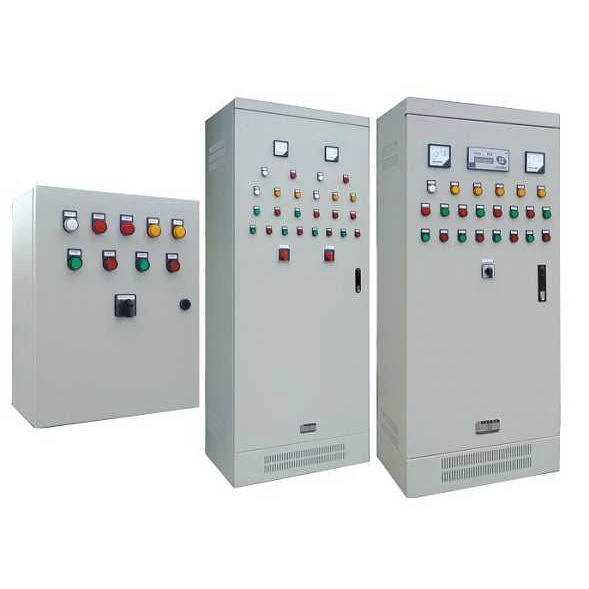
The enclosure of the pump control panel is not only for protection but also for meeting the environmental requirements of the installation site. We offer a variety of enclosure materials and designs for customization. For indoor applications, we can use standard steel enclosures with a powder - coated finish for durability and aesthetics.
In outdoor or harsh environments, we can provide stainless - steel enclosures that are resistant to corrosion, dust, and water. These enclosures can be designed with proper ventilation systems to prevent overheating of the electrical components. In addition, we can customize the enclosure size and shape to fit the available space at the installation site.
User Interface
A user - friendly interface is essential for the operation and maintenance of the pump control panel. We can customize the user interface to include different types of displays, such as LCD screens or touchscreens. The display can show real - time pump status, sensor readings, and alarm messages.
We can also design the interface to be intuitive and easy to navigate, allowing operators to perform basic operations such as starting and stopping the pumps, adjusting control parameters, and viewing historical data. For example, a touchscreen interface can be customized with graphical icons and menus, making it more accessible for operators with limited technical knowledge.
The Customization Process
When a customer approaches us with a customization request, the first step is to have a detailed consultation. We work closely with the customer to understand their specific requirements, including the pump application, operating conditions, and performance expectations. During this consultation, we may ask the customer to provide technical specifications such as pump motor data, sensor information, and any existing control system requirements.
Based on the information gathered, our engineering team will develop a preliminary design for the customized pump control panel. This design will include electrical schematics, control logic diagrams, enclosure drawings, and user interface mock - ups. We will present this design to the customer for review and feedback.
Once the customer approves the design, our manufacturing team will start the production process. We use high - quality components and follow strict quality control procedures to ensure that the customized control panel meets the highest standards of performance and reliability. During the production process, we keep the customer informed about the progress and address any concerns they may have.
After the control panel is manufactured, it undergoes a series of rigorous tests, including electrical testing, functional testing, and safety testing. These tests are designed to verify that the control panel operates as expected and meets all the specified requirements. Once the testing is completed successfully, the control panel is ready for delivery and installation.
Benefits of Working with a Custom Pump Control Panel Supplier
Tailored Solutions
By working with a custom pump control panel supplier like us, customers can get a control panel that is specifically designed for their application. This means that the control panel will be more efficient, reliable, and cost - effective in the long run. It can also reduce the risk of system failures and downtime, which is crucial for industries where continuous pump operation is essential.
Technical Expertise
Our team of engineers has extensive experience in pump control panel design and customization. We stay up - to - date with the latest technologies and industry standards, ensuring that the customized control panels we provide are of the highest quality. We can also offer technical support and advice to customers throughout the project, from design to installation and maintenance.
Flexibility
As a custom supplier, we are flexible in terms of project scope and delivery time. We can handle both small - scale and large - scale projects, and we can adjust the production schedule to meet the customer's deadlines. Whether a customer needs a single customized control panel or a batch of panels for a large - scale project, we can accommodate their needs.
Contact Us for Customization
If you are in need of a customized pump control panel, we would be more than happy to assist you. Our team of experts is ready to work with you to understand your requirements and design a solution that meets your specific needs. Whether you are in the water treatment, chemical, or any other industry, we have the experience and capabilities to provide you with a high - quality, customized pump control panel.
Don't hesitate to reach out to us for a consultation. We look forward to starting a partnership with you and helping you achieve optimal pump performance through our customized control panel solutions.
References
- Electrical Engineering Handbook, Third Edition, Richard C. Dorf (Editor).
- Pump Handbook, Fourth Edition, Igor J. Karassik, Joseph P. Messina, Paul Cooper, Charles C. Heald.
- Industrial Control Systems Handbook, Second Edition, Gary J. Vining.