As a seasoned supplier of pump impellers, I've witnessed firsthand how the design of these crucial components can make or break a pump's performance. In this blog, I'll delve into the intricate relationship between pump impeller design and its impact on overall pump efficiency, capacity, and reliability.
1. The Basics of Pump Impellers
Before we explore the impact of design, let's briefly understand what a pump impeller is. A pump impeller is a rotating component with vanes or blades that transfers energy to the fluid being pumped. As the impeller spins, it creates a centrifugal force that moves the fluid from the center of the impeller towards the outer edges, increasing its velocity and pressure.
2. Key Design Factors Affecting Performance
Blade Shape and Number
The shape and number of blades on an impeller play a significant role in determining the pump's performance. Different blade shapes, such as radial, backward - curved, and forward - curved, have distinct characteristics.
- Radial Blades: These blades are straight and extend radially from the center of the impeller. Radial blade impellers are known for generating high pressure, making them suitable for applications where a large pressure increase is required, such as in high - head pumps. However, they may have lower efficiency compared to other blade shapes at certain operating conditions.
- Backward - Curved Blades: Backward - curved blades are curved in the opposite direction of the impeller's rotation. They offer a good balance between efficiency and pressure generation. These impellers are commonly used in centrifugal pumps for general - purpose applications, as they can operate over a wide range of flow rates with relatively high efficiency.
- Forward - Curved Blades: Forward - curved blades are curved in the direction of the impeller's rotation. They can generate high flow rates at relatively low pressures. However, they are less efficient than backward - curved blades and are more prone to cavitation, a phenomenon where vapor bubbles form and collapse in the fluid, causing damage to the impeller and reducing pump performance.
The number of blades also affects the pump's performance. Generally, an impeller with more blades can provide a smoother flow and higher pressure, but it may also increase the friction losses and reduce the efficiency. Fewer blades, on the other hand, can result in a more turbulent flow but may offer higher efficiency at certain flow rates.
Impeller Diameter
The diameter of the impeller is another critical design factor. A larger impeller diameter can increase the pump's flow rate and pressure capabilities. As the impeller diameter increases, the centrifugal force acting on the fluid also increases, allowing the pump to move more fluid and generate higher pressures. However, increasing the impeller diameter also requires more power to drive the pump, which can increase operating costs.
Conversely, a smaller impeller diameter will result in lower flow rates and pressures. Smaller impellers are often used in applications where space is limited or where a lower flow rate is required.
Inlet and Outlet Geometry
The design of the impeller's inlet and outlet also impacts its performance. The inlet geometry affects how the fluid enters the impeller. A well - designed inlet can minimize flow disturbances and ensure a smooth entry of the fluid into the impeller, reducing losses and improving efficiency.
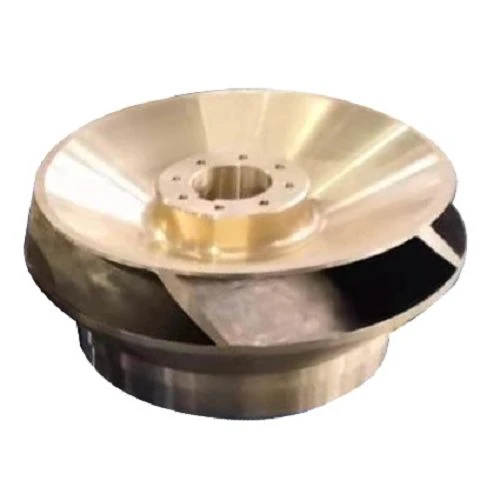
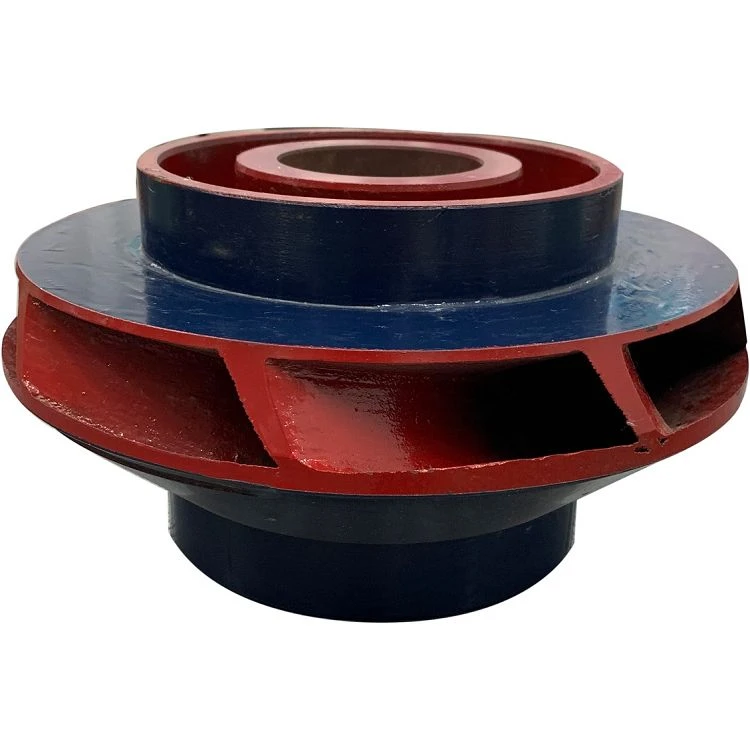
The outlet geometry determines how the fluid exits the impeller. It can influence the pump's discharge characteristics, such as the flow pattern and pressure distribution. For example, a properly designed outlet can help reduce turbulence and improve the pump's overall efficiency.
3. Material Selection and Its Impact on Design and Performance
The material used to manufacture the pump impeller is closely related to its design and performance. Different materials have different properties, such as strength, corrosion resistance, and wear resistance, which can affect the impeller's durability and performance.
- Stainless Steel Pump Impeller: Stainless steel is a popular choice for pump impellers due to its excellent corrosion resistance. It can withstand harsh chemical environments, making it suitable for applications in the chemical, pharmaceutical, and food industries. Stainless steel impellers are also relatively strong and can maintain their shape and performance over a long period.
- Bronze Pump Impeller: Bronze is another commonly used material for pump impellers. It has good corrosion resistance, especially in water - based applications. Bronze impellers are also relatively easy to machine, allowing for more complex impeller designs. They are often used in marine applications, water treatment plants, and HVAC systems.
- Cast Iron Pump Impeller: Cast iron is a cost - effective material for pump impellers. It has good strength and is suitable for applications where the fluid being pumped is relatively clean and non - corrosive. Cast iron impellers are commonly used in general - purpose water pumps, such as those used in irrigation and domestic water supply systems.
4. The Influence of Design on Pump Efficiency
Pump efficiency is a measure of how effectively the pump converts mechanical energy into fluid energy. The design of the pump impeller has a direct impact on the pump's efficiency. A well - designed impeller can minimize losses due to friction, turbulence, and leakage, resulting in higher efficiency.
For example, an impeller with a smooth surface finish can reduce friction losses as the fluid flows over the blades. Similarly, a properly designed blade shape and number can ensure a more uniform flow distribution, reducing turbulence and improving efficiency.
In addition, the impeller design should be optimized for the specific operating conditions of the pump. For instance, if a pump is required to operate at a constant flow rate and pressure, the impeller design can be tailored to maximize efficiency at that particular operating point.
5. Impact on Pump Capacity and Head
The pump capacity, which is the volume of fluid the pump can deliver per unit time, and the pump head, which is the pressure increase provided by the pump, are also affected by the impeller design. As mentioned earlier, the impeller diameter, blade shape, and number all play a role in determining the pump's capacity and head.
A larger impeller diameter and a blade shape that can generate high pressure, such as radial blades, can increase the pump's head. On the other hand, a blade shape that promotes high flow rates, such as forward - curved blades, can increase the pump's capacity.
6. Reliability and Maintenance Considerations
The design of the pump impeller also affects its reliability and maintenance requirements. A well - designed impeller is less prone to damage from cavitation, erosion, and wear, reducing the frequency of maintenance and replacement.
For example, an impeller with a proper blade shape and material selection can resist cavitation damage, which can cause pitting and erosion on the impeller surface. Similarly, a robust impeller design can withstand the forces generated during operation, reducing the risk of mechanical failure.
7. Conclusion and Call to Action
In conclusion, the design of a pump impeller has a profound impact on its performance, including efficiency, capacity, head, reliability, and maintenance requirements. As a pump impeller supplier, we understand the importance of providing high - quality impellers that are designed to meet the specific needs of our customers.
Whether you are looking for a Stainless Steel Pump Impeller, a Bronze Pump Impeller, or a Cast Iron Pump Impeller, we have the expertise and experience to offer you the best solutions. We can work with you to understand your application requirements and design an impeller that will optimize your pump's performance.
If you are interested in learning more about our pump impellers or would like to discuss your specific needs, please feel free to reach out to us. We look forward to the opportunity to serve you and help you achieve the best performance from your pumps.
References
- Stepanoff, A. J. (1957). Centrifugal and Axial Flow Pumps: Theory, Design, and Application. John Wiley & Sons.
- Karassik, I. J., Messina, J. P., Cooper, P. T., & Heald, C. C. (2008). Pump Handbook (4th ed.). McGraw - Hill.
- Gulich, J. F. (2010). Centrifugal Pumps. Springer.