The impeller is a crucial component of a pump, and its design can significantly influence the pump's performance. Among the various materials used for pump impellers, bronze is a popular choice due to its excellent corrosion resistance, high strength, and good casting properties. One of the key design parameters of a bronze pump impeller is the number of blades. In this blog, as a bronze pump impeller supplier, I will delve into how the number of blades affects a bronze pump impeller.
1. Hydraulic Performance
The number of blades on a bronze pump impeller has a direct impact on the pump's hydraulic performance, which includes factors such as flow rate, head, and efficiency.
Flow Rate
A pump with a higher number of blades generally has a more uniform flow distribution within the impeller. When the number of blades is increased, the flow channels between the blades become narrower. This can lead to a more controlled and less turbulent flow, allowing the pump to handle the fluid more efficiently. As a result, for a given rotational speed, a pump with more blades may be able to achieve a higher flow rate. However, if the number of blades is too large, the flow channels may become so narrow that they cause excessive frictional losses, which can ultimately reduce the flow rate.
On the other hand, an impeller with fewer blades may have wider flow channels. This can be beneficial for handling fluids with high viscosity or containing solid particles, as the wider channels are less likely to become clogged. But the flow may be more turbulent, and the pump may not be as efficient in converting mechanical energy into hydraulic energy, resulting in a lower flow rate compared to an impeller with an optimal number of blades.
Head
The head of a pump refers to the height to which the pump can lift the fluid. The number of blades affects the head by influencing the pressure increase within the impeller. More blades can provide a greater pressure rise because they can transfer more energy to the fluid. As the fluid passes through the impeller, each blade imparts a certain amount of energy to it. With more blades, there are more opportunities for energy transfer, leading to a higher head.
However, increasing the number of blades also increases the frictional losses within the impeller. If these losses are not compensated by the additional energy transfer, the net increase in head may be limited. In some cases, an excessive number of blades can even cause a decrease in head due to the high frictional resistance.
Efficiency
Efficiency is a measure of how well a pump converts mechanical energy into hydraulic energy. The number of blades plays a vital role in determining the pump's efficiency. An optimal number of blades can minimize both hydraulic losses (such as flow separation and turbulence) and frictional losses.
For a bronze pump impeller, there is usually an ideal number of blades that maximizes efficiency. This number depends on various factors, including the pump's design, the fluid properties, and the operating conditions. In general, an impeller with an appropriate number of blades can ensure a smooth flow of fluid, reducing energy losses and improving the overall efficiency of the pump.
2. Cavitation Resistance
Cavitation is a phenomenon that occurs when the pressure in a fluid drops below its vapor pressure, causing the formation of vapor bubbles. These bubbles can collapse violently when they move to a region of higher pressure, leading to damage to the impeller surface. The number of blades on a bronze pump impeller can affect its cavitation resistance.
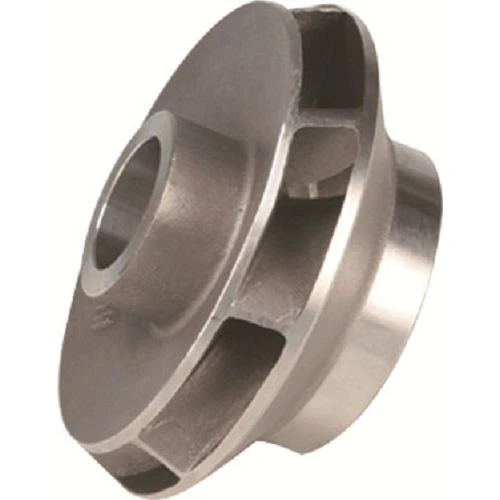
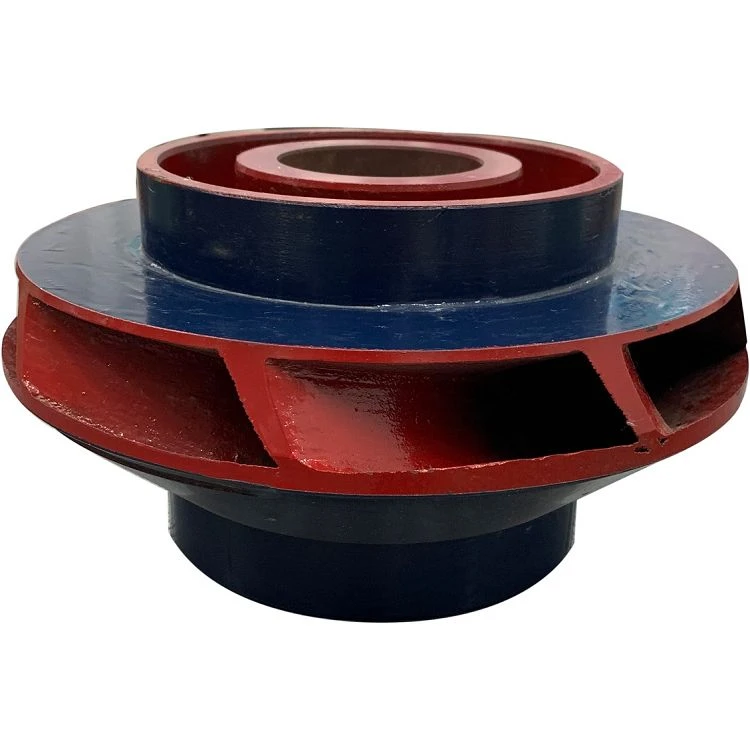
An impeller with more blades can distribute the fluid pressure more evenly. This helps to prevent the formation of low - pressure regions where cavitation is likely to occur. The increased number of blades provides more support to the fluid flow, reducing the likelihood of pressure fluctuations that can trigger cavitation.
Conversely, an impeller with fewer blades may have more significant pressure variations within the flow channels. This can create areas of low pressure, increasing the risk of cavitation. However, it's important to note that other factors, such as the impeller's shape, the inlet design, and the operating conditions, also play important roles in cavitation resistance.
3. Structural Strength
The number of blades also affects the structural strength of a bronze pump impeller. Each blade is subjected to forces during the pump's operation, including centrifugal forces, fluid forces, and vibration forces.
An impeller with more blades can distribute these forces more evenly across the impeller body. This can reduce the stress concentration on individual blades, making the impeller more resistant to fatigue and failure. Bronze, with its high strength and good ductility, can better withstand these forces when the load is distributed over a larger number of blades.
However, adding more blades also increases the weight and complexity of the impeller. This can put additional stress on the pump shaft and bearings, and may require a more robust pump design. An impeller with too many blades may also be more difficult to manufacture, increasing the production cost.
4. Comparison with Other Materials
When considering the number of blades, it's also interesting to compare bronze pump impellers with Cast Iron Pump Impeller and Stainless Steel Pump Impeller.
Cast iron is a relatively brittle material compared to bronze. In an impeller with a large number of blades, the stress distribution may be more critical for cast iron. If the stress is not evenly distributed, the cast iron impeller may be more prone to cracking. Bronze, with its better ductility, can handle the stress more effectively, allowing for a wider range of blade numbers without significant structural concerns.
Stainless steel is known for its high corrosion resistance and strength. Similar to bronze, stainless steel impellers can support a reasonable number of blades. However, the cost of stainless steel is generally higher than that of bronze. For applications where corrosion resistance is important but cost is also a consideration, bronze pump impellers may be a more attractive option.
5. Choosing the Right Number of Blades
As a bronze pump impeller supplier, we understand that choosing the right number of blades is crucial for achieving optimal pump performance. The selection process should take into account the specific requirements of the application.
For applications that require high flow rates and low head, an impeller with a relatively small number of blades (e.g., 3 - 5 blades) may be suitable. This type of impeller can handle large volumes of fluid with less resistance.
If high head and good efficiency are the main goals, an impeller with 5 - 7 blades is often a good choice. This number of blades can provide a good balance between energy transfer and frictional losses.
For applications where cavitation resistance is a major concern, an impeller with 6 - 8 blades may be preferred. The additional blades can help to distribute the pressure more evenly and reduce the risk of cavitation.
Conclusion
In conclusion, the number of blades on a bronze pump impeller has a profound impact on its hydraulic performance, cavitation resistance, and structural strength. As a Bronze Pump Impeller supplier, we are committed to providing our customers with impellers that are designed to meet their specific needs. By carefully considering the number of blades and other design parameters, we can ensure that our bronze pump impellers deliver high - quality performance, reliability, and efficiency.
If you are in the market for bronze pump impellers or have any questions about our products, we encourage you to contact us for a detailed discussion. Our team of experts is ready to assist you in selecting the right impeller for your application and to provide you with the best possible solutions.
References
- "Pump Handbook" by Igor J. Karassik et al.
- "Fluid Mechanics and Machinery" by R. K. Bansal.
- Technical papers on pump impeller design from industry journals.