Hey there! I'm a supplier of centrifugal pumps, and today I wanna chat about how the speed of a centrifugal pump affects its performance. Centrifugal pumps are super common in all sorts of industries, like water treatment, oil and gas, and manufacturing. Understanding how speed impacts their performance can really help you make the right choice when it comes to buying one.
First off, let's talk about the basics. A centrifugal pump works by using an impeller to spin and create a centrifugal force. This force moves the fluid from the center of the impeller to the outer edges, and then out through the pump's outlet. The speed at which the impeller spins is a key factor in how well the pump works.
Flow Rate
One of the most important things affected by the pump speed is the flow rate. Flow rate is basically how much fluid the pump can move in a given amount of time, usually measured in gallons per minute (GPM) or cubic meters per hour (m³/h). As the speed of the pump increases, the flow rate also goes up. That's because the faster the impeller spins, the more force it can generate to push the fluid through the pump.
Think of it like a fan. When you turn up the speed on a fan, it blows more air. Similarly, when you increase the speed of a centrifugal pump, it moves more fluid. But there's a catch. If you increase the speed too much, the pump might start to cavitate. Cavitation is when the pressure in the pump drops so low that the fluid starts to form vapor bubbles. These bubbles can cause damage to the pump's impeller and other parts, and they can also reduce the pump's efficiency.
Head
Another crucial aspect is the head, which is the height or pressure that the pump can lift the fluid. Head is measured in feet (ft) or meters (m). Just like the flow rate, the head also increases as the pump speed goes up. The faster the impeller spins, the more energy it can transfer to the fluid, allowing it to be lifted to a greater height or pushed against a higher pressure.
But again, there's a limit. If you try to push the pump too hard by increasing the speed beyond its design limits, the head might not increase as expected. In fact, the pump's performance could start to degrade, and it might not be able to maintain the required head. This can lead to problems in your system, like not being able to get the fluid to where it needs to go.
Power Consumption
The speed of the pump also has a big impact on power consumption. As the speed increases, the power required to run the pump goes up exponentially. That means a small increase in speed can result in a much larger increase in power consumption. So, if you're looking to save on energy costs, you need to be careful about how fast you run your pump.
It's important to find the right balance between the flow rate, head, and power consumption. You don't want to run the pump at a speed that's too low, because then it won't be able to meet your system's requirements. But you also don't want to run it at a speed that's too high, because that will waste a lot of energy and could damage the pump.
Efficiency
Efficiency is a measure of how well the pump converts the input power into useful work. It's expressed as a percentage. The efficiency of a centrifugal pump typically has an optimal speed range. When the pump is running within this range, it can operate at its highest efficiency.
If the speed is too low, the pump might not be able to generate enough force to move the fluid effectively, and a lot of the input power will be wasted. On the other hand, if the speed is too high, the pump might experience cavitation and other issues that can reduce its efficiency. So, it's crucial to select a pump with the right speed for your application to ensure maximum efficiency.
Types of Centrifugal Pumps
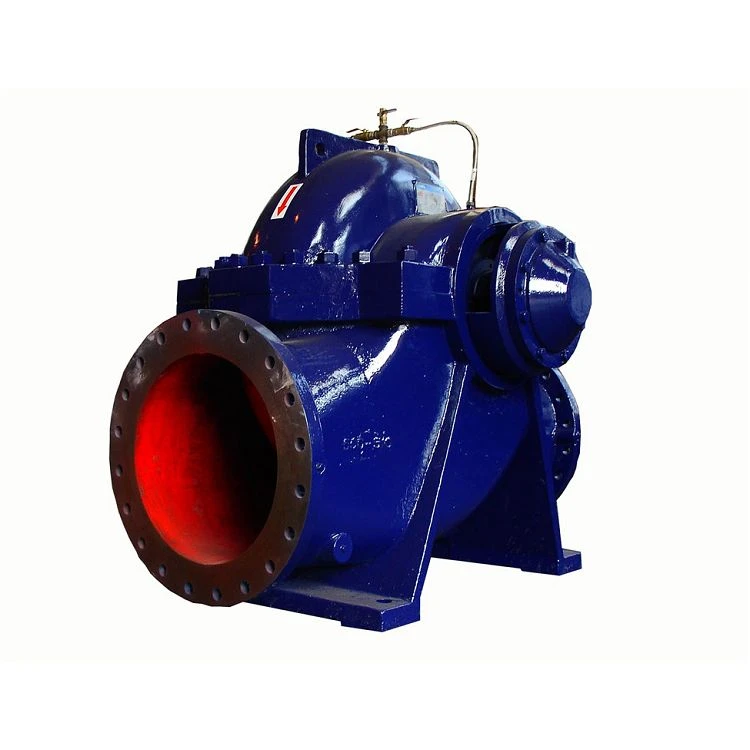
Now, let's talk about some different types of centrifugal pumps that we supply. We have the Horizontal Split Casing Centrifugal Pump. These pumps are great for high-flow, medium-head applications. They're designed with a split casing, which makes them easy to maintain and repair. The speed of these pumps can be adjusted to meet different flow and head requirements.
Another type is the Single Stage Double-Suction Centrifugal Pump. These pumps are ideal for applications where you need a high flow rate and a relatively low head. The double-suction design helps to balance the axial thrust, which can improve the pump's reliability and efficiency. The speed of these pumps can also be optimized to get the best performance.
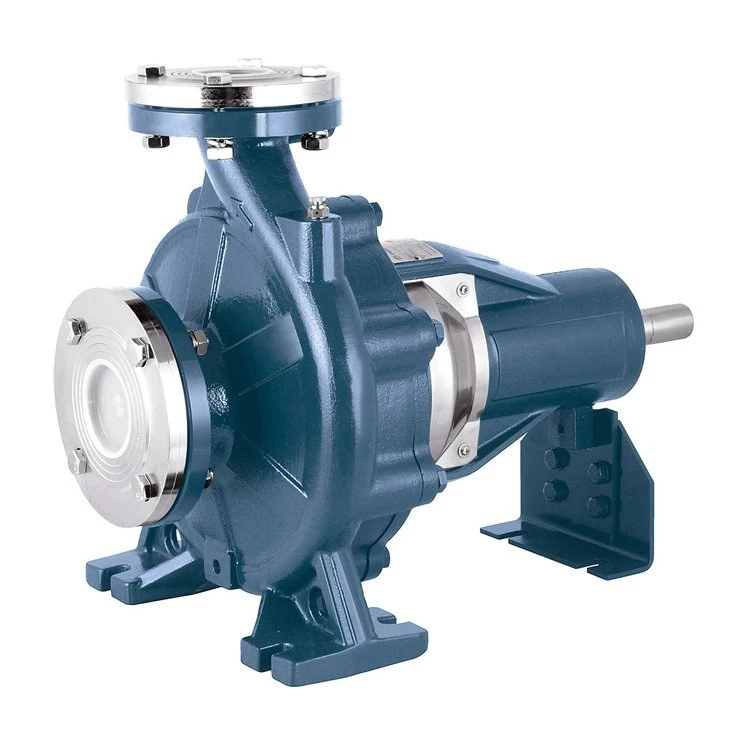
We also offer the End Suction Centrifugal Pump. These pumps are simple and cost-effective, and they're commonly used in small to medium-sized applications. They can be run at different speeds depending on your specific needs.
Selecting the Right Speed
So, how do you select the right speed for your centrifugal pump? Well, it depends on your application. You need to consider factors like the required flow rate, head, and the characteristics of the fluid you're pumping. It's a good idea to work with a pump expert who can help you analyze your system and choose the right pump and speed.
You also need to think about the long-term costs. While a higher-speed pump might give you a higher flow rate and head, it will also consume more power. So, you need to balance the initial cost of the pump with the ongoing energy costs.
Conclusion
In conclusion, the speed of a centrifugal pump has a significant impact on its performance, including the flow rate, head, power consumption, and efficiency. As a supplier, we understand the importance of selecting the right pump and speed for your specific application. We offer a wide range of centrifugal pumps, including Horizontal Split Casing Centrifugal Pump, Single Stage Double-Suction Centrifugal Pump, and End Suction Centrifugal Pump.
If you're in the market for a centrifugal pump, or if you have any questions about how speed affects pump performance, don't hesitate to reach out. We're here to help you make the best choice for your needs. Contact us to start a procurement discussion and find the perfect pump for your application.
References
- Pump Handbook, by Igor Karassik et al.
- Centrifugal Pumps: Design and Application, by Heinz P. Bloch and Allan R. Budris.