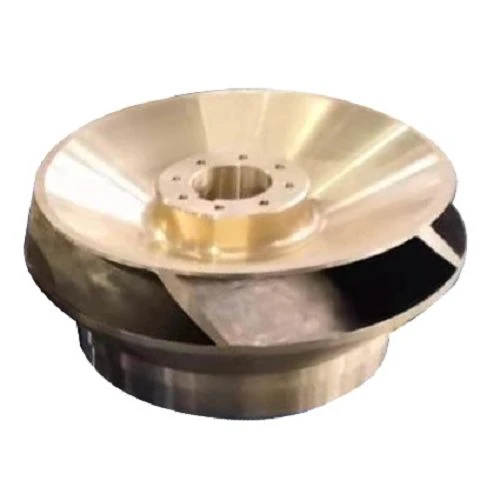
Hey there! As a supplier of Bronze Pump Impeller, I've seen firsthand how temperature can have a big impact on these essential components. In this blog, I'm gonna break down the ways temperature affects bronze pump impellers and why it's so important to understand these dynamics.
1. Thermal Expansion and Contraction
One of the most obvious ways temperature affects a bronze pump impeller is through thermal expansion and contraction. Bronze, like most materials, expands when heated and contracts when cooled. This might seem like a small thing, but it can have some serious consequences for the performance and lifespan of the impeller.
When the temperature rises, the bronze impeller expands. If the expansion isn't properly accounted for in the pump design, it can lead to a tight fit within the pump housing. This increased friction can cause the impeller to wear out faster, leading to reduced efficiency and potentially even pump failure. On the other hand, when the temperature drops, the impeller contracts. A significant contraction can create gaps between the impeller and the housing, which can result in fluid leakage and a loss of pump performance.
For example, in a high - temperature industrial process where the bronze pump impeller is constantly exposed to hot fluids, the continuous expansion and contraction cycles can gradually cause micro - cracks in the impeller material. Over time, these cracks can grow and lead to a catastrophic failure of the impeller.
2. Material Hardness and Ductility
Temperature also has a major influence on the hardness and ductility of bronze. At lower temperatures, bronze becomes harder and more brittle. This means that it's more likely to crack or break under stress. In a pump application, this could happen if there's a sudden pressure surge or if the impeller hits a foreign object. The lack of ductility makes it difficult for the impeller to absorb the impact without fracturing.
Conversely, at higher temperatures, bronze becomes softer and more ductile. While this might seem like an advantage as it can absorb more energy without breaking, it also means that the impeller is more prone to deformation. If the impeller deforms, its shape changes, which can disrupt the flow of fluid through the pump and reduce the pump's efficiency.
Let's say you're using a bronze pump impeller in a refrigeration system where the temperature is relatively low. The hard and brittle nature of the bronze at these temperatures makes it crucial to ensure that the pump is protected from any sudden shocks or impacts. Otherwise, you could end up with a broken impeller and a non - functioning pump.
3. Corrosion Rates
Temperature plays a key role in the corrosion rates of bronze pump impellers. Generally, higher temperatures accelerate the corrosion process. Corrosion occurs when the bronze reacts with the surrounding fluid, usually water or chemicals in the pumped medium.
In a warm environment, the chemical reactions that cause corrosion happen more quickly. The increased temperature provides more energy for the molecules involved in the corrosion process to react. This can lead to the formation of rust and other corrosion products on the surface of the impeller. As the corrosion progresses, the impeller's surface becomes rough, which can disrupt the smooth flow of fluid and increase friction.
On top of that, corrosion can weaken the structure of the impeller. If the corrosion eats away at the impeller material, it can reduce its thickness and strength. Eventually, this can lead to the impeller failing, either by breaking apart or losing its ability to generate the necessary pressure to pump the fluid.
In a water treatment plant where the water is warm and may contain various chemicals, the bronze pump impellers need to be carefully monitored for signs of corrosion. Regular maintenance and the use of anti - corrosion coatings can help extend the life of the impellers.
4. Viscosity of the Pumped Fluid
The temperature of the fluid being pumped also affects the bronze pump impeller indirectly through its impact on fluid viscosity. Viscosity is a measure of a fluid's resistance to flow. As the temperature of a fluid increases, its viscosity decreases.
When the fluid has a lower viscosity, it flows more easily through the pump. This means that the impeller doesn't have to work as hard to move the fluid, which can reduce the wear and tear on the impeller. However, a very low - viscosity fluid may also cause issues such as cavitation. Cavitation occurs when the pressure in the fluid drops below the vapor pressure, causing vapor bubbles to form. When these bubbles collapse near the impeller surface, they can cause pitting and damage to the impeller.
On the other hand, when the fluid temperature is low, the high viscosity makes it more difficult for the impeller to move the fluid. This can put extra strain on the impeller and the pump motor, leading to increased energy consumption and a shorter lifespan for the impeller.
For instance, in an oil refinery, the temperature of the crude oil being pumped can vary widely. When the oil is cold, the high viscosity requires the bronze pump impeller to work harder, which can lead to premature wear. When the oil is heated to reduce viscosity, care must be taken to prevent cavitation.
5. Comparing with Other Materials
It's interesting to compare how bronze pump impellers react to temperature changes with other common impeller materials like Cast Iron Pump Impeller and Stainless Steel Pump Impeller.
Cast iron is generally more brittle than bronze, especially at lower temperatures. So, it's even more prone to cracking under the stress caused by temperature - induced expansion and contraction. Stainless steel, on the other hand, has better corrosion resistance at high temperatures compared to bronze. However, stainless steel can be more expensive, and in some cases, the thermal expansion characteristics of stainless steel may not be as well - suited for certain pump designs as bronze.
Each material has its own advantages and disadvantages when it comes to temperature effects. As a supplier, I often work with customers to understand their specific temperature requirements and choose the most appropriate impeller material for their application.
Conclusion
In conclusion, temperature has a far - reaching impact on bronze pump impellers. From thermal expansion and contraction to changes in material properties, corrosion rates, and fluid viscosity, every aspect of the impeller's performance is affected by temperature. Understanding these effects is crucial for ensuring the proper operation and longevity of the pump.
If you're in the market for a bronze pump impeller or have questions about how temperature might affect your specific application, don't hesitate to reach out. I'm here to help you make the best choice for your pumping needs. Whether it's finding the right impeller size, material, or dealing with temperature - related challenges, I've got the expertise to assist you. Let's start a conversation and see how we can work together to keep your pumps running smoothly.
References
- ASM Handbook Volume 2: Properties and Selection: Nonferrous Alloys and Special - Purpose Materials
- Pump Handbook by Igor Karassik et al.
- Corrosion Engineering Handbook by Pierre R. Roberge