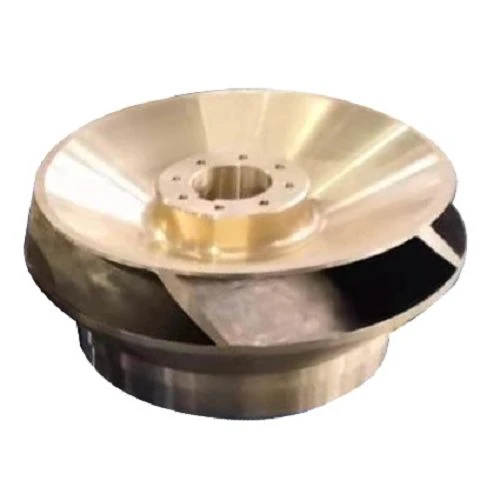
Hey there! I'm a supplier of Bronze Pump Impeller, and I've been in this industry for quite a while. One question that often pops up is how the viscosity of the fluid affects a bronze pump impeller. Well, let's dive right into it!
Understanding Viscosity
First off, what exactly is viscosity? In simple terms, viscosity is a measure of a fluid's resistance to flow. Think of it like this: honey is more viscous than water. Honey flows more slowly because its molecules are more tightly packed and have more internal friction, making it resistant to movement. On the other hand, water has a lower viscosity and flows more freely.
Viscosity is usually measured in centipoise (cP). Water at 20°C has a viscosity of about 1 cP, while honey can have a viscosity ranging from 2,000 to 10,000 cP. Different fluids have different viscosities, and this can have a significant impact on how a bronze pump impeller performs.
Impact on Pump Performance
Flow Rate
One of the most noticeable effects of fluid viscosity on a bronze pump impeller is the flow rate. As the viscosity of the fluid increases, the flow rate through the pump decreases. This is because the impeller has to work harder to move the more viscous fluid. The higher internal friction in the fluid makes it more difficult for the impeller to transfer energy to the fluid and push it through the pump.
For example, if you have a pump that is designed to move water at a certain flow rate, when you switch to a more viscous fluid like oil, the flow rate will drop. The impeller blades have to overcome the greater resistance of the oil, and as a result, less fluid is moved per unit of time.
Head
Head refers to the height that a pump can lift a fluid or the pressure it can generate. When the viscosity of the fluid increases, the head produced by the pump also decreases. The impeller has to use more energy to move the viscous fluid, and this results in a reduction in the available energy to generate head.
In practical terms, if you have a pump that is used to lift water to a certain height, when you use a more viscous fluid, the pump may not be able to lift the fluid to the same height. The increased resistance of the fluid means that the impeller cannot generate enough pressure to overcome the gravitational force and lift the fluid as effectively.
Efficiency
Efficiency is a crucial factor in pump operation. It is the ratio of the useful work done by the pump (moving the fluid) to the energy input. As the viscosity of the fluid increases, the efficiency of the bronze pump impeller decreases.
The impeller has to work harder to move the more viscous fluid, which requires more energy input. However, the amount of useful work done (flow rate and head) decreases. This results in a lower efficiency. In some cases, the efficiency can drop significantly, leading to higher operating costs.
Effects on the Bronze Pump Impeller Itself
Wear and Tear
Higher viscosity fluids can cause more wear and tear on the bronze pump impeller. The increased resistance of the fluid means that the impeller blades are subjected to greater forces. This can lead to abrasion and erosion of the impeller surface.
The particles in the viscous fluid can also act as abrasives, wearing down the impeller over time. Additionally, the higher forces can cause mechanical stress on the impeller, potentially leading to cracks or other forms of damage.
Cavitation
Cavitation is a phenomenon that occurs when the pressure in a fluid drops below its vapor pressure, causing vapor bubbles to form. These bubbles then collapse when they reach a region of higher pressure, creating shock waves that can damage the pump components.
Higher viscosity fluids can increase the likelihood of cavitation. The increased resistance of the fluid can cause the pressure to drop more rapidly in certain areas of the pump, leading to the formation of vapor bubbles. The impeller is particularly vulnerable to cavitation damage, as the collapsing bubbles can erode the impeller surface.
Choosing the Right Bronze Pump Impeller for Viscous Fluids
When dealing with viscous fluids, it's important to choose the right bronze pump impeller. Here are some factors to consider:
Impeller Design
The design of the impeller plays a crucial role in its performance with viscous fluids. A wider impeller blade can provide more surface area to interact with the fluid, allowing for better energy transfer. Additionally, a larger impeller diameter can increase the torque and power available to move the viscous fluid.
Material Selection
Bronze is a popular choice for pump impellers due to its corrosion resistance and good mechanical properties. However, for highly viscous fluids, you may need to consider other materials or coatings to reduce wear and tear. For example, Stainless Steel Pump Impeller may be more suitable in some cases, as it offers better resistance to abrasion and corrosion.
Pump Size and Power
When dealing with viscous fluids, you may need a larger pump with more power to achieve the desired flow rate and head. A pump that is too small may not be able to handle the increased resistance of the fluid, leading to poor performance and potential damage to the impeller.
Conclusion
In conclusion, the viscosity of the fluid has a significant impact on a bronze pump impeller. It affects the pump's performance in terms of flow rate, head, and efficiency, and can also cause wear and tear on the impeller itself. As a Bronze Pump Impeller supplier, I understand the importance of choosing the right impeller for the specific fluid and application.
If you're in the market for a pump impeller and need to handle viscous fluids, don't hesitate to reach out. We can help you select the best impeller based on your requirements and ensure that it performs optimally. Whether you need a Bronze Pump Impeller, Stainless Steel Pump Impeller, or Cast Iron Pump Impeller, we've got you covered. Let's start a conversation and find the perfect solution for your pumping needs!
References
- Pump Handbook, Karassik et al.
- Fluid Mechanics, Frank M. White