Calculating the bending strength of a pump shaft is a crucial aspect in the design and manufacturing of pumps. As a trusted Pump Shaft supplier, we understand the significance of accurate calculations to ensure the reliability and longevity of pump systems. In this blog, we will delve into the step - by - step process of calculating the bending strength of a pump shaft, along with the key factors that influence it.
Understanding the Basics of Bending Strength
Before we start with the calculations, it's essential to understand what bending strength means. Bending strength, also known as flexural strength, is the maximum stress a material can withstand while being bent before it breaks or permanently deforms. In the context of a pump shaft, it is the ability of the shaft to resist bending forces caused by various factors such as the weight of the impeller, misalignment, and external loads.
Step 1: Determine the Loads Acting on the Pump Shaft
The first step in calculating the bending strength is to identify and quantify the loads acting on the pump shaft. There are several types of loads that a pump shaft may experience:
1. Weight of the Impeller
The impeller is a key component of the pump, and its weight exerts a downward force on the shaft. To calculate the weight of the impeller, you need to know its mass (m) and the acceleration due to gravity (g, approximately 9.81 m/s²). The force (F) due to the weight of the impeller is given by the formula F = m×g.
2. Radial Forces
Radial forces can be caused by factors such as unbalanced forces in the impeller, fluid flow forces, and misalignment between the pump and the motor. These forces act perpendicular to the axis of the shaft. Measuring radial forces can be more complex and may require the use of sensors or analytical models based on the pump's operating conditions.
3. Axial Forces
Axial forces act along the axis of the shaft. They can be generated by the pressure difference across the impeller, thrust from the fluid flow, or the interaction between the pump and the piping system. Similar to radial forces, accurate measurement or estimation of axial forces is necessary for precise calculations.
Step 2: Calculate the Bending Moment
Once the loads acting on the pump shaft are determined, the next step is to calculate the bending moment. The bending moment (M) at a particular point on the shaft is the product of the force (F) and the perpendicular distance (d) from the point of application of the force to the point where the bending moment is being calculated, i.e., M = F×d.
In a real - world pump shaft, there may be multiple forces acting at different points along the shaft. To find the maximum bending moment, you need to consider the combined effect of all the forces. This often involves constructing a bending moment diagram, which shows how the bending moment varies along the length of the shaft. The maximum value on this diagram is the critical bending moment that the shaft must be able to withstand.
Step 3: Select the Appropriate Material and Its Properties
The choice of material for the pump shaft has a significant impact on its bending strength. Common materials used for pump shafts include stainless steel, carbon steel, and alloy steel. Each material has its own mechanical properties, such as the modulus of elasticity (E) and the yield strength (σ_y).
The modulus of elasticity is a measure of the material's stiffness, while the yield strength is the stress at which the material begins to deform plastically. When selecting a material, you need to ensure that its yield strength is high enough to withstand the maximum bending stress that the shaft will experience.
Step 4: Calculate the Section Modulus
The section modulus (Z) is a geometric property of the shaft's cross - section that relates to its ability to resist bending. The formula for the section modulus depends on the shape of the cross - section. For a solid circular shaft, the section modulus is given by (Z=\frac{\pi d^{3}}{32}), where d is the diameter of the shaft.
For a hollow circular shaft, the section modulus is (Z = \frac{\pi(D^{4}-d^{4})}{32D}), where D is the outer diameter and d is the inner diameter of the shaft.
Step 5: Determine the Bending Stress
The bending stress (σ) in the shaft can be calculated using the formula (\sigma=\frac{M}{Z}), where M is the bending moment and Z is the section modulus. This formula is based on the theory of pure bending, which assumes that the shaft is straight, the material is homogeneous and isotropic, and the cross - section remains plane during bending.
Step 6: Check the Safety Factor
To ensure the reliability of the pump shaft, it is necessary to apply a safety factor. The safety factor (SF) is the ratio of the yield strength of the material ((\sigma_y)) to the calculated bending stress ((\sigma)), i.e., (SF=\frac{\sigma_y}{\sigma}). A typical safety factor for pump shafts ranges from 1.5 to 3, depending on the application and the level of uncertainty in the load calculations. If the safety factor is less than the recommended value, the shaft may need to be redesigned by either increasing its diameter or changing the material to one with a higher yield strength.
Factors Affecting Bending Strength
Several factors can affect the bending strength of a pump shaft:
1. Shaft Geometry
The shape and size of the shaft's cross - section play a crucial role. A larger diameter shaft generally has a higher bending strength than a smaller one, as it has a larger section modulus. Additionally, features such as keyways, shoulders, and holes can reduce the shaft's cross - sectional area and thus its bending strength.
2. Material Quality
The quality of the material, including its composition, heat treatment, and manufacturing process, can significantly impact its mechanical properties. For example, a well - heat - treated steel shaft may have a higher yield strength and better fatigue resistance than an untreated one.
3. Operating Conditions
The operating environment of the pump, such as temperature, humidity, and the presence of corrosive substances, can affect the material's properties over time. High temperatures can reduce the yield strength of the material, while corrosion can weaken the shaft by reducing its cross - sectional area.
Importance of Accurate Calculations for Pump Shafts
Accurate calculations of the bending strength of pump shafts are essential for several reasons. Firstly, it ensures the safety and reliability of the pump system. A shaft with insufficient bending strength may fail prematurely, leading to costly downtime and potential damage to other components of the pump.
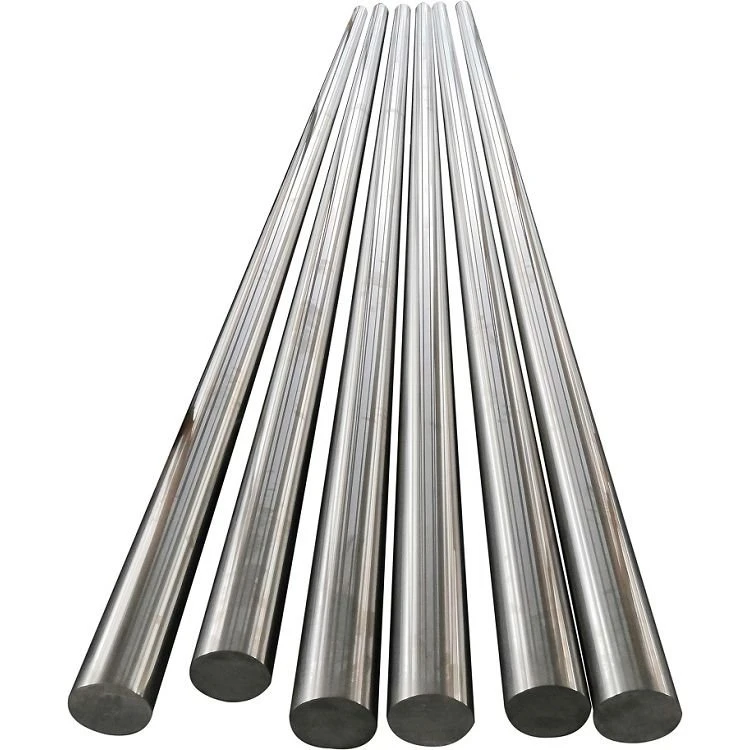
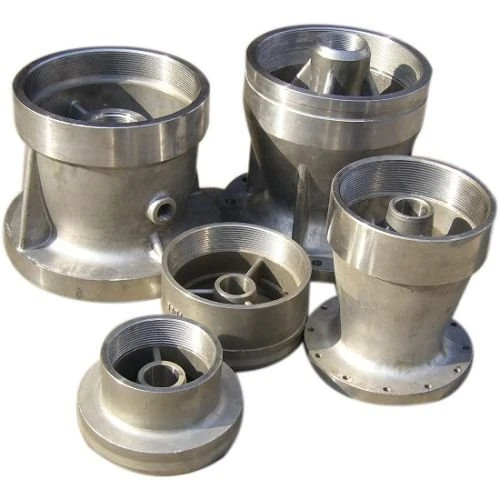
Secondly, it helps in optimizing the design of the pump shaft. By accurately calculating the bending strength, engineers can select the most appropriate material and dimensions for the shaft, which can reduce the cost of manufacturing without compromising on performance.
Our Role as a Pump Shaft Supplier
As a [Your Company Type] Pump Shaft supplier, we have extensive experience in providing high - quality pump shafts that meet the specific requirements of our customers. We use advanced manufacturing techniques and strict quality control measures to ensure that our pump shafts have the required bending strength and other mechanical properties.
We also offer technical support to our customers, helping them with the calculation of bending strength and the selection of the right pump shaft for their applications. Whether you are in need of a shaft for a Sea Water Pump Parts or a standard Pump Shaft, we have the expertise and resources to meet your needs.
Contact Us for Your Pump Shaft Needs
If you are looking for reliable and high - quality pump shafts, we invite you to contact us. Our team of experts is ready to assist you in selecting the right pump shaft, calculating its bending strength, and ensuring that it meets your specific requirements. We are committed to providing excellent products and services to our customers, and we look forward to partnering with you in your pump projects.
References
- Shigley, J. E., & Mischke, C. R. (2001). Mechanical Engineering Design. McGraw - Hill.
- Budynas, R. G., & Nisbett, J. K. (2011). Shigley's Mechanical Engineering Design. McGraw - Hill.
- Timoshenko, S. P., & Goodier, J. N. (1970). Theory of Elasticity. McGraw - Hill.