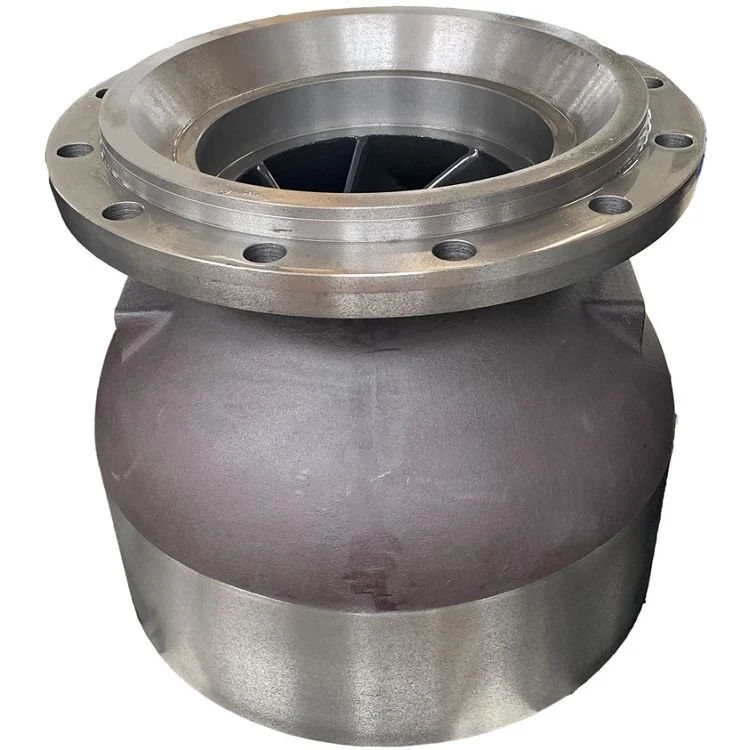
Dye penetrant testing, also known as liquid penetrant testing, is a widely used non - destructive testing (NDT) method for detecting surface - opening defects in pump castings. As a leading Pump Casting supplier, we understand the critical importance of this testing procedure in ensuring the quality and reliability of our products. In this blog, we will guide you through the process of conducting dye penetrant testing on pump castings.
1. Understanding the Basics of Dye Penetrant Testing
Dye penetrant testing is based on the principle of capillary action. A liquid penetrant with high surface wetting characteristics is applied to the surface of the pump casting. The penetrant seeps into any surface - opening defects, such as cracks, porosity, or laps. After a sufficient dwell time, the excess penetrant is removed from the surface, and a developer is applied. The developer acts as a blotter, drawing the penetrant out of the defects and making them visible as bright indications against a contrasting background.
2. Pre - testing Preparation
Surface Cleaning
Before applying the penetrant, the surface of the pump casting must be thoroughly cleaned. Any dirt, oil, grease, scale, or paint on the surface can prevent the penetrant from entering the defects. We usually use solvents, alkaline cleaners, or mechanical methods like grinding and sandblasting to clean the surface. For [Ductile Iron Casting](/pump - casting/ductile - iron - casting.html) and [Cast Iron Casting](/pump - casting/cast - iron - casting.html), the cleaning process needs to be carefully controlled to avoid damaging the surface.
Surface Roughness
The surface roughness of the pump casting can also affect the test results. A rough surface may hold more penetrant, making it difficult to remove the excess penetrant and increasing the background noise. We aim to achieve a surface finish that is smooth enough for effective penetrant testing but not so smooth that it eliminates the natural surface features that could indicate defects.
3. Application of the Penetrant
Penetrant Selection
There are different types of penetrants available, including fluorescent penetrants and visible (color - contrast) penetrants. Fluorescent penetrants are more sensitive and are typically used for detecting very small defects. Visible penetrants, on the other hand, are easier to use in daylight and do not require a black light for inspection. As a Pump Casting supplier, we often choose the type of penetrant based on the specific requirements of the pump casting and the defect size we are trying to detect.
Penetrant Application
The penetrant can be applied by spraying, brushing, or dipping. Spraying is the most common method as it provides a uniform coating over the entire surface of the pump casting. We ensure that the penetrant is applied evenly and that all areas of interest are covered. The penetrant should be allowed to dwell on the surface for a sufficient time, usually between 10 - 30 minutes, depending on the type of penetrant, the material of the casting, and the size of the expected defects.
4. Removal of Excess Penetrant
After the dwell time, the excess penetrant must be removed from the surface of the pump casting. This step is crucial as any remaining penetrant on the surface can cause false indications. For water - washable penetrants, the surface can be gently rinsed with water. For post - emulsifiable penetrants, an emulsifier is first applied to break down the penetrant, followed by a water rinse. Solvent - removable penetrants are removed using a solvent - dampened cloth.
5. Application of the Developer
Developer Type
There are several types of developers, including dry powder developers, wet - suspendable developers, and non - aqueous wet developers. Dry powder developers are easy to apply and are suitable for detecting large defects. Wet - suspendable developers provide a more uniform coating and are often used for fluorescent penetrant testing. Non - aqueous wet developers offer high sensitivity and are ideal for detecting very small defects.
Developer Application
The developer is usually applied by spraying. We make sure to apply a thin, uniform layer of developer over the entire surface of the pump casting. The developer should be allowed to dry for a few minutes before inspection. During this time, the developer will draw the penetrant out of the defects, creating visible indications.
6. Inspection
Visual Inspection
Once the developer has dried, the pump casting is ready for inspection. For visible penetrants, the inspection can be done under normal daylight or white light. For fluorescent penetrants, a black light is used. The inspector looks for any bright indications on the surface of the casting, which indicate the presence of surface - opening defects. The size, shape, and location of the indications are recorded for further analysis.
Evaluation of Defects
Not all indications found during the inspection are necessarily defects that will affect the performance of the pump casting. We have a set of acceptance criteria based on industry standards and customer requirements. Minor indications may be acceptable, while larger or more critical defects may require further processing or rejection of the casting.
7. Post - testing Cleaning
After the inspection is complete, the penetrant and developer must be removed from the surface of the pump casting. This is usually done using a solvent or water rinse, depending on the type of penetrant and developer used. The cleaned casting is then ready for further processing, such as machining or assembly.
8. Quality Assurance and Documentation
As a Pump Casting supplier, we maintain strict quality control throughout the dye penetrant testing process. We keep detailed records of each test, including the type of penetrant and developer used, the dwell times, the inspection results, and any corrective actions taken. These records are important for traceability and for demonstrating compliance with industry standards and customer requirements.
9. Importance of Dye Penetrant Testing in Pump Casting
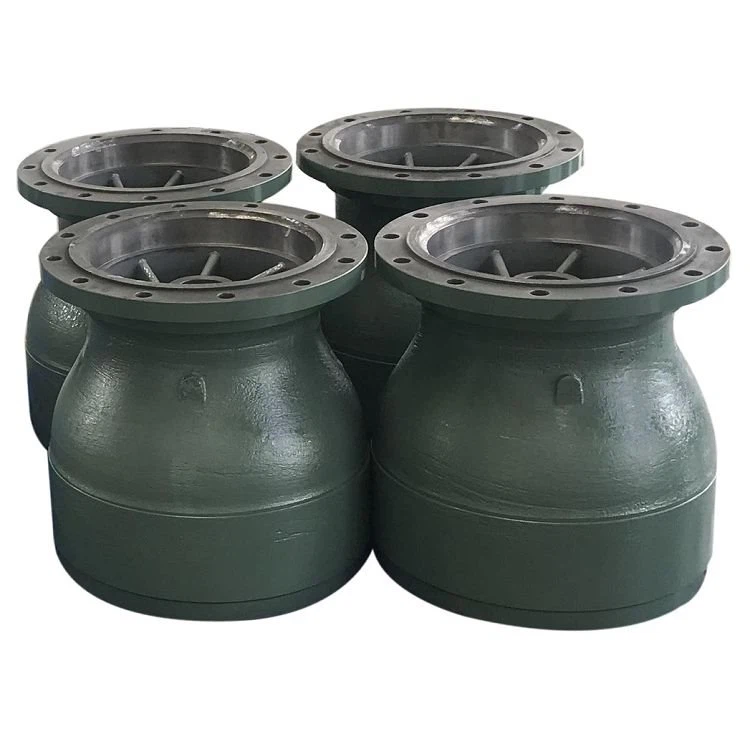
Pump castings are used in a wide range of applications, from water supply systems to chemical processing plants. Any surface - opening defects in these castings can lead to leaks, reduced efficiency, and even catastrophic failures. Dye penetrant testing helps us to identify these defects early in the manufacturing process, allowing us to take corrective actions and ensure that only high - quality pump castings are delivered to our customers. For [Wear Resistant Pump Parts](/pump - casting/wear - resistant - pump - parts.html), dye penetrant testing is especially important as these parts are often subject to high - stress conditions.
10. Conclusion
Dye penetrant testing is a reliable and effective method for detecting surface - opening defects in pump castings. By following the proper procedures and using high - quality penetrants and developers, we can ensure the integrity and performance of our pump castings. As a Pump Casting supplier, we are committed to providing our customers with the highest quality products. If you are interested in our pump casting products or have any questions about our manufacturing processes, including dye penetrant testing, please feel free to contact us for procurement discussions.
References
- American Society for Nondestructive Testing (ASNT). "Liquid Penetrant Testing Handbook."
- ASTM International. "Standard Practices for Liquid Penetrant Testing."