Hey there! I'm a supplier in the pump casting business, and I know how crucial it is to ensure the precision of pump casting. In this blog, I'll share some tips and tricks that I've picked up over the years to help you get the most accurate pump castings possible.
First off, let's talk about the materials. The type of material you choose for your pump casting can have a big impact on its precision. For example, Ductile Iron Casting is a popular choice because it offers good strength and ductility. It can handle high pressures and is resistant to wear and tear. This makes it ideal for pumps that are used in tough environments.
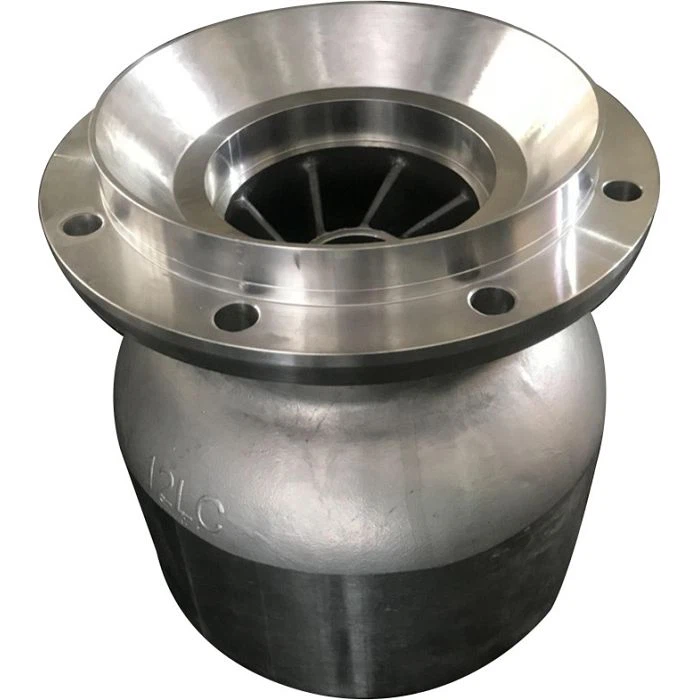
Another great option is Stainless Steel Pump Casting. Stainless steel is corrosion-resistant, which is a huge plus for pumps that will be exposed to water or other corrosive substances. It also has a smooth surface finish, which can improve the efficiency of the pump.
When it comes to the casting process itself, there are several steps that need to be carefully controlled to ensure precision. One of the most important steps is the pattern-making. The pattern is essentially a model of the pump part that will be cast. It needs to be made with high precision to ensure that the final casting has the right dimensions.
We use advanced CNC machining techniques to create our patterns. This allows us to achieve very tight tolerances, usually within a few thousandths of an inch. By using CNC machining, we can also ensure that the pattern is consistent from one part to the next, which is crucial for mass production.
Once the pattern is made, the next step is the mold-making. The mold is what holds the molten metal in place while it cools and solidifies. There are different types of molds, such as sand molds and investment molds. Each type has its own advantages and disadvantages, and the choice depends on the specific requirements of the pump casting.
For sand molds, we use high-quality sand that has good thermal properties. The sand is packed around the pattern to create the mold cavity. After the molten metal is poured into the mold, it cools and takes the shape of the cavity. Sand molds are relatively inexpensive and can be used for large-scale production. However, they may not provide the same level of precision as investment molds.
Investment molds, on the other hand, are made by coating a wax pattern with a ceramic shell. The wax is then melted out, leaving behind a hollow ceramic mold. Investment molds can provide very high precision and a smooth surface finish. They are often used for complex pump parts that require tight tolerances.
During the casting process, it's also important to control the temperature of the molten metal. If the temperature is too high, the metal may be too fluid and could cause defects in the casting. If the temperature is too low, the metal may not flow properly and could result in incomplete filling of the mold cavity.
We use advanced temperature sensors and control systems to monitor and adjust the temperature of the molten metal. This ensures that the metal is at the optimal temperature for casting, which helps to minimize defects and improve the precision of the final product.
After the casting is complete, it goes through a series of finishing operations. These operations include machining, grinding, and polishing. Machining is used to remove any excess material and to achieve the final dimensions of the pump part. Grinding and polishing are used to improve the surface finish and to ensure that the part meets the required specifications.
For example, if you need Wear Resistant Pump Parts, we can use special machining techniques to create a hard surface layer on the part. This can significantly improve the wear resistance of the pump part and extend its service life.
Quality control is another crucial aspect of ensuring the precision of pump casting. We have a comprehensive quality control system in place to check every pump casting before it leaves our factory. This includes dimensional inspection, non-destructive testing, and material analysis.
We use advanced measuring equipment, such as coordinate measuring machines (CMMs), to check the dimensions of the pump castings. CMMs can measure the dimensions of a part with very high accuracy, usually within a few microns. This allows us to ensure that the castings meet the required tolerances.
Non-destructive testing methods, such as ultrasonic testing and X-ray testing, are used to detect any internal defects in the castings. These methods can help us identify any cracks, porosity, or other defects that may not be visible on the surface.
Material analysis is also important to ensure that the castings are made from the right materials. We use spectroscopy and other analytical techniques to determine the chemical composition of the castings. This helps us to ensure that the materials meet the required standards and specifications.
In addition to these technical aspects, we also focus on continuous improvement. We regularly review our processes and procedures to identify areas where we can make improvements. We also invest in new technologies and equipment to stay ahead of the competition and to provide our customers with the highest quality pump castings.
If you're in the market for high-precision pump castings, I'd love to talk to you. We have the expertise and the facilities to produce pump castings that meet your specific requirements. Whether you need a small batch of custom pump parts or a large quantity of standard pump castings, we can help.
Contact us today to discuss your pump casting needs and to get a free quote. We're always happy to answer any questions you may have and to provide you with more information about our products and services.
References
- Campbell, J. (2003). Castings. Butterworth-Heinemann.
- ASM Handbook Committee. (2008). ASM Handbook Volume 15: Casting. ASM International.