Magnesium plays a crucial and multi - faceted role in ductile iron casting. As a ductile iron casting supplier, I have witnessed firsthand the significance of magnesium in achieving high - quality castings. In this blog, I will delve into the various aspects of magnesium's role in the ductile iron casting process.
Graphite Nodule Formation
One of the most critical functions of magnesium in ductile iron casting is to promote the formation of graphite nodules. In gray iron, graphite exists in the form of flakes, which can cause stress concentrations and reduce the mechanical properties of the material. However, when magnesium is added to the molten iron, it reacts with sulfur and oxygen impurities, forming magnesium sulfide and magnesium oxide. These compounds act as nuclei for graphite precipitation, leading to the formation of spherical graphite nodules.
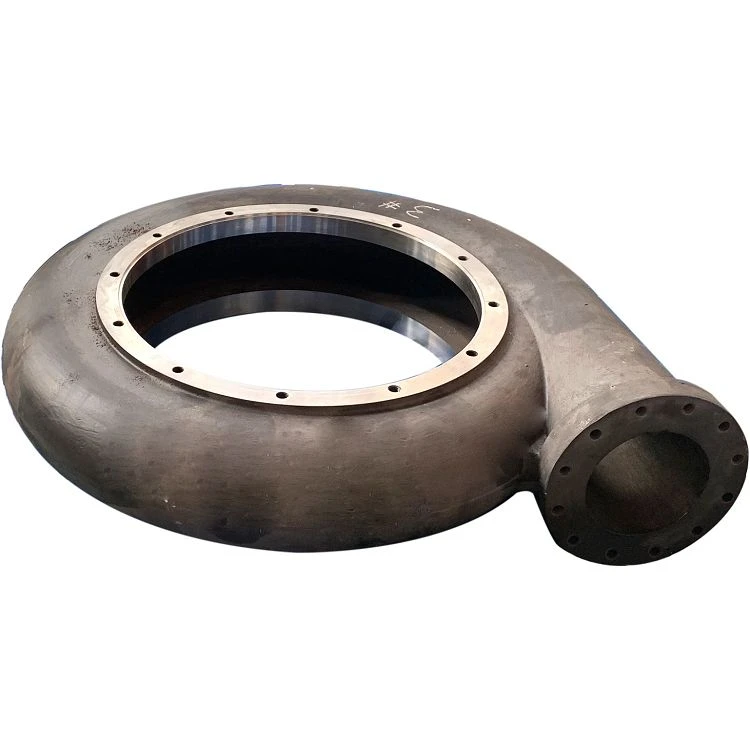
The presence of graphite nodules in ductile iron significantly improves its mechanical properties. Ductile iron with well - formed graphite nodules has higher ductility, toughness, and impact resistance compared to gray iron. For example, in applications where components are subjected to dynamic loads, such as Wear Resistant Pump Parts, the improved mechanical properties provided by magnesium - induced graphite nodule formation are essential. The spherical graphite nodules distribute stress more evenly throughout the material, reducing the likelihood of crack initiation and propagation.
Desulfurization and Deoxidation
Magnesium is an effective desulfurizer and deoxidizer in ductile iron casting. Sulfur is a common impurity in iron ore and scrap metal, and it can have a detrimental effect on the quality of the casting. High sulfur content can lead to the formation of iron sulfide, which can cause hot cracking during solidification. By adding magnesium to the molten iron, magnesium reacts with sulfur to form magnesium sulfide (MgS), which has a high melting point and can be easily removed from the molten metal as slag.
Similarly, oxygen can also cause problems in ductile iron casting. Oxygen can react with iron to form iron oxide, which can reduce the fluidity of the molten metal and lead to the formation of porosity in the casting. Magnesium reacts with oxygen to form magnesium oxide (MgO), which can also be removed as slag. The desulfurization and deoxidation processes not only improve the purity of the molten iron but also enhance the fluidity of the metal, allowing it to fill the mold cavity more completely. This is particularly important in the production of complex - shaped Stainless Steel Pump Casting and other precision castings.
Grain Refinement
In addition to graphite nodule formation and desulfurization/deoxidation, magnesium can also contribute to grain refinement in ductile iron. During solidification, the presence of magnesium can influence the growth rate and morphology of the grains. Magnesium atoms can adsorb on the grain boundaries, inhibiting the growth of grains and promoting the formation of a finer grain structure.
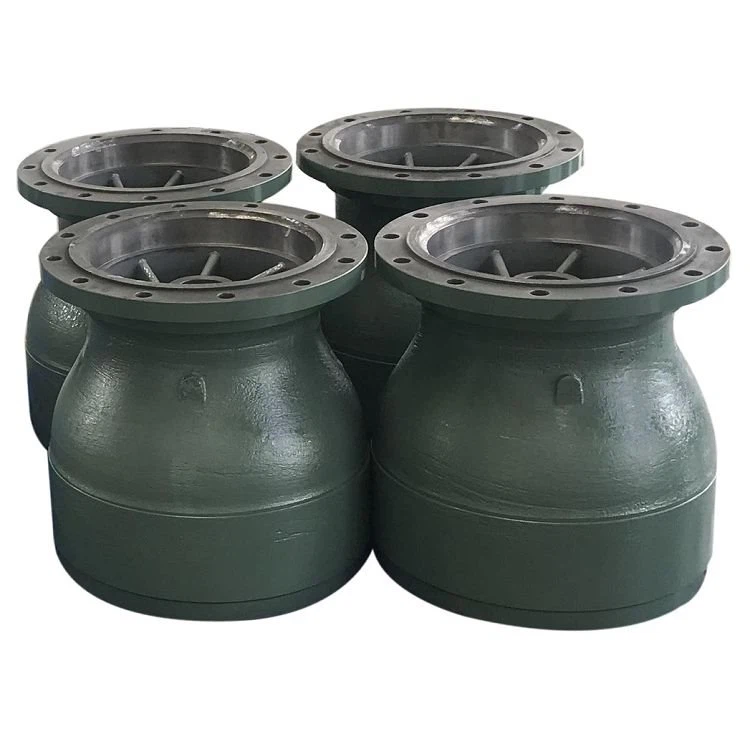
A finer grain structure in ductile iron has several advantages. It improves the mechanical properties of the material, including strength, hardness, and fatigue resistance. Finer grains also enhance the machinability of the casting, as they reduce the tendency for the material to chip or break during machining operations. This is beneficial for the production of Ductile Iron Casting components that require precise machining to meet specific dimensional and surface finish requirements.
Control of Matrix Structure
Magnesium can also have an impact on the matrix structure of ductile iron. The matrix structure refers to the metallic phase that surrounds the graphite nodules, and it can be ferrite, pearlite, or a combination of both. The addition of magnesium can influence the cooling rate and the transformation kinetics during solidification, which in turn affects the matrix structure.
By controlling the amount of magnesium added and the cooling conditions, it is possible to achieve a desired matrix structure in the ductile iron casting. For example, in applications where high ductility is required, a ferrite - rich matrix can be obtained. On the other hand, if high strength is the primary requirement, a pearlite - rich matrix can be produced. This flexibility in controlling the matrix structure allows ductile iron castings to be tailored to specific application requirements.
Challenges and Considerations
While magnesium offers many benefits in ductile iron casting, there are also some challenges and considerations that need to be addressed. One of the main challenges is the proper addition of magnesium. Magnesium is a highly reactive element, and it can react with the atmosphere and other elements in the molten iron. Therefore, it is crucial to add magnesium in a controlled manner to ensure its effective incorporation into the molten metal.
Another consideration is the potential for magnesium burn - off. Magnesium has a relatively low boiling point, and it can vaporize during the melting and pouring process. To minimize magnesium burn - off, special handling techniques and protective measures are often required. For example, magnesium can be added in the form of magnesium - bearing alloys or encapsulated in a protective coating to reduce its reaction with the atmosphere.
Conclusion
In conclusion, magnesium plays a vital role in ductile iron casting. From promoting graphite nodule formation to desulfurization, deoxidation, grain refinement, and control of the matrix structure, magnesium significantly influences the quality and properties of ductile iron castings. As a ductile iron casting supplier, we understand the importance of carefully controlling the addition of magnesium to ensure the production of high - quality castings that meet the diverse needs of our customers.
If you are in the market for high - quality ductile iron castings, we invite you to contact us for a detailed discussion of your requirements. Our team of experts is ready to provide you with customized solutions and excellent service. We look forward to the opportunity to work with you and contribute to the success of your projects.
References
- Campbell, J. (2003). Castings. Butterworth - Heinemann.
-ASM Handbook Committee. (2008). ASM Handbook Volume 15: Casting. ASM International. - Loper, C. R., Jr., & Heine, R. W. (1988). Principles of Metal Casting. McGraw - Hill.