Measuring the dimensions of a bronze pump impeller is a critical process that ensures its proper fit, performance, and efficiency within a pumping system. As a supplier of high-quality Bronze Pump Impeller, I understand the importance of accurate measurements in delivering products that meet the specific needs of our customers. In this blog post, I will share some essential techniques and considerations for measuring the dimensions of a bronze pump impeller.
Understanding the Importance of Accurate Measurements
Before delving into the measurement techniques, it's crucial to understand why accurate measurements are so important. A pump impeller's dimensions directly impact its performance, including flow rate, head, and efficiency. Incorrect dimensions can lead to reduced performance, increased energy consumption, and premature wear and tear on the impeller and other pump components. By ensuring accurate measurements, we can guarantee that our bronze pump impellers fit perfectly into the pumping system, optimizing its performance and longevity.
Tools Required for Measuring
To measure the dimensions of a bronze pump impeller accurately, you will need a few essential tools:
- Calipers: Digital or vernier calipers are used to measure the outer diameter, inner diameter, thickness, and other linear dimensions of the impeller.
- Micrometers: These are more precise than calipers and are used for measuring small dimensions, such as the thickness of the impeller blades.
- Surface Plate: A flat surface plate is used to ensure that the impeller is level and stable during measurement.
- Height Gauge: This tool is used to measure the height of the impeller and its components.
- Coordinate Measuring Machine (CMM): For more complex impeller designs, a CMM can provide highly accurate 3D measurements.
Measuring the Outer Diameter
The outer diameter of the impeller is one of the most critical dimensions. To measure it, follow these steps:
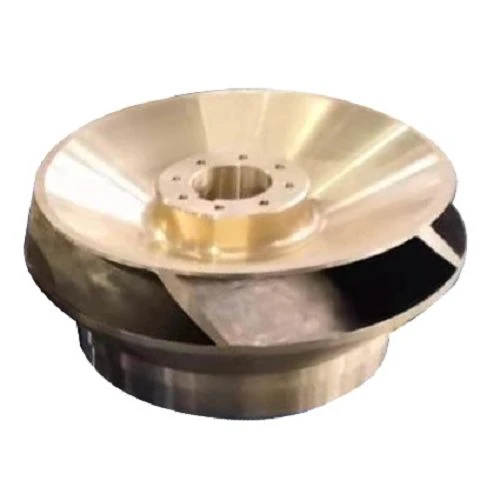
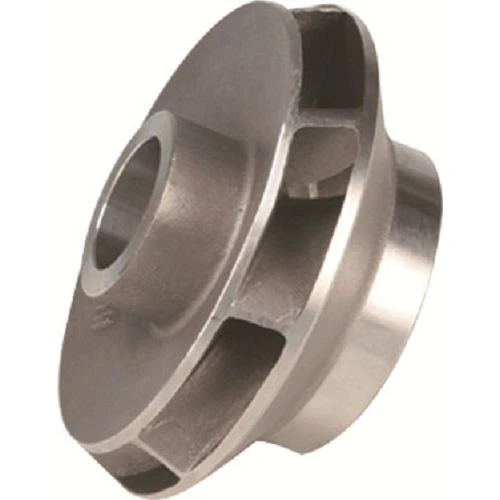
- Place the impeller on a flat surface plate to ensure it is level.
- Open the calipers and place the jaws around the outer edge of the impeller.
- Gently close the calipers until they make contact with the impeller. Make sure the calipers are perpendicular to the impeller's axis.
- Read the measurement on the caliper display. Take multiple measurements at different points around the impeller to ensure accuracy.
Measuring the Inner Diameter
The inner diameter of the impeller is important for ensuring a proper fit on the pump shaft. To measure it, use the following steps:
- Insert the caliper jaws into the center hole of the impeller.
- Gently expand the calipers until they make contact with the inner surface of the hole.
- Read the measurement on the caliper display. Again, take multiple measurements at different points to ensure accuracy.
Measuring the Thickness
The thickness of the impeller can vary depending on its design and application. To measure the thickness, use the following steps:
- Place the caliper jaws on opposite sides of the impeller at the desired location.
- Gently close the calipers until they make contact with the impeller.
- Read the measurement on the caliper display. Measure the thickness at multiple points to ensure consistency.
Measuring the Blade Dimensions
The dimensions of the impeller blades are crucial for determining the impeller's performance. To measure the blade dimensions, use the following steps:
- Use a micrometer to measure the thickness of the blade at different points along its length.
- Use a caliper to measure the width of the blade at the tip and the root.
- Measure the angle of the blade using a protractor or a specialized blade angle measuring tool.
Measuring the Impeller Height
The height of the impeller is important for ensuring proper clearance within the pump housing. To measure the height, use the following steps:
- Place the impeller on a flat surface plate.
- Use a height gauge to measure the distance from the surface plate to the top of the impeller.
- Measure the height at multiple points around the impeller to ensure accuracy.
Considerations for Measuring Complex Impeller Designs
Some bronze pump impellers have complex designs, such as curved blades or irregular shapes. In these cases, additional measurement techniques may be required:
- 3D Scanning: This technique uses a 3D scanner to create a digital model of the impeller. The digital model can then be used to measure the dimensions accurately.
- CMM Measurement: As mentioned earlier, a CMM can provide highly accurate 3D measurements of complex impeller designs.
- Profile Projector: A profile projector can be used to project the image of the impeller onto a screen, allowing for easy measurement of the blade profiles and other complex features.
Quality Control and Documentation
Once the measurements have been taken, it's important to perform quality control checks to ensure that the impeller meets the required specifications. Compare the measured dimensions with the design drawings or specifications provided by the customer. If any dimensions are out of tolerance, the impeller may need to be reworked or rejected.
It's also important to document all the measurements taken. This documentation can be used for quality control purposes, as well as for future reference. Keep a record of the measurement tools used, the measurement results, and the date of measurement.
Conclusion
Measuring the dimensions of a bronze pump impeller is a precise and critical process that requires the use of appropriate tools and techniques. By following the steps outlined in this blog post, you can ensure that your bronze pump impellers are measured accurately, meeting the specific needs of your customers. As a Bronze Pump Impeller supplier, we are committed to providing high-quality products that are manufactured to the highest standards. If you have any questions or need assistance with measuring your bronze pump impellers, please don't hesitate to contact us. We are here to help you find the right solution for your pumping needs.
In addition to bronze pump impellers, we also offer Cast Iron Pump Impeller and Stainless Steel Pump Impeller options. These materials offer different properties and advantages, depending on your specific application. Contact us today to discuss your requirements and explore our full range of pump impeller products.
References
- "Pump Handbook" by Igor J. Karassik, Joseph P. Messina, Paul Cooper, and Charles C. Heald.
- "Centrifugal Pumps: Design and Application" by Heinz P. Bloch and Fred K. Geitner.
- "Measurement Systems: Application and Design" by Donald G. Fink and Daniel Christiansen.