Hey there! As a supplier of sea water pumps, I often get asked about how to measure the performance of these pumps. It's a crucial topic, especially for those who rely on these pumps for various applications, whether it's in marine vessels, desalination plants, or offshore oil rigs. In this blog, I'll share some practical ways to measure the performance of a sea water pump.
Flow Rate
One of the most important aspects of a sea water pump's performance is its flow rate. Flow rate refers to the volume of water that the pump can move in a given amount of time. It's usually measured in gallons per minute (GPM) or cubic meters per hour (m³/h).
To measure the flow rate, you can use a flow meter. There are different types of flow meters available, such as electromagnetic flow meters, ultrasonic flow meters, and turbine flow meters. Each type has its own advantages and disadvantages, so you need to choose the one that suits your specific needs.
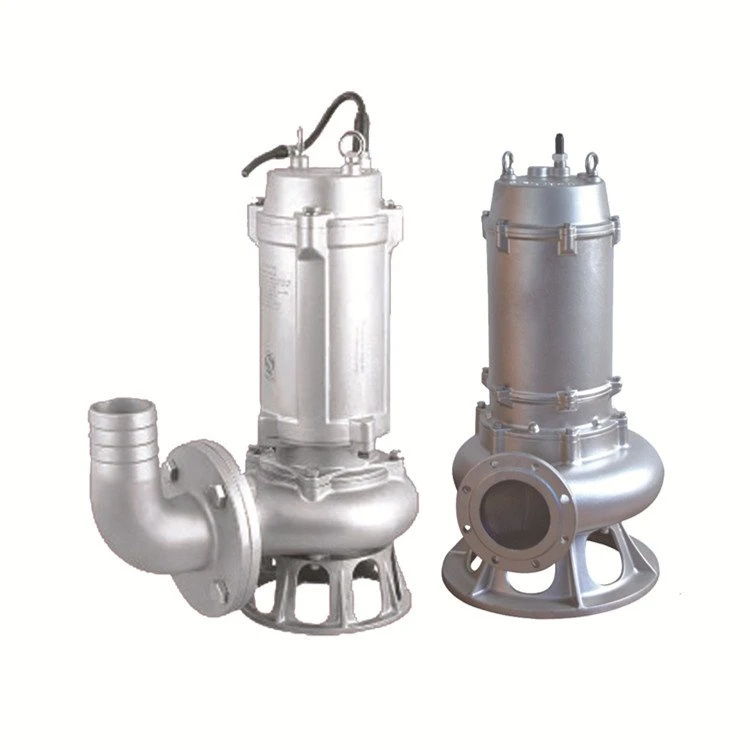
For example, if you have a Submersible Sea Water Pump, an ultrasonic flow meter might be a good choice. It can be installed on the outside of the pipe, which means you don't have to cut into the pipe to install it. This is especially useful if you're dealing with a large or difficult - to - access pipeline.
Once you've installed the flow meter, you can simply read the flow rate directly from the meter's display. Make sure to take multiple readings over a period of time to get an accurate average flow rate. This is because the flow rate can vary depending on factors such as the pump's speed, the pressure in the system, and the viscosity of the sea water.
Head
Another key performance metric is the head. Head refers to the height that the pump can lift the water or the pressure that the pump can generate. It's measured in feet (ft) or meters (m) of water column.
To measure the head, you'll need to use pressure gauges. You should install a pressure gauge at the inlet and the outlet of the pump. The difference between the outlet pressure and the inlet pressure, along with the elevation difference between the two points, will give you the total head of the pump.
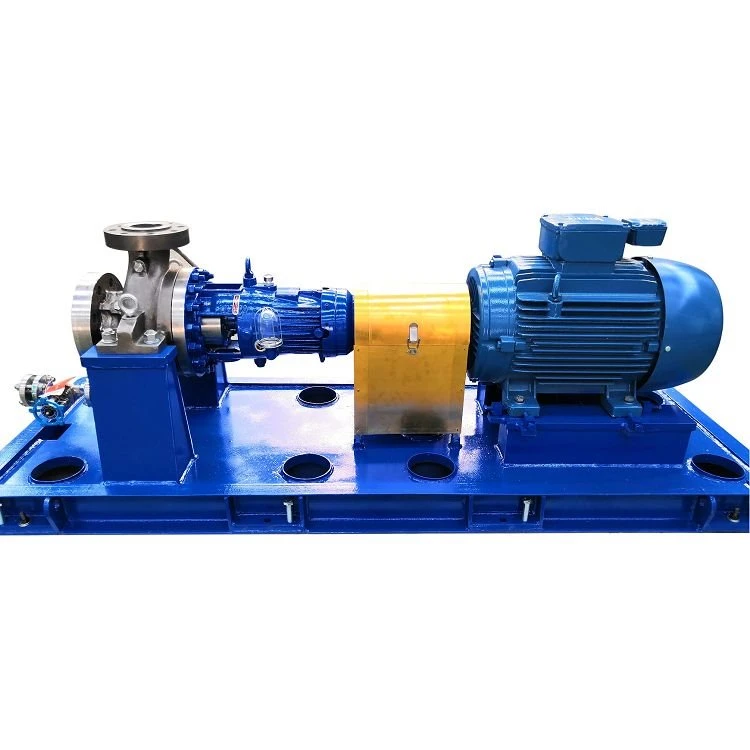
For instance, if you have a Centrifugal Sea Water Pump, accurate head measurement is crucial. Centrifugal pumps work by converting the rotational energy of the impeller into kinetic energy and then into pressure energy. If the head is not measured correctly, you might end up over - or under - sizing the pump for your application.
Keep in mind that the head can also be affected by factors like friction in the pipes, the presence of valves and fittings, and the density of the sea water. So, when calculating the head, you need to take these factors into account.
Efficiency
Efficiency is a measure of how well the pump converts the input power (usually electrical power) into useful hydraulic power. It's expressed as a percentage.
To calculate the efficiency of a sea water pump, you first need to measure the input power and the output power. The input power can be measured using a power meter, which measures the electrical power consumed by the pump motor.
The output power, on the other hand, can be calculated using the formula:
[P_{out}=\rho gQH]
where (\rho) is the density of the sea water, (g) is the acceleration due to gravity, (Q) is the flow rate, and (H) is the head.
Once you have the input power ((P_{in})) and the output power ((P_{out})), you can calculate the efficiency ((\eta)) using the formula:
[\eta=\frac{P_{out}}{P_{in}}\times100%]
A high - efficiency pump means that you're getting more work done with less energy consumption. This not only saves you money on your energy bills but also reduces your environmental impact.
NPSH (Net Positive Suction Head)
NPSH is a critical parameter, especially for sea water pumps. It refers to the minimum pressure required at the suction side of the pump to prevent cavitation. Cavitation is a phenomenon where bubbles form in the liquid due to low pressure, and when these bubbles collapse, they can cause damage to the pump impeller and other components.
To measure the NPSH available ((NPSH_A)) at the pump inlet, you need to measure the pressure at the suction side, the vapor pressure of the sea water, and the velocity head at the suction. The formula for (NPSH_A) is:
[NPSH_A = P_{s}/\rho g+V_{s}^{2}/2g - P_{v}/\rho g]
where (P_{s}) is the suction pressure, (V_{s}) is the velocity at the suction, and (P_{v}) is the vapor pressure of the sea water.
The pump manufacturer will specify the NPSH required ((NPSH_R)) for the pump to operate without cavitation. You need to make sure that (NPSH_A\gt NPSH_R) to avoid cavitation.
Noise and Vibration
Although not as straightforward as the other performance metrics, noise and vibration can also give you an indication of the pump's performance. Excessive noise and vibration can be a sign of problems such as misalignment, bearing wear, or cavitation.
You can use a sound level meter to measure the noise level of the pump. A normal operating sea water pump should produce a relatively low - level, consistent noise. If you notice a sudden increase in the noise level, it's a red flag that something might be wrong.
Vibration can be measured using a vibration sensor. The sensor can detect the amplitude and frequency of the vibrations. By analyzing the vibration data, you can identify potential issues early on and take corrective action before they lead to major pump failures.
Conclusion
Measuring the performance of a sea water pump is a multi - faceted process that involves measuring flow rate, head, efficiency, NPSH, and also paying attention to noise and vibration. By accurately measuring these parameters, you can ensure that your sea water pump is operating at its best, which will save you money, increase the lifespan of the pump, and improve the overall reliability of your system.
If you're in the market for a high - quality sea water pump or need more information on how to measure pump performance, don't hesitate to reach out for a discussion. We're here to help you find the best pump solution for your specific needs.
References
- "Pump Handbook" by Igor Karassik
- "Centrifugal Pumps: Design and Application" by Heinz P. Bloch