As a supplier of Pump Shaft, I understand the critical importance of ensuring the performance of pump shafts. A well - performing pump shaft is the backbone of any pumping system, whether it's used in industrial applications, water treatment plants, or even in Sea Water Pump Parts. In this blog, I'll share some key methods and considerations for testing the performance of a pump shaft.
Visual Inspection
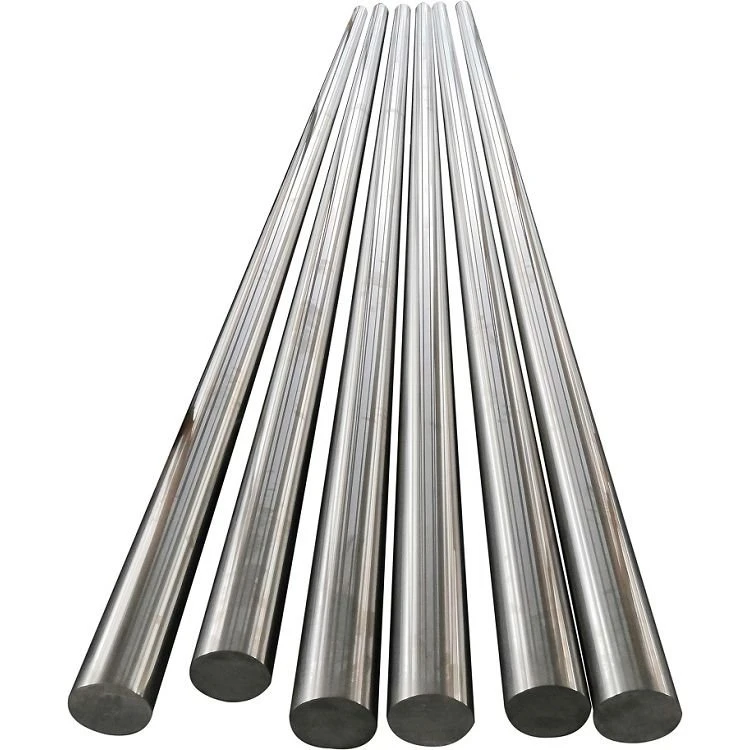
The first step in testing a pump shaft is a thorough visual inspection. This may seem basic, but it can reveal a lot about the shaft's condition. Check for any visible cracks, scratches, or deformities on the surface of the shaft. Cracks can propagate over time, leading to catastrophic failure of the shaft. Scratches, especially deep ones, can cause stress concentrations and may also affect the fit of other components on the shaft.
Inspect the shaft's straightness. A bent shaft can cause uneven wear on bearings and seals, and can also lead to vibration in the pump system. You can use a straightedge or a laser alignment tool to check the straightness. Place the straightedge along the length of the shaft and look for any gaps between the straightedge and the shaft surface. A laser alignment tool provides a more accurate measurement and can detect even minor deviations from straightness.
Dimensional Measurement
Accurate dimensional measurement is crucial for ensuring that the pump shaft meets the required specifications. Measure the diameter of the shaft at different points along its length. Any significant variation in diameter can affect the fit of the bearings and other components, leading to premature wear and reduced performance.
Use precision measuring tools such as micrometers or calipers. Micrometers offer a high level of accuracy and are suitable for measuring small - diameter shafts. Calipers are more versatile and can be used for both internal and external measurements. Measure the length of the shaft as well, as an incorrect length can also cause problems in the pump assembly.
In addition to the overall dimensions, also check the keyways and splines on the shaft. The width, depth, and length of the keyways and splines should be within the specified tolerances. Incorrect keyway or spline dimensions can lead to improper torque transmission and may cause the shaft to slip under load.
Material Testing
The material of the pump shaft plays a vital role in its performance. Different applications require different materials based on factors such as corrosion resistance, strength, and hardness. Conduct material testing to ensure that the shaft is made of the correct material and that it has the desired properties.
One common method of material testing is hardness testing. Hardness is an important property as it affects the shaft's resistance to wear and deformation. There are several hardness testing methods available, such as the Brinell, Rockwell, and Vickers hardness tests. Each method has its own advantages and is suitable for different types of materials and shaft sizes.
Chemical analysis can also be performed to determine the composition of the material. This can be done using techniques such as spectroscopy. By analyzing the chemical composition, you can ensure that the shaft is made of the correct alloy and that it contains the appropriate amounts of elements such as carbon, chromium, and nickel.
Dynamic Balancing
A balanced pump shaft is essential for smooth operation and to reduce vibration in the pump system. Unbalanced shafts can cause excessive wear on bearings, seals, and other components, and can also lead to noise and reduced pump efficiency.
Dynamic balancing involves rotating the shaft at high speeds and measuring the unbalance forces. Specialized balancing machines are used for this purpose. These machines can detect both static and dynamic unbalance. Static unbalance occurs when the center of gravity of the shaft is not on its axis of rotation, while dynamic unbalance is caused by uneven distribution of mass along the length of the shaft.
Once the unbalance is detected, corrective measures can be taken. This usually involves adding or removing material from specific locations on the shaft. For example, small weights can be added to the shaft at the appropriate points to counteract the unbalance forces.
Torque Testing
Torque testing is used to determine the shaft's ability to transmit torque without failure. The pump shaft must be able to handle the torque generated by the motor and transfer it to the impeller or other pumping components.
Use a torque wrench to apply a known amount of torque to the shaft. Measure the angle of twist of the shaft under the applied torque. The relationship between the applied torque and the angle of twist can be used to calculate the shaft's torsional stiffness. A shaft with low torsional stiffness may deform under load, leading to reduced performance and potential failure.
In addition to static torque testing, dynamic torque testing can also be performed. This involves applying a varying torque to the shaft while it is rotating. Dynamic torque testing can simulate real - world operating conditions and can provide more accurate information about the shaft's performance under load.
Fatigue Testing
Pump shafts are often subjected to cyclic loading during operation, which can lead to fatigue failure over time. Fatigue failure occurs when the shaft cracks and eventually breaks due to repeated stress cycles.
Fatigue testing involves subjecting the shaft to a large number of stress cycles at a specified stress level. The test can be performed using a fatigue testing machine. The machine applies a cyclic load to the shaft, simulating the actual operating conditions.
Monitor the shaft during the fatigue test for the development of cracks. Non - destructive testing methods such as ultrasonic testing or magnetic particle testing can be used to detect cracks at an early stage. By performing fatigue testing, you can determine the fatigue life of the shaft and ensure that it can withstand the expected number of stress cycles in its intended application.
Corrosion Testing
In applications where the pump shaft is exposed to corrosive environments, such as in Sea Water Pump Parts, corrosion testing is essential. Corrosion can weaken the shaft and reduce its performance over time.
There are several corrosion testing methods available. One common method is the salt spray test. In this test, the shaft is exposed to a salt - laden mist for a specified period of time. The salt spray simulates the corrosive effects of a marine environment. After the test, the shaft is inspected for signs of corrosion, such as rust or pitting.
Another method is immersion testing, where the shaft is immersed in a corrosive solution for a certain period. This can provide more accurate information about the long - term corrosion resistance of the shaft. Based on the results of the corrosion test, appropriate surface treatments or coatings can be applied to the shaft to improve its corrosion resistance.
Conclusion
Testing the performance of a pump shaft is a comprehensive process that involves multiple steps and techniques. By conducting visual inspection, dimensional measurement, material testing, dynamic balancing, torque testing, fatigue testing, and corrosion testing, you can ensure that the pump shaft meets the required specifications and performs reliably in its intended application.
As a Pump Shaft supplier, we are committed to providing high - quality pump shafts that have been thoroughly tested. If you are in the market for pump shafts or have any questions about pump shaft performance testing, we would be more than happy to assist you. Contact us to discuss your specific requirements and start a procurement negotiation.
References
- "Mechanical Engineering Design" by Joseph E. Shigley and Charles R. Mischke.
- "Materials Science and Engineering: An Introduction" by William D. Callister Jr. and David G. Rethwisch.
- "Pump Handbook" by Igor J. Karassik, Joseph P. Messina, Paul Cooper, and Charles C. Heald.