Hey there! As a supplier of Ductile Iron Casting, I often get asked about the fatigue life of this amazing material. So, I thought I'd sit down and write a blog post to share what I know.
First off, let's talk a bit about what Ductile Iron Casting is. Ductile iron, also known as nodular or spheroidal graphite iron, is a type of cast iron. It's got graphite in the form of nodules, which gives it some really cool properties compared to regular Cast Iron Casting. It's stronger, more ductile, and can handle a lot more stress without breaking.
Now, the fatigue life of Ductile Iron Casting is super important. Fatigue is basically the weakening of a material caused by repeated loading and unloading. Think about a metal spoon. If you bend it back and forth a few times, it'll eventually break. That's fatigue in action. In the case of Ductile Iron Casting, understanding its fatigue life helps us figure out how long a part made from it will last under real - world conditions.
There are a bunch of factors that can affect the fatigue life of Ductile Iron Casting. One of the big ones is the microstructure. The size, shape, and distribution of those graphite nodules I mentioned earlier play a huge role. If the nodules are well - formed and evenly distributed, the casting will have better fatigue resistance. For example, a casting with large, irregularly shaped nodules might crack more easily under cyclic loading compared to one with small, spherical nodules.
The surface finish of the casting is another key factor. A rough surface can act as a stress concentrator. Stress concentrations are like little weak spots where cracks can start to form. So, if a Ductile Iron Casting has a rough surface, it's more likely to develop fatigue cracks earlier. That's why we often take extra steps to make sure the surface of our Ductile Iron Casting parts is smooth.
The loading conditions also matter a ton. If a part made from Ductile Iron Casting is subjected to high - amplitude, short - cycle loads, it'll experience more fatigue damage compared to a part with low - amplitude, long - cycle loads. For instance, in a machine where a Ductile Iron Casting component is constantly being hit hard with a high - force impact, the fatigue life will be shorter than if it's just experiencing a gentle, continuous vibration.
Another factor is the environment. If the casting is exposed to corrosive substances, like saltwater or certain chemicals, it can accelerate the fatigue process. Corrosion can eat away at the surface of the casting, creating pits and flaws that act as stress raisers. This makes it easier for cracks to form and grow.
Now, how do we measure the fatigue life of Ductile Iron Casting? Well, there are a few methods. One common way is through fatigue testing. We take samples of the casting and subject them to cyclic loading in a testing machine. We keep track of how many cycles it takes for the sample to fail. This gives us an idea of the fatigue life under specific loading conditions.
We can also use computer simulations. With advanced software, we can model the behavior of Ductile Iron Casting under different loading scenarios. This helps us predict the fatigue life without having to do a whole bunch of physical testing. It's a really useful tool, especially when we're designing new parts.
In the real world, Ductile Iron Casting is used in a wide range of applications. In the automotive industry, it's used for parts like crankshafts and suspension components. These parts need to have a long fatigue life because they're constantly under stress as the vehicle moves. In the construction industry, Ductile Iron Casting is used for pipes and fittings. These need to be able to withstand the pressure and vibrations over a long period of time.
Compared to other materials like Stainless Steel Pump Casting, Ductile Iron Casting has its own advantages when it comes to fatigue life. Stainless steel is great for corrosion resistance, but Ductile Iron Casting can often offer better fatigue performance in certain applications, especially when cost is a factor. Ductile iron is generally more affordable than stainless steel, and with proper design and processing, it can have a fatigue life that meets the requirements of many projects.
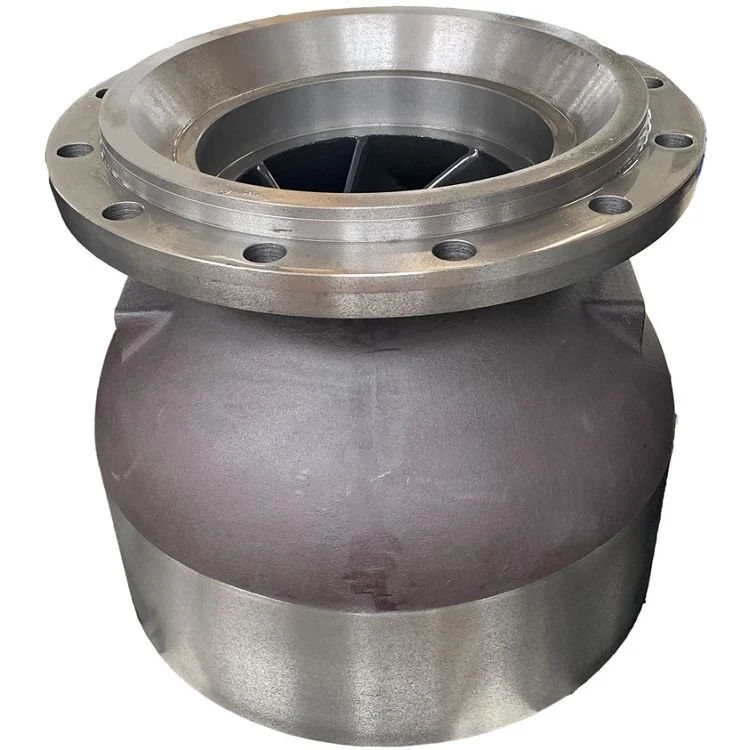
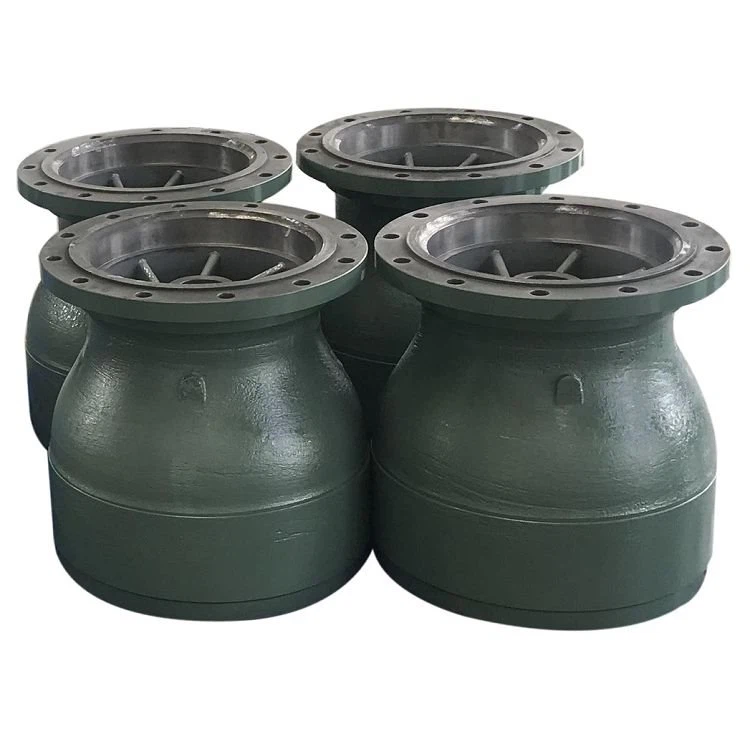
As a supplier of Ductile Iron Casting, we take all these factors into account when we're making our products. We use high - quality raw materials to ensure a good microstructure. We pay close attention to the surface finish during the manufacturing process. And we work closely with our customers to understand their specific loading and environmental conditions so we can design parts with the right fatigue life.
If you're in the market for Ductile Iron Casting and you're concerned about the fatigue life of the parts you need, don't hesitate to reach out. We've got the expertise and experience to provide you with high - quality castings that will meet your requirements. Whether you need a small batch of custom - designed parts or a large - scale production run, we're here to help. Contact us to start a conversation about your project and let's work together to get you the best Ductile Iron Casting solutions.
References
-ASM Handbook Volume 1: Properties and Selection: Irons, Steels, and High - Performance Alloys
- Fatigue of Materials by Norman E. Dowling