Centrifugal pumps are a cornerstone in various industrial and commercial applications, from water supply systems to chemical processing plants. As a leading centrifugal pump supplier, we often encounter questions regarding the concept of pump head and its calculation. In this blog, we will delve into what the head of a centrifugal pump is and how it can be calculated.
Understanding the Concept of Pump Head
The head of a centrifugal pump is a crucial parameter that represents the energy imparted by the pump to the fluid. It is often misunderstood as pressure, but in fact, head is a measure of energy per unit weight of the fluid, typically expressed in meters (m) or feet (ft) of fluid column.
To put it simply, the pump head is the height to which the pump can lift a fluid above a reference point. This reference point is usually the centerline of the pump. It takes into account several factors, including the elevation difference, friction losses in the piping system, and the velocity of the fluid.
There are three main types of head associated with a centrifugal pump:
1. Static Head
Static head is the vertical distance between the suction and discharge points of the fluid. It can be further divided into static suction head and static discharge head.
-
Static Suction Head: This is the vertical distance from the centerline of the pump to the free surface of the fluid in the suction tank when the fluid level is above the pump centerline. If the fluid level is below the pump centerline, it is called a static suction lift.
-
Static Discharge Head: This is the vertical distance from the centerline of the pump to the free surface of the fluid in the discharge tank.
2. Friction Head
Friction head accounts for the energy losses due to friction as the fluid flows through the pipes, valves, fittings, and other components of the piping system. These losses are influenced by factors such as the pipe diameter, length, roughness, and the flow rate of the fluid. The friction head can be calculated using various empirical formulas, such as the Darcy - Weisbach equation or the Hazen - Williams equation.
3. Velocity Head
Velocity head is the energy associated with the fluid's motion. It is proportional to the square of the fluid velocity and can be calculated using the formula (h_v=\frac{v^2}{2g}), where (h_v) is the velocity head, (v) is the fluid velocity, and (g) is the acceleration due to gravity.
Calculating the Total Head of a Centrifugal Pump
The total head of a centrifugal pump ((H_T)) is the sum of the static head ((H_s)), friction head ((H_f)), and velocity head ((H_v)). Mathematically, it can be expressed as:
(H_T = H_s + H_f+ H_v)
Let's break down the calculation process step by step:
Step 1: Determine the Static Head
First, measure the vertical distances between the suction and discharge points. If the fluid is being pumped from a lower level to a higher level, the static head is the difference in elevation. For example, if the fluid is being pumped from a tank 5 meters below the pump centerline to a tank 15 meters above the pump centerline, the static head (H_s=15 - (- 5)=20) meters.
Step 2: Calculate the Friction Head
To calculate the friction head, you need to know the pipe characteristics and the flow rate. The Darcy - Weisbach equation is a widely used formula for calculating friction losses in pipes:
(H_f = f\frac{L}{D}\frac{v^2}{2g})
where (f) is the Darcy friction factor, (L) is the length of the pipe, (D) is the pipe diameter, (v) is the fluid velocity, and (g) is the acceleration due to gravity.
The friction factor (f) depends on the Reynolds number ((Re)) and the relative roughness of the pipe ((\epsilon/D)). For laminar flow ((Re < 2000)), (f=\frac{64}{Re}). For turbulent flow, the friction factor can be determined using the Moody chart or empirical correlations.
Step 3: Calculate the Velocity Head
As mentioned earlier, the velocity head can be calculated using the formula (h_v=\frac{v^2}{2g}). First, calculate the fluid velocity (v) using the flow rate (Q) and the cross - sectional area of the pipe (A): (v=\frac{Q}{A}).
Step 4: Calculate the Total Head
Once you have determined the static head, friction head, and velocity head, you can calculate the total head by adding them together.
Importance of Accurate Head Calculation
Accurate head calculation is essential for proper pump selection. If the calculated head is too low, the pump may not be able to deliver the required flow rate or lift the fluid to the desired height. On the other hand, if the calculated head is too high, the pump may operate inefficiently, leading to increased energy consumption and premature wear of the pump components.
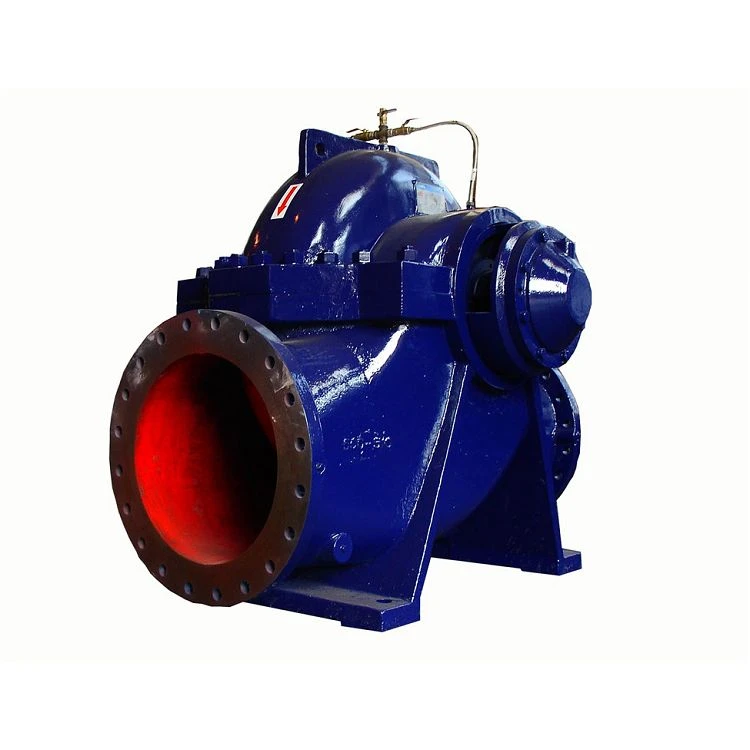
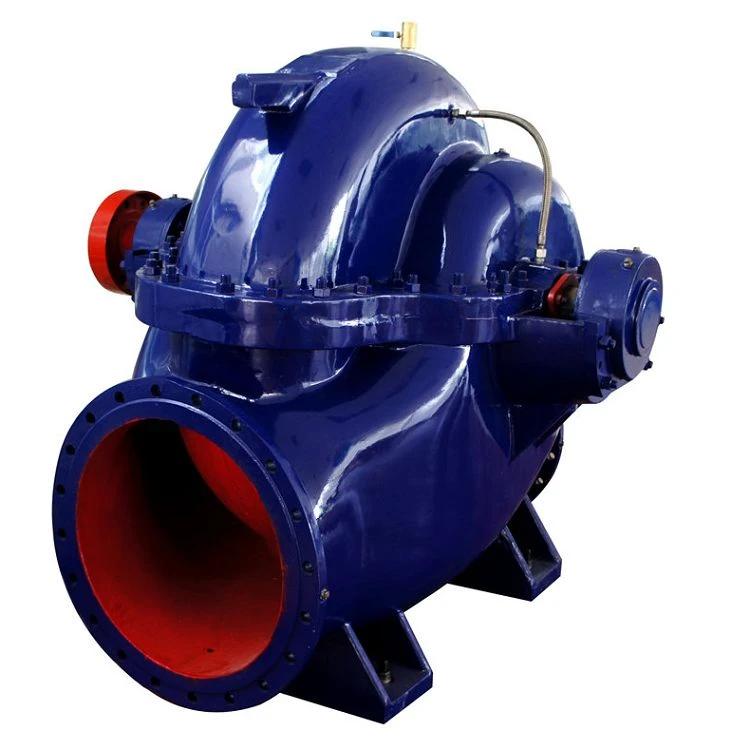
As a centrifugal pump supplier, we offer a wide range of pumps suitable for different head requirements. For example, our Horizontal Split Casing Centrifugal Pump is designed for high - flow, medium - head applications, while our Single Stage Double - Suction Centrifugal Pump is ideal for large - scale water supply and irrigation systems. We also provide Slurry Pump for handling abrasive and viscous fluids.
Factors Affecting Pump Head
Several factors can affect the head of a centrifugal pump:
1. Pump Speed
The head of a centrifugal pump is proportional to the square of the pump speed. Increasing the pump speed will increase the head, while decreasing the speed will reduce the head. However, changing the pump speed also affects the flow rate and power consumption.
2. Impeller Diameter
The head of a centrifugal pump is also proportional to the square of the impeller diameter. A larger impeller diameter will result in a higher head, but it may also require more power to operate.
3. Fluid Properties
The density and viscosity of the fluid can affect the pump head. A more viscous fluid will experience higher friction losses, resulting in a lower effective head. Similarly, a fluid with a higher density will require more energy to lift, reducing the pump's performance.
Conclusion
In conclusion, the head of a centrifugal pump is a critical parameter that determines the pump's ability to lift and move fluids. By understanding the concept of head and how to calculate it accurately, you can select the right pump for your application, ensuring optimal performance and energy efficiency.
As a trusted centrifugal pump supplier, we are committed to providing high - quality pumps and technical support. If you have any questions about pump head calculation or need assistance in selecting the right pump for your project, please feel free to contact us for a detailed discussion and procurement negotiation.
References
- Crane, D. S. (1988). Flow of Fluids Through Valves, Fittings, and Pipe. Technical Paper No. 410. Crane Co.
- Streeter, V. L., & Wylie, E. B. (1979). Fluid Mechanics. McGraw - Hill.
- Daugherty, R. L., Franzini, J. B., & Finnemore, E. J. (1985). Fluid Mechanics With Engineering Applications. McGraw - Hill.