As a supplier of Submersible Motors, I've had my fair share of discussions with customers about various aspects of these motors. One question that pops up quite often is, "What is the influence of cable length on a submersible motor?" Well, let's dive right into it.
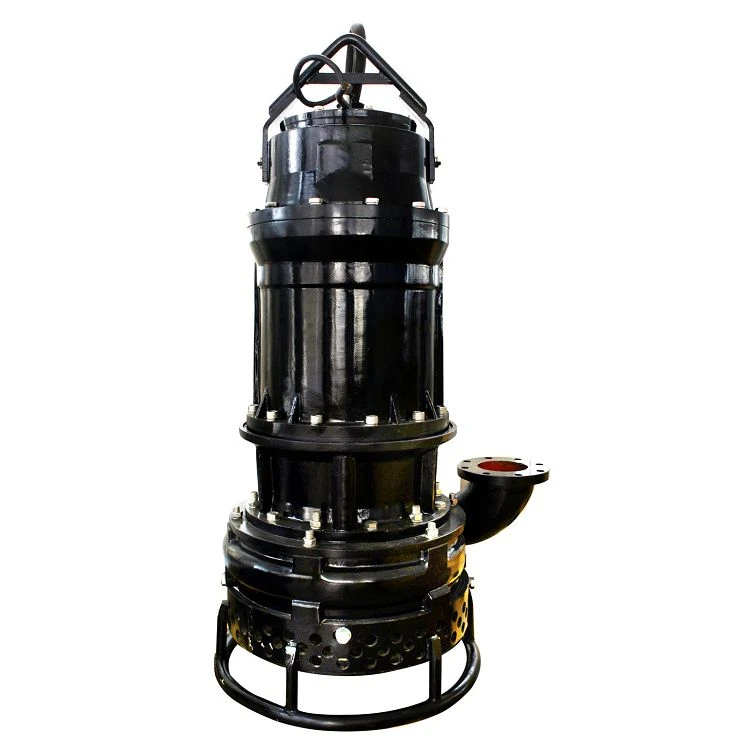
First off, we need to understand the basic setup of a submersible motor. These motors are designed to operate underwater, and they're used in a variety of applications, from pumping water out of mines to handling slurry in industrial settings. For instance, our Mine Flameproof Submersible Sand Pump is a great example of a product that relies on a high - quality submersible motor to get the job done.
Now, let's talk about cable length. The cable is the lifeline of the submersible motor, providing the electrical power it needs to run. When we increase the length of the cable, a few things start to happen.

One of the most significant effects is voltage drop. You see, every cable has a certain amount of resistance. According to Ohm's Law (V = IR, where V is voltage, I is current, and R is resistance), as the length of the cable increases, so does its resistance. When current flows through a cable with higher resistance, there's a drop in voltage along the length of the cable.
A voltage drop can have some serious consequences for a submersible motor. If the voltage at the motor terminals is lower than the rated voltage, the motor may not be able to generate the required torque. This means that the motor might struggle to start or may run at a slower speed than normal. In some cases, it could even overheat. Overheating is a big no - no because it can damage the insulation of the motor windings, leading to a shorter lifespan of the motor.
Let's say you're using our Submersible Motor in a deep - well pumping application. If the cable length from the power source to the motor is too long, you might notice that the motor takes longer to start or that the water flow rate is lower than expected. This is likely due to the voltage drop caused by the long cable.
Another aspect to consider is power loss. Power (P) is given by the formula P = VI. When there's a voltage drop (V decreases), and assuming the current (I) remains relatively constant, the power delivered to the motor also decreases. This means that the motor has less power available to do its job, resulting in reduced efficiency.
In addition to voltage drop and power loss, long cables can also be more susceptible to interference. Electrical interference can cause fluctuations in the power supply to the motor, which can lead to erratic motor operation. This interference can come from various sources, such as nearby electrical equipment or lightning strikes.
However, it's not all doom and gloom. There are ways to mitigate the negative effects of long cable lengths. One option is to use a cable with a larger cross - sectional area. A cable with a larger cross - section has lower resistance, which helps to reduce voltage drop. For example, if you're dealing with a long - distance installation, you might want to upgrade from a standard - gauge cable to a thicker one.
Another solution is to install a voltage regulator. A voltage regulator can help to maintain a stable voltage at the motor terminals, even if there's a voltage drop in the cable. This ensures that the motor receives the correct voltage and can operate at its optimal performance.
It's also important to properly size the cable based on the motor's power requirements and the distance between the power source and the motor. As a supplier, we often provide guidance to our customers on cable sizing to ensure that they get the best performance out of our Submersible Motors.
Let's take a look at a real - world example. Suppose you're using a Submersible Slurry Pump in a mining operation. The pump is located deep underground, and the power source is on the surface. The long cable run from the surface to the pump can cause significant voltage drop if not properly addressed. By working with us, we can help you select the right cable size and, if necessary, recommend a voltage regulator to ensure that the pump operates smoothly and efficiently.
In conclusion, cable length has a substantial influence on a submersible motor. Voltage drop, power loss, and interference are all potential issues that can arise from using a long cable. But with the right precautions, such as using a larger - gauge cable and installing a voltage regulator, these problems can be minimized.
If you're in the market for a submersible motor or have any questions about cable length and its impact on motor performance, don't hesitate to reach out. We're here to help you make the best choice for your application and ensure that your equipment runs smoothly for years to come.
References
- Ohm, G. S. (1827). Die galvanische Kette, mathematisch bearbeitet. Berlin: T. H. Riemann.
- Electrical Engineering Handbook, various editions.