As a seasoned supplier in the pump casting industry, I've witnessed firsthand the critical role that mechanical properties play in the performance and longevity of pump castings. In this blog, I'll delve into the key mechanical property requirements for pump casting, sharing insights based on years of experience and industry knowledge.
Strength and Durability
One of the primary mechanical property requirements for pump casting is strength. Pumps are often subjected to high pressures, especially in industrial applications where they may be used to transport fluids over long distances or at high flow rates. Therefore, the casting material must be able to withstand these pressures without deforming or failing.
Tensile strength is a crucial measure of a material's ability to resist being pulled apart. For pump castings, a high tensile strength ensures that the pump can operate under high-pressure conditions without experiencing catastrophic failure. Yield strength, on the other hand, indicates the point at which a material begins to deform permanently. A high yield strength is essential to prevent the pump from deforming under normal operating conditions.
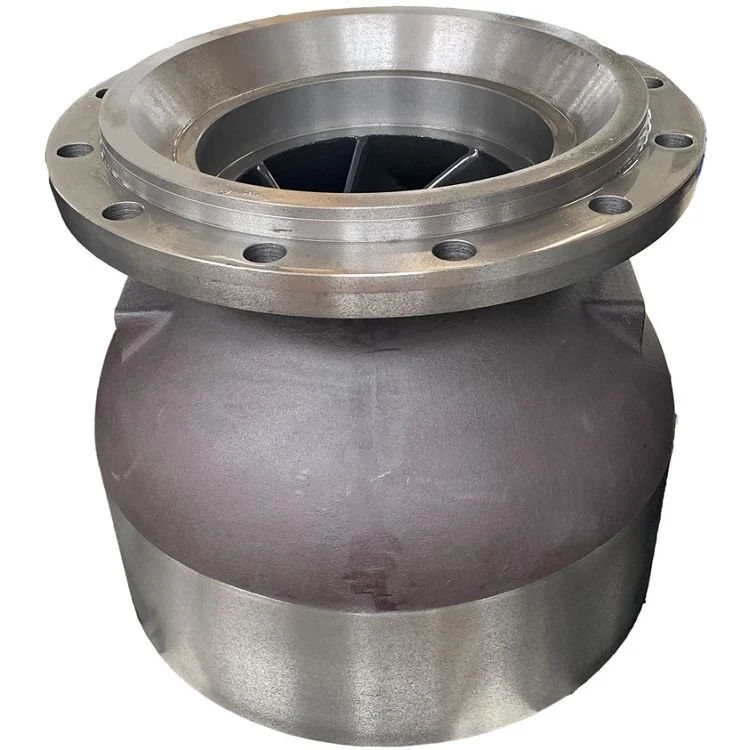
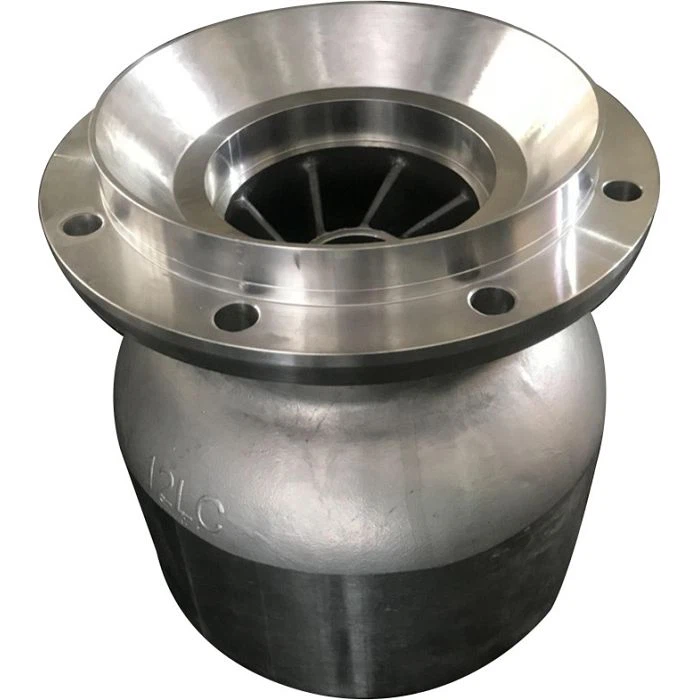
In addition to strength, durability is also a key consideration. Pumps are often exposed to harsh environments, including corrosive chemicals, abrasive particles, and high temperatures. The casting material must be able to resist these environmental factors to ensure a long service life. For example, Stainless Steel Pump Casting is a popular choice for applications where corrosion resistance is required. Stainless steel contains chromium, which forms a protective oxide layer on the surface of the material, preventing corrosion and rust.
Hardness and Wear Resistance
Hardness is another important mechanical property for pump castings. A hard material is more resistant to wear and abrasion, which is particularly important in pumps that handle abrasive fluids or solids. For example, pumps used in mining or wastewater treatment applications may be exposed to sand, gravel, or other abrasive particles. A hard casting material can withstand the impact of these particles without wearing down quickly, ensuring a longer service life for the pump.
There are several ways to measure hardness, including the Brinell, Rockwell, and Vickers hardness tests. The choice of hardness test depends on the material and the application. For pump castings, a hardness value within a specific range is often specified to ensure optimal performance.
In addition to hardness, wear resistance is also a critical property. Wear resistance can be improved by using materials with a high hardness, as well as by applying surface treatments such as coatings or heat treatments. For example, Cast Iron Casting is known for its excellent wear resistance, making it a popular choice for pump components that are subject to high levels of wear.
Ductility and Toughness
Ductility is the ability of a material to deform plastically before fracturing. In the context of pump castings, ductility is important because it allows the pump to absorb energy and deform under stress without breaking. This is particularly important in applications where the pump may be subjected to sudden shocks or vibrations.
Toughness is closely related to ductility and is a measure of a material's ability to absorb energy and resist fracture. A tough material can withstand high levels of stress and strain without breaking, making it ideal for pump castings that are exposed to harsh operating conditions.
For example, Ductile Iron Casting is known for its high ductility and toughness. Ductile iron contains graphite nodules, which give the material its unique properties. These nodules act as stress concentrators, allowing the material to deform plastically before fracturing.
Fatigue Resistance
Pumps often operate under cyclic loading conditions, which can lead to fatigue failure over time. Fatigue failure occurs when a material is subjected to repeated stress cycles, causing cracks to initiate and propagate until the material eventually fails. Therefore, fatigue resistance is a critical mechanical property for pump castings.
The fatigue resistance of a material depends on several factors, including its composition, microstructure, and surface finish. For example, materials with a fine-grained microstructure and a smooth surface finish are generally more resistant to fatigue than materials with a coarse-grained microstructure and a rough surface finish.
To improve the fatigue resistance of pump castings, it is important to use materials with high fatigue strength and to design the pump components to minimize stress concentrations. Additionally, surface treatments such as shot peening or nitriding can be applied to improve the fatigue resistance of the casting.
Machinability
In addition to the mechanical properties mentioned above, machinability is also an important consideration for pump castings. Machinability refers to the ease with which a material can be machined using conventional machining processes such as turning, milling, and drilling.
A material with good machinability can be easily shaped and finished to the required dimensions and surface finish. This is important because pump components often require precise machining to ensure proper fit and function. For example, the impeller of a pump must be machined to a high degree of accuracy to ensure efficient fluid flow.
The machinability of a material depends on several factors, including its hardness, ductility, and microstructure. For example, materials with a low hardness and a fine-grained microstructure are generally more machinable than materials with a high hardness and a coarse-grained microstructure.
Conclusion
In conclusion, the mechanical property requirements for pump casting are complex and depend on a variety of factors, including the application, the operating conditions, and the type of fluid being pumped. As a pump casting supplier, it is our responsibility to understand these requirements and to select the appropriate materials and manufacturing processes to ensure that our products meet or exceed our customers' expectations.
If you're in the market for high-quality pump castings, we'd love to hear from you. Our team of experts has extensive experience in the pump casting industry and can help you select the right materials and design the perfect pump components for your application. Contact us today to start the conversation and explore how we can meet your pump casting needs.
References
- Callister, W. D., & Rethwisch, D. G. (2011). Materials Science and Engineering: An Introduction. Wiley.
- ASM Handbook, Volume 1: Properties and Selection: Irons, Steels, and High-Performance Alloys. ASM International.
- Perry, R. H., & Green, D. W. (2007). Perry's Chemical Engineers' Handbook. McGraw-Hill.