Hey there! I'm in the pump impeller supply business, and I often get asked about the relationship between pump impeller size and flow rate. It's a super important topic, especially for those who are in the market for a new pump or looking to optimize their existing systems. So, let's dive right in and break it down.
First off, what exactly is a pump impeller? Well, it's a crucial part of a pump. Think of it as the heart of the pump. It rotates inside the pump casing and uses centrifugal force to move fluid. The fluid enters the center of the impeller and gets pushed outwards by the spinning blades, creating pressure and making the fluid flow.
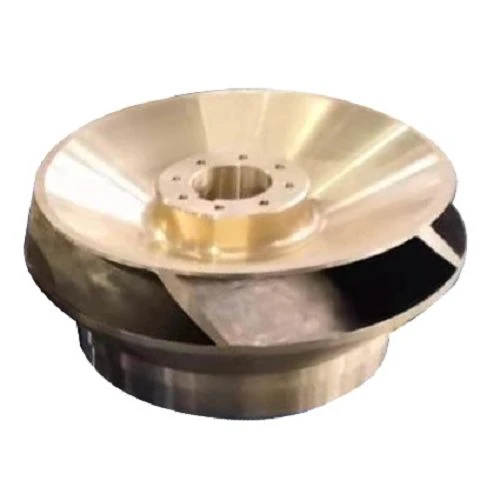
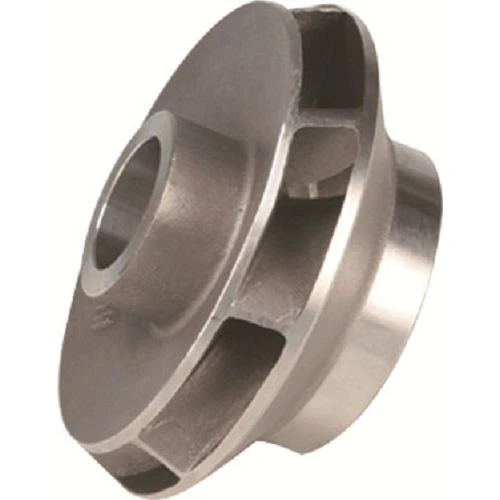
Now, let's talk about how the size of the impeller affects the flow rate. In simple terms, generally speaking, a larger impeller can move more fluid than a smaller one. Why is that? It all comes down to the amount of area the impeller covers and the force it can generate.
A bigger impeller has more blade surface area. This means it can come into contact with more fluid at once. When the impeller spins, it imparts more energy to the fluid. The increased energy results in a higher velocity of the fluid as it exits the impeller. And with a higher velocity, more fluid can be moved through the pump in a given amount of time, which translates to a higher flow rate.
For example, if you have a small pump with a tiny impeller, it might be able to move a small amount of water, say, for a small fountain in your garden. But if you need to move a large volume of water, like in an industrial cooling system, you'll need a pump with a much larger impeller.
However, it's not as simple as just slapping in the biggest impeller you can find. There are other factors at play. One of the most important factors is the power of the motor driving the pump. A larger impeller requires more power to spin. If your motor isn't powerful enough to turn the large impeller at the required speed, the impeller won't be able to generate the necessary energy to move the fluid efficiently. This can lead to a lower flow rate than expected, and it might even cause the motor to overheat or burn out.
Another factor is the system resistance. Every piping system has a certain amount of resistance to the flow of fluid. This resistance can be due to factors like the length of the pipes, the number of bends, and the size of the pipes. If the system resistance is too high, even a large impeller might not be able to achieve a high flow rate. The impeller has to work against this resistance to move the fluid, and if the resistance is too great, it can limit the flow.
At our company, we offer a wide range of pump impellers to suit different needs. We have Stainless Steel Pump Impeller, which are great for applications where corrosion resistance is important. Stainless steel is durable and can withstand harsh chemicals and environments. For more heavy - duty applications where cost is a factor, we have Cast Iron Pump Impeller. Cast iron impellers are strong and can handle high - pressure applications. And if you need an impeller with good heat conductivity and resistance to wear, our Bronze Pump Impeller is a great choice.
When choosing the right impeller size for your application, it's essential to consider all these factors. You need to know the required flow rate, the system resistance, and the available power. We can help you with that. Our team of experts has years of experience in the pump industry. We can analyze your specific requirements and recommend the best impeller size and type for your system.
Let's take a look at some real - world examples. In a water treatment plant, they need to move large volumes of water through various treatment processes. A large impeller pump is used to ensure a high flow rate. The plant managers work closely with us to select the right impeller size based on the capacity of the treatment tanks, the length of the pipes between different treatment stages, and the power of the available motors.
On the other hand, in a small aquarium, a small impeller pump is sufficient. The flow rate needed is relatively low, and the system resistance is minimal. A small impeller can easily move the water around the tank to keep it oxygenated and clean.
In addition to the physical size of the impeller, the design of the impeller blades also affects the flow rate. There are different types of impeller blade designs, such as open, semi - open, and closed impellers. Open impellers are simple and are often used in applications where the fluid contains a lot of solids. However, they might not be as efficient in generating high flow rates compared to closed impellers. Closed impellers have shrouds on both sides of the blades, which helps to direct the fluid more effectively and can result in a higher flow rate.
So, to sum it up, the relationship between pump impeller size and flow rate is quite complex. A larger impeller generally has the potential to increase the flow rate, but it's affected by factors like motor power and system resistance. The type of impeller material and blade design also play important roles.
If you're in the process of choosing a pump impeller or looking to upgrade your existing system, don't hesitate to reach out. We're here to help you make the right decision. Whether you need a Stainless Steel Pump Impeller, Cast Iron Pump Impeller, or Bronze Pump Impeller, we've got you covered.
References
- Pump Handbook, Karassik, I. J., Messina, J. P., Cooper, P. T., & Heald, C. C.
- Centrifugal Pumps: Design and Application, Stepanoff, A. J.