In the manufacturing world, casting is a versatile and widely - used process for creating pumps. As a pump casting supplier, I have in - depth knowledge of the various types of pumps that can be produced through casting. This blog will explore these pump types, their applications, and the advantages of using casting for their production.
Centrifugal Pumps
Centrifugal pumps are one of the most common types of pumps made by casting. These pumps work by using a rotating impeller to increase the velocity of the fluid, which is then converted into pressure energy. Casting is an ideal method for manufacturing centrifugal pumps because it allows for the creation of complex impeller shapes.
The impeller, a key component of the centrifugal pump, often has curved vanes that require high precision. Casting can produce these intricate designs with great accuracy. For example, in the case of a single - stage centrifugal pump, the impeller and the volute casing can be cast as separate parts and then assembled. The casting process can use materials like Cast Iron Casting, which is known for its good wear resistance and low cost, or Stainless Steel Pump Casting, which offers excellent corrosion resistance.
Centrifugal pumps made by casting are used in a wide range of applications, including water supply systems, irrigation, and industrial processes such as chemical processing and power generation. Their ability to handle large volumes of fluid at relatively low pressures makes them suitable for these diverse applications.
Positive Displacement Pumps
Positive displacement pumps are another category that can be effectively made through casting. These pumps work by trapping a fixed amount of fluid and then forcing (displacing) that trapped volume into the discharge pipe. There are several types of positive displacement pumps, such as gear pumps, piston pumps, and diaphragm pumps.
Gear pumps, for instance, consist of two meshing gears that rotate within a casing. The casing and the gears can be cast to achieve the required precision and smoothness. Casting allows for the production of gears with accurate tooth profiles, which is crucial for the efficient operation of the pump. Wear Resistant Pump Parts can be used in gear pumps to enhance their durability, especially when handling abrasive fluids.
Piston pumps use a piston moving back and forth within a cylinder to displace the fluid. The cylinder and the piston can be cast from materials that offer high strength and wear resistance. Diaphragm pumps, on the other hand, use a flexible diaphragm to displace the fluid. The pump housing and other components can be cast to ensure a tight seal and proper operation of the diaphragm.
Positive displacement pumps made by casting are often used in applications where a constant flow rate is required, regardless of the pressure. They are commonly found in the oil and gas industry, food and beverage processing, and pharmaceutical manufacturing.
Axial Flow Pumps
Axial flow pumps are designed to move fluid in a direction parallel to the pump shaft. These pumps are characterized by their high flow rates and relatively low heads. Casting is well - suited for manufacturing axial flow pumps because it can produce the large, streamlined impellers and casings required for their operation.
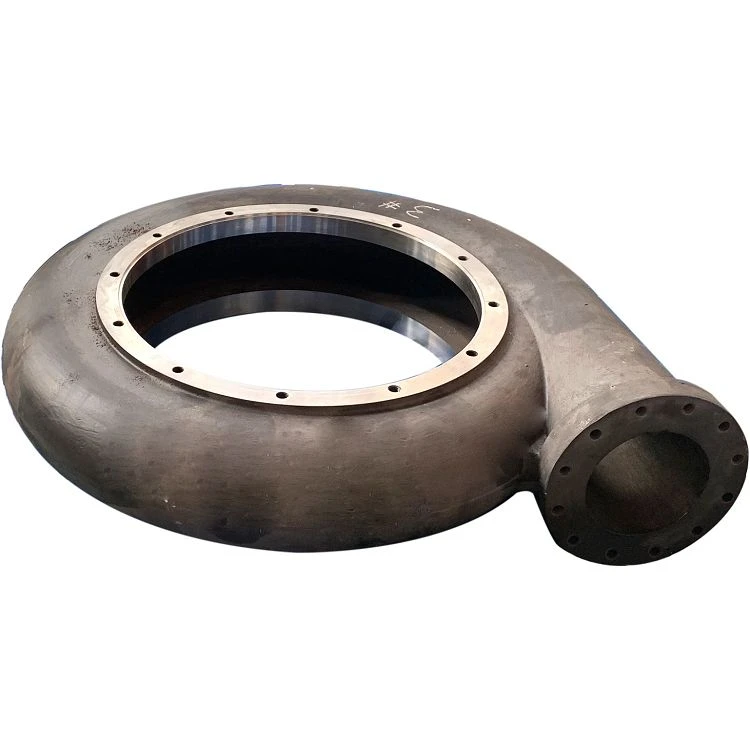
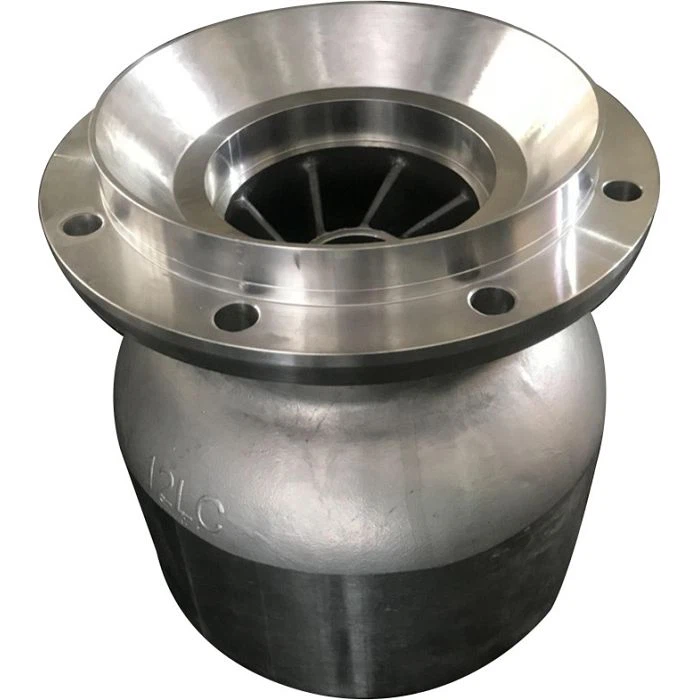
The impeller of an axial flow pump has a series of blades that are shaped to direct the fluid axially. Casting can create these blades with the necessary aerodynamic profiles to ensure efficient fluid flow. The casing of the axial flow pump also needs to be carefully designed to minimize flow losses. Casting allows for the production of casings with smooth internal surfaces, which helps to improve the pump's performance.
Axial flow pumps made by casting are commonly used in applications such as flood control, sewage treatment, and large - scale water circulation systems. Their ability to move large volumes of water quickly makes them ideal for these types of applications.
Mixed Flow Pumps
Mixed flow pumps combine the characteristics of both centrifugal and axial flow pumps. They move fluid in a direction that is a combination of radial and axial directions. Casting is an excellent method for manufacturing mixed flow pumps because it can create the complex impeller shapes required for their operation.
The impeller of a mixed flow pump has blades that are designed to impart both radial and axial velocity to the fluid. Casting can produce these blades with high precision, ensuring that the pump operates efficiently. The casing of the mixed flow pump also needs to be carefully designed to guide the fluid flow. Casting allows for the production of casings that can handle the unique flow patterns of mixed flow pumps.
Mixed flow pumps made by casting are used in applications where a moderate head and high flow rate are required, such as in agricultural irrigation and some industrial processes.
Advantages of Casting for Pump Manufacturing
There are several advantages to using casting for pump manufacturing. Firstly, casting allows for the production of complex shapes. Pumps often have components with intricate geometries, such as impellers and casings. Casting can accurately reproduce these shapes, which is difficult or impossible to achieve with other manufacturing methods.
Secondly, casting offers a wide range of material options. As a pump casting supplier, I can use materials like cast iron, stainless steel, bronze, and various alloys depending on the specific requirements of the pump. For example, cast iron is a popular choice for general - purpose pumps due to its low cost and good mechanical properties. Stainless steel, on the other hand, is used for pumps that need to handle corrosive fluids.
Thirdly, casting can produce parts with high strength and durability. The casting process can be controlled to ensure that the final parts have the desired microstructure and mechanical properties. This results in pumps that can withstand the harsh operating conditions in various industries.
Finally, casting is a cost - effective manufacturing method, especially for large - scale production. Once the molds are created, the casting process can produce multiple parts with high efficiency, reducing the overall production cost per unit.
Conclusion
As a pump casting supplier, I am well - aware of the vast potential of casting in pump manufacturing. Centrifugal pumps, positive displacement pumps, axial flow pumps, and mixed flow pumps are just some of the types that can be effectively made through casting. Each type of pump has its own unique applications, and casting allows for the production of pumps that meet the specific requirements of these applications.
If you are in need of high - quality pump castings, whether it's for a new project or to replace existing parts, I encourage you to reach out for a procurement discussion. I can provide you with detailed information about the casting process, the materials available, and how we can customize the pumps to meet your exact needs.
References
- Incropera, F. P., & DeWitt, D. P. (2002). Fundamentals of Heat and Mass Transfer. John Wiley & Sons.
- Daugherty, R. L., Franzini, J. B., & Finnemore, E. J. (1985). Fluid Mechanics with Engineering Applications. McGraw - Hill.
- Pump Handbook (4th Edition), by Igor Karassik, Joseph P. Messina, Paul Cooper, Charles C. Heald.