Hey there! As a supplier of Vertical In-Line Pumps, I often get asked about how to calculate the power required for these pumps. It's a crucial aspect, whether you're in the industrial sector, water treatment, or any application that needs fluid transfer. So, let's dive right in and break down the process step by step.
Understanding the Basics
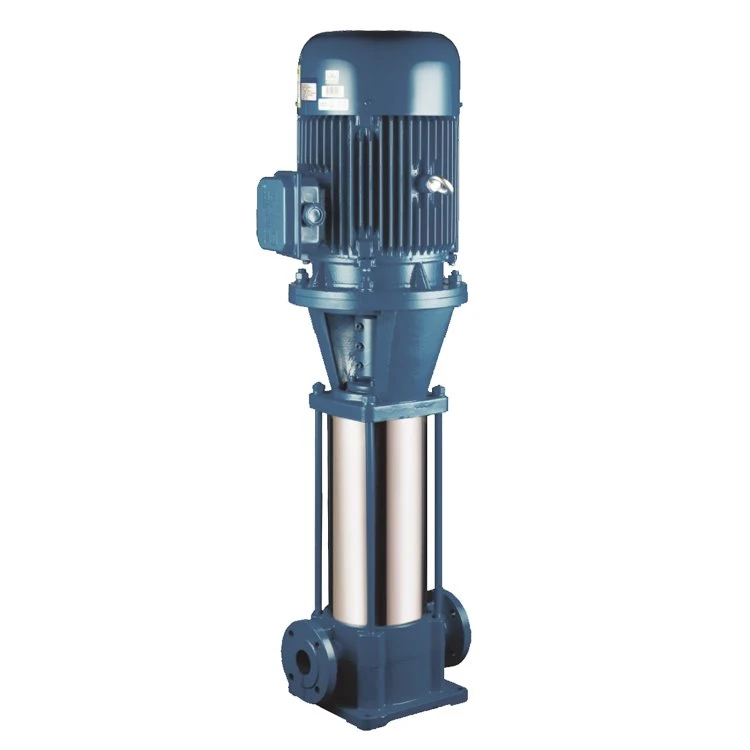
First off, we need to grasp some fundamental concepts. A vertical in-line pump is a type of centrifugal pump. It's designed with the suction and discharge ports in a straight line, which makes it compact and easy to install, especially in tight spaces. These pumps are used in various applications, from HVAC systems to water supply and drainage.
The power required for a pump is essentially the energy needed to move a certain amount of fluid at a specific pressure. There are a few key factors that influence this power calculation:
Flow Rate (Q)
Flow rate, measured in cubic meters per hour (m³/h) or gallons per minute (GPM), refers to the volume of fluid that the pump needs to move in a given time. It's a critical parameter because the more fluid you need to transfer, the more power the pump will require. For example, if you're using the pump to supply water to a large building, the flow rate will be relatively high compared to a small residential property.
Head (H)
Head is the height or pressure that the pump needs to overcome to move the fluid. It includes factors like the vertical distance the fluid needs to be lifted (static head), the friction losses in the pipes (friction head), and any additional pressure requirements in the system (pressure head). Head is usually measured in meters (m) or feet (ft). A pump used in a high-rise building will need to generate a higher head compared to a pump in a single-story structure.
Efficiency (η)
Efficiency is a measure of how well the pump converts the input power into useful work. No pump is 100% efficient, and some energy is lost as heat and through mechanical friction. The efficiency of a pump is expressed as a percentage. A higher efficiency means that the pump uses less power to achieve the same flow rate and head. When selecting a pump, it's important to choose one with a high efficiency to reduce energy costs.
The Power Calculation Formula
Now that we understand the key factors, let's look at the formula for calculating the power required for a vertical in-line pump:
[ P = \frac{\rho \times g \times Q \times H}{\eta} ]
Where:
- ( P ) is the power required in kilowatts (kW)
- ( \rho ) is the density of the fluid in kilograms per cubic meter (kg/m³). For water at room temperature, the density is approximately 1000 kg/m³.
- ( g ) is the acceleration due to gravity, which is approximately 9.81 m/s².
- ( Q ) is the flow rate in cubic meters per second (m³/s). To convert from m³/h to m³/s, divide the flow rate in m³/h by 3600.
- ( H ) is the head in meters (m).
- ( \eta ) is the efficiency of the pump, expressed as a decimal. For example, if the pump has an efficiency of 80%, ( \eta = 0.8 ).
Let's work through an example to illustrate how this formula works. Suppose we have a vertical in-line pump that needs to move water at a flow rate of 50 m³/h to a height of 30 m. The pump has an efficiency of 75% (or 0.75).
First, we need to convert the flow rate from m³/h to m³/s:
[ Q = \frac{50}{3600} \approx 0.0139 \ m³/s ]
Now we can plug the values into the formula:
[ P = \frac{1000 \times 9.81 \times 0.0139 \times 30}{0.75} ]
[ P = \frac{4089.3}{0.75} \approx 5452.4 \ W ]
Converting to kilowatts, we get ( P \approx 5.45 \ kW ).
Additional Considerations
While the formula gives us a good estimate of the power required, there are a few additional factors that we need to take into account:
Viscosity
If the fluid being pumped is more viscous than water, such as oil or a slurry, the pump will need more power to move it. Viscous fluids create more friction in the pump and the pipes, which increases the head and reduces the pump's efficiency. In such cases, it may be necessary to use a pump with a higher power rating or to adjust the pump's design to handle the viscous fluid.
System Characteristics
The characteristics of the piping system, such as the diameter, length, and number of fittings, can also affect the power requirements. A longer pipe with more bends and fittings will have higher friction losses, which means the pump needs to generate more head and therefore more power. It's important to design the piping system carefully to minimize these losses.
Safety Factor
It's always a good idea to include a safety factor in the power calculation. This accounts for any uncertainties in the system, such as changes in the flow rate or head over time, or variations in the fluid properties. A typical safety factor ranges from 10% to 20%. So, in our previous example, if we apply a 15% safety factor, the required power would be ( P = 5.45 \times 1.15 \approx 6.27 \ kW ).
Choosing the Right Pump
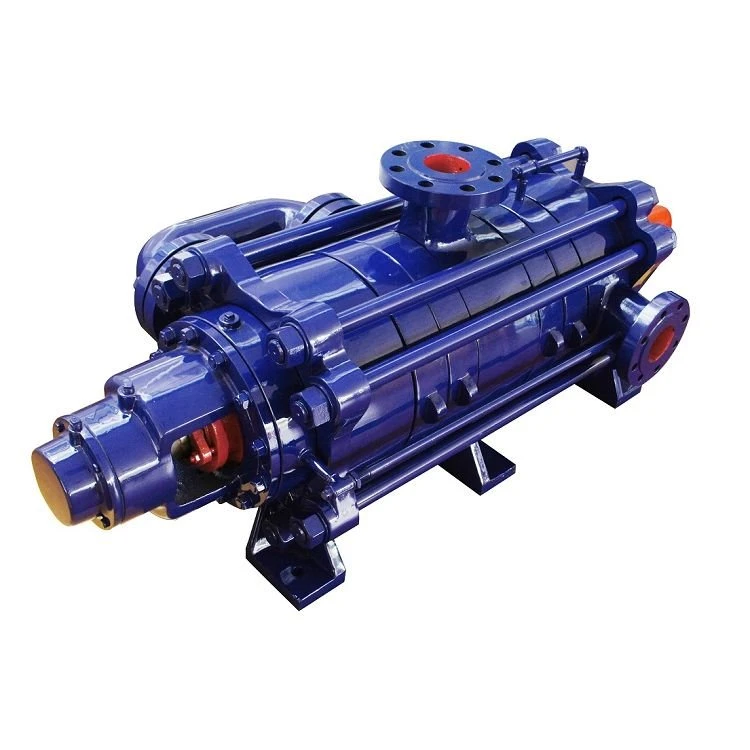
Once you've calculated the power required, it's time to choose the right vertical in-line pump for your application. At our company, we offer a wide range of pumps, including Vertical Multistage Pump, Mine Multistage Centrifugal Pump, and Slurry Pump. These pumps are designed to meet different flow rates, heads, and fluid types, ensuring that you can find the perfect solution for your needs.
When selecting a pump, consider the following:
- Flow Rate and Head: Make sure the pump can handle the required flow rate and head. Check the pump's performance curve, which shows the relationship between the flow rate, head, and power consumption.
- Efficiency: Look for a pump with a high efficiency to reduce energy costs. Our pumps are designed with advanced technology to maximize efficiency and minimize power consumption.
- Material and Construction: The pump's material and construction should be suitable for the fluid being pumped and the operating environment. For example, if you're pumping corrosive fluids, choose a pump made of corrosion-resistant materials.
- Reliability and Maintenance: A reliable pump with easy maintenance requirements will save you time and money in the long run. Our pumps are built to last and are designed for easy maintenance.
Contact Us for a Quote
If you're in the market for a vertical in-line pump and need help calculating the power requirements or choosing the right pump for your application, don't hesitate to contact us. Our team of experts is here to assist you every step of the way. We can provide you with detailed information, technical support, and a competitive quote. Whether you're a small business or a large industrial facility, we have the right pump solution for you.
References
- "Pump Handbook" by Igor J. Karassik, Joseph P. Messina, Paul Cooper, and Charles C. Heald.
- "Centrifugal Pumps: Design and Application" by Heinz P. Bloch and Fred K. Geitner.
- Various industry standards and guidelines for pump selection and sizing.