Accurately measuring pump discharge is crucial in various industrial and commercial applications. As a trusted Pump Discharge supplier, I understand the significance of this process and the impact it has on the overall performance and efficiency of pumping systems. In this blog post, I will delve into the key methods and considerations for measuring pump discharge with high accuracy.
Understanding the Importance of Accurate Pump Discharge Measurement
Before we explore the measurement techniques, it's essential to understand why accurate pump discharge measurement is so important. Precise measurement of pump discharge helps in determining the actual flow rate of the fluid being pumped. This information is vital for several reasons:
- System Efficiency: By knowing the exact discharge rate, operators can optimize the pump's performance and ensure that it is operating at its most efficient level. This can lead to significant energy savings and reduced operational costs.
- Process Control: In many industrial processes, maintaining a specific flow rate is critical for the quality and consistency of the end product. Accurate pump discharge measurement allows for precise control of the process, ensuring that the desired results are achieved.
- Equipment Protection: Over - or under - pumping can cause damage to the pump and other components in the system. Measuring the discharge accurately helps in preventing such issues and extending the lifespan of the equipment.
Methods of Measuring Pump Discharge
There are several methods available for measuring pump discharge, each with its own advantages and limitations. Let's take a closer look at some of the most commonly used techniques:
1. Volumetric Measurement
Volumetric measurement is one of the simplest and most direct methods of measuring pump discharge. It involves collecting the pumped fluid in a container of known volume over a specific period of time. The discharge rate can then be calculated using the following formula:
[Q=\frac{V}{t}]
where (Q) is the discharge rate (volume per unit time), (V) is the volume of the fluid collected, and (t) is the time taken to collect the fluid.
This method is highly accurate when used correctly, but it has some limitations. It is suitable for low - flow applications and may not be practical for high - volume pumping systems. Additionally, it requires a stopwatch and a container of known volume, which may not always be readily available in industrial settings.
2. Differential Pressure Flow Meters
Differential pressure flow meters work on the principle of creating a pressure drop across a constriction in the pipe. The pressure drop is proportional to the flow rate of the fluid. Some common types of differential pressure flow meters include orifice plates, venturi meters, and flow nozzles.
The discharge rate can be calculated using the following formula:
[Q = C\cdot A\cdot\sqrt{\frac{2\Delta P}{\rho}}]
where (Q) is the discharge rate, (C) is the discharge coefficient, (A) is the cross - sectional area of the constriction, (\Delta P) is the pressure drop across the constriction, and (\rho) is the density of the fluid.
Differential pressure flow meters are widely used in industrial applications due to their relatively high accuracy and reliability. However, they require regular calibration and maintenance to ensure accurate readings.
3. Magnetic Flow Meters
Magnetic flow meters, also known as magmeters, are based on Faraday's law of electromagnetic induction. They measure the flow rate of conductive fluids by generating a magnetic field across the pipe and measuring the voltage induced by the moving fluid.
The discharge rate is directly proportional to the induced voltage, and the meter can provide accurate readings over a wide range of flow rates. Magnetic flow meters are non - intrusive, which means they do not cause any pressure drop in the pipe. They are also suitable for measuring the flow of corrosive and abrasive fluids.
However, magnetic flow meters are relatively expensive and require the fluid to be conductive. They may also be affected by external magnetic fields, which can lead to inaccurate readings.
4. Ultrasonic Flow Meters
Ultrasonic flow meters use ultrasonic waves to measure the flow rate of fluids. There are two main types of ultrasonic flow meters: transit - time and Doppler.
Transit - time ultrasonic flow meters measure the difference in the time taken for ultrasonic waves to travel upstream and downstream in the fluid. The flow rate is calculated based on this time difference. Doppler ultrasonic flow meters, on the other hand, measure the frequency shift of the ultrasonic waves reflected from particles or bubbles in the fluid.
Ultrasonic flow meters are non - intrusive and can be easily installed on existing pipes. They are suitable for measuring the flow of clean and dirty fluids, as well as gases. However, their accuracy can be affected by factors such as the fluid's temperature, viscosity, and the presence of air bubbles or solid particles.
Considerations for High - Accuracy Measurement
Regardless of the measurement method used, there are several factors that need to be considered to ensure high - accuracy pump discharge measurement:
- Calibration: Regular calibration of the measuring equipment is essential to maintain accuracy. Calibration should be performed using a known standard and in accordance with the manufacturer's recommendations.
- Pipe Conditions: The condition of the pipe, including its diameter, roughness, and straightness, can affect the accuracy of the measurement. It is important to ensure that the pipe meets the requirements of the measuring device.
- Fluid Properties: The properties of the fluid, such as its density, viscosity, and temperature, can also impact the measurement accuracy. These properties should be taken into account when selecting the measuring method and calculating the discharge rate.
- Installation: Proper installation of the measuring device is crucial for accurate measurement. The device should be installed in a location where the flow is fully developed and free from disturbances.
Our Pump Discharge Products
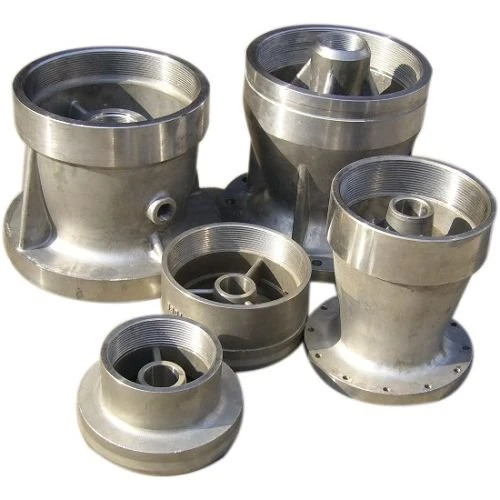
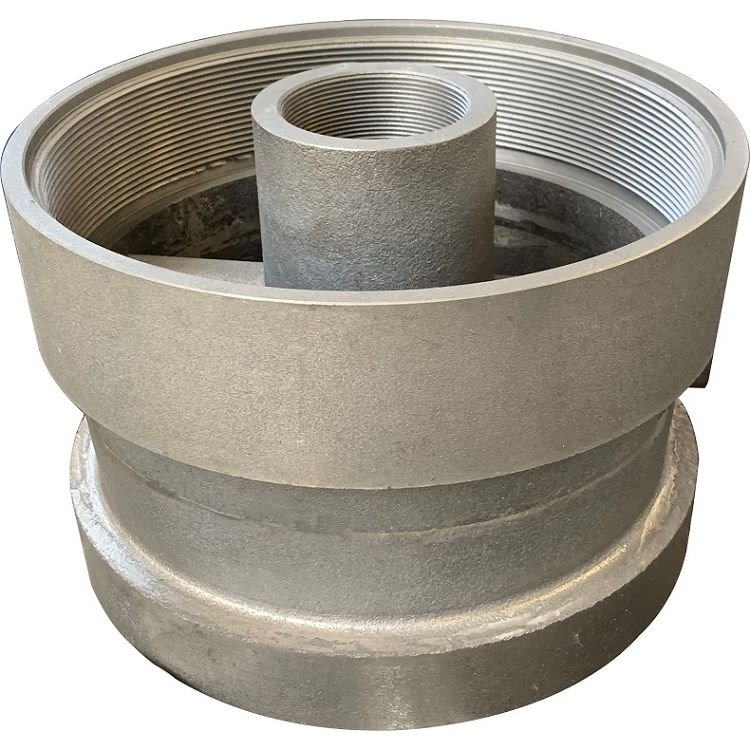
As a Pump Discharge supplier, we offer a wide range of high - quality pump discharge products to meet the diverse needs of our customers. Our Cast Iron Pump Discharge is known for its durability and strength, making it suitable for a variety of industrial applications. It is designed to withstand high pressures and corrosive environments.
Our Stainless Steel Pump Discharge is another popular choice. It offers excellent corrosion resistance and is ideal for applications where hygiene and cleanliness are important, such as in the food and beverage industry.
Conclusion
Accurately measuring pump discharge is a critical aspect of pump system operation. By understanding the different measurement methods and considering the factors that affect accuracy, operators can ensure that their pumping systems are operating at peak efficiency. As a Pump Discharge supplier, we are committed to providing high - quality products and technical support to help our customers achieve accurate pump discharge measurement.
If you are interested in our pump discharge products or have any questions about pump discharge measurement, please feel free to contact us for procurement and further discussions. We look forward to serving you.
References
- Miller, R. W. (1983). Flow measurement engineering handbook. McGraw - Hill.
- Spitzer, D. W. (2001). Flow measurement: practical guides for measurement and control. ISA - The Instrumentation, Systems, and Automation Society.
- Streeter, V. L., & Wylie, E. B. (1979). Fluid mechanics. McGraw - Hill.