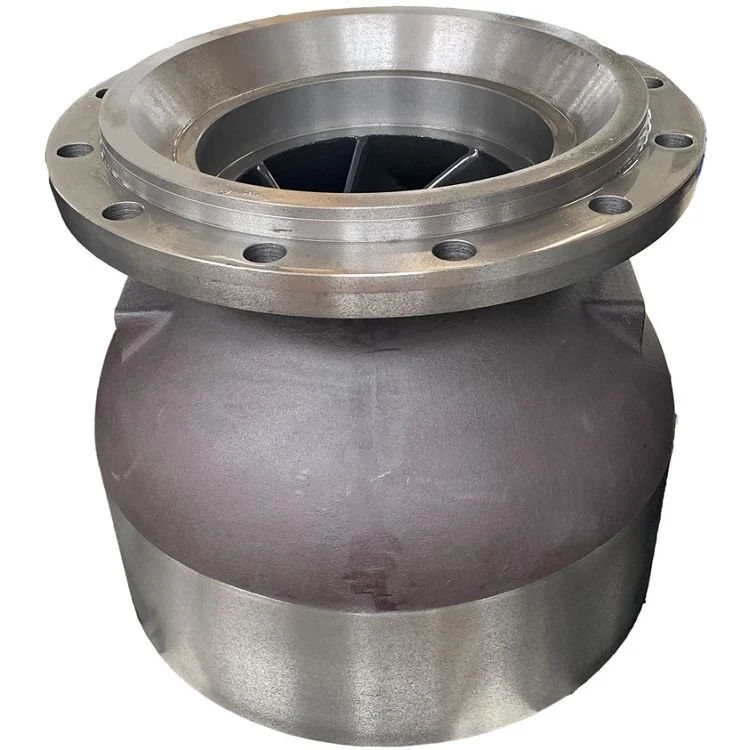
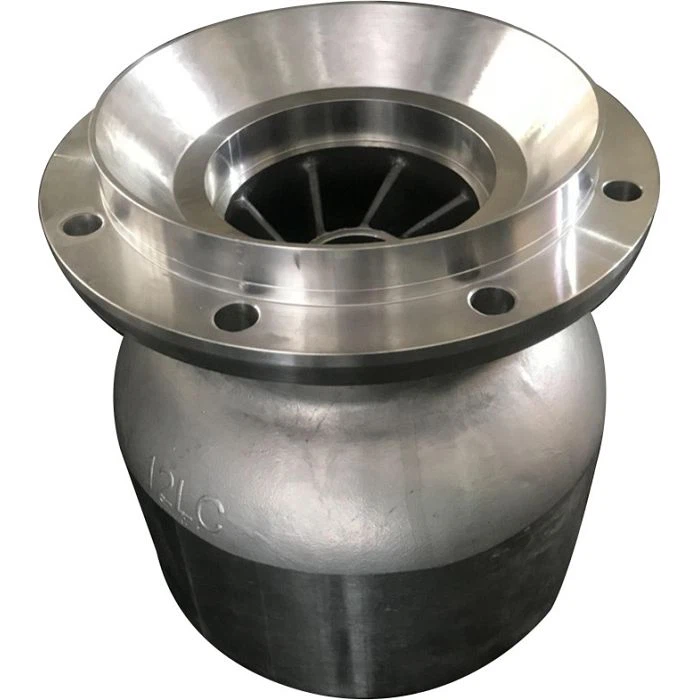
Shrinkage porosity is a common and pesky issue in pump casting. As a pump casting supplier, I've dealt with this problem more times than I can count. In this blog, I'll share some practical tips on how to prevent shrinkage porosity in pump casting.
Understanding Shrinkage Porosity
Before we dive into prevention methods, let's quickly understand what shrinkage porosity is. When molten metal cools and solidifies during the casting process, it contracts. If the molten metal can't flow properly to fill the space created by this contraction, tiny voids or pores are formed. These pores are what we call shrinkage porosity. They can weaken the structure of the pump casting, reduce its performance, and even lead to premature failure.
Choosing the Right Material
The choice of material plays a crucial role in preventing shrinkage porosity. Different materials have different solidification characteristics. For example, stainless steel has a relatively high thermal conductivity and a narrow solidification range, which can help reduce the likelihood of shrinkage porosity. You can check out our Stainless Steel Pump Casting options, which are carefully selected and processed to minimize such issues.
Ductile iron is another great choice. It has good fluidity and a graphite structure that can compensate for some of the shrinkage during solidification. Our Ductile Iron Casting products are designed to take advantage of these properties. Cast iron is also commonly used in pump casting. However, it has a wider solidification range, which means it's more prone to shrinkage porosity. But with proper techniques, we can still use it effectively. Check out our Cast Iron Casting solutions.
Controlling the Pouring Process
The pouring process is where things start to get real. The temperature and speed at which you pour the molten metal can have a huge impact on shrinkage porosity.
- Pouring Temperature: If the pouring temperature is too high, the metal will have a longer solidification time, increasing the chance of shrinkage. On the other hand, if it's too low, the metal may not flow properly, also leading to porosity. You need to find the sweet spot for each material. For example, for stainless steel, a pouring temperature around 1500 - 1550°C is usually a good range.
- Pouring Speed: A slow pouring speed allows the metal to flow smoothly and gives it time to fill the mold properly. But if it's too slow, the metal may start to solidify before the mold is completely filled. A fast pouring speed can cause turbulence, which can trap air and lead to porosity. It's all about finding that balance.
Using Chills and Risers
Chills and risers are like the secret weapons in the fight against shrinkage porosity.
- Chills: Chills are blocks of high thermal conductivity material placed in the mold. They help to cool the metal faster in specific areas, promoting directional solidification. This means the metal solidifies from the farthest point from the riser towards the riser, ensuring that the shrinkage is compensated by the molten metal from the riser. For example, if you have a thick section in the pump casting, placing a chill near it can help prevent shrinkage porosity in that area.
- Risers: Risers are reservoirs of molten metal connected to the casting. They supply additional metal to the casting as it solidifies and shrinks. The size, shape, and location of the risers are crucial. A well-designed riser should be large enough to hold enough molten metal but not so large that it causes other problems like excessive metal waste.
Optimizing the Mold Design
The mold design can make or break your casting. A good mold design should promote uniform cooling and proper metal flow.
- Wall Thickness: Try to keep the wall thickness of the casting as uniform as possible. Thick sections cool more slowly than thin sections, which can lead to shrinkage porosity. If you need to have different wall thicknesses, use gradual transitions to minimize the temperature difference.
- Gating System: The gating system is responsible for guiding the molten metal into the mold. It should be designed to ensure a smooth and even flow of metal. A well-designed gating system can prevent turbulence and air entrapment, reducing the risk of shrinkage porosity.
Heat Treatment
Heat treatment can also be used to reduce shrinkage porosity. After the casting is made, it can be heat-treated to relieve internal stresses and improve its microstructure. This can help close some of the small pores and improve the overall quality of the casting. For example, annealing can be used to soften the casting and reduce internal stresses, while quenching and tempering can improve its hardness and strength.
Quality Control
Last but not least, quality control is essential. Regular inspections during and after the casting process can help you catch any signs of shrinkage porosity early on. Non-destructive testing methods like ultrasonic testing and X-ray inspection can be used to detect internal defects. If you find any porosity, you can take corrective actions such as reworking the casting or adjusting the process parameters for future castings.
In conclusion, preventing shrinkage porosity in pump casting is a multi-faceted process. It requires careful selection of materials, precise control of the pouring process, the use of chills and risers, optimization of the mold design, heat treatment, and strict quality control. By following these tips, you can significantly reduce the occurrence of shrinkage porosity and produce high-quality pump castings.
If you're in the market for pump castings and want to discuss how we can prevent shrinkage porosity in your specific application, feel free to reach out. We're always happy to have a chat and see how we can help you get the best pump castings for your needs.
References
- Campbell, J. (2003). Castings. Butterworth-Heinemann.
- Flemings, M. C. (1974). Solidification Processing. McGraw-Hill.
- Kalpakjian, S., & Schmid, S. R. (2013). Manufacturing Engineering and Technology. Pearson.