As a seasoned supplier of Slurry Pump, I've witnessed firsthand the pivotal role that pump speed plays in slurry handling capacity. In the industrial realm, slurry pumps are indispensable for transporting abrasive, corrosive, and high - density slurries across various sectors such as mining, power generation, and chemical processing. Understanding the relationship between pump speed and slurry handling capacity is crucial for optimizing pump performance, reducing operational costs, and ensuring the longevity of the equipment.
The Basics of Slurry Pumps
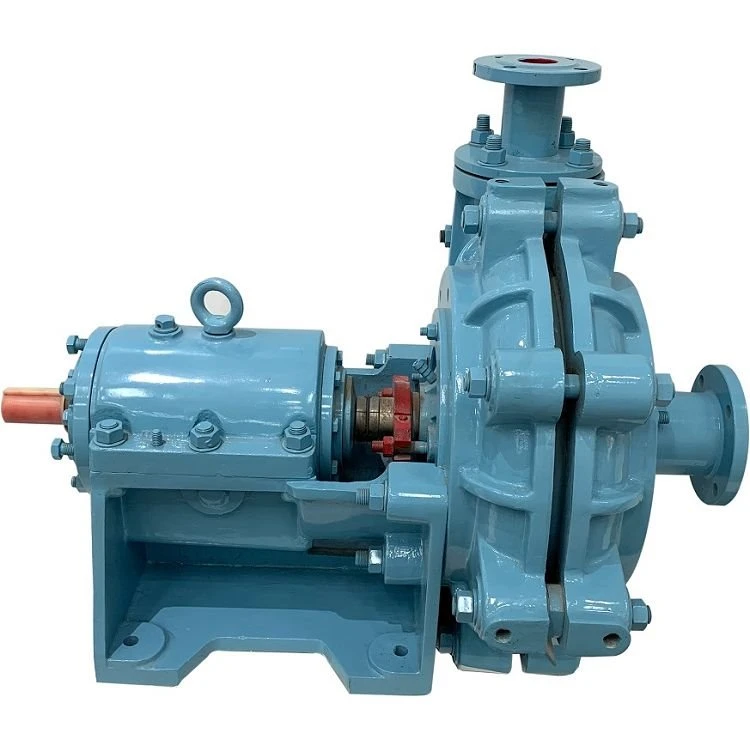
Before delving into the impact of pump speed, it's essential to understand the fundamentals of slurry pumps. Slurry pumps are a type of centrifugal pump designed to handle mixtures of solids and liquids. Unlike standard water pumps, slurry pumps must be able to withstand the abrasive nature of the solids in the slurry, which can cause significant wear and tear on the pump components.
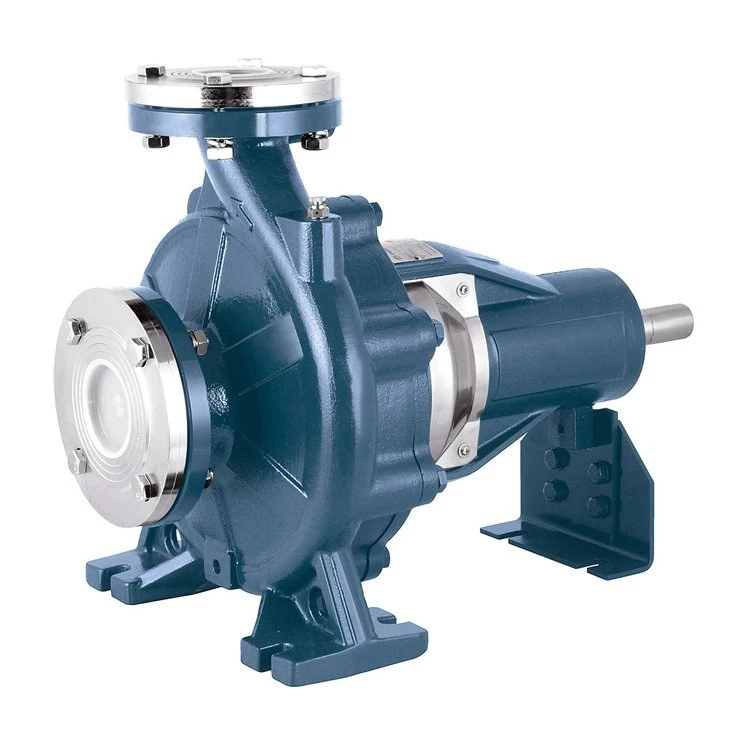
There are different types of slurry pumps available in the market, including End Suction Centrifugal Pump and Single Stage Double - Suction Centrifugal Pump. Each type has its own unique design features and performance characteristics, but they all operate on the principle of converting rotational energy from the pump impeller into kinetic energy of the slurry, thereby facilitating its movement through the pipeline.
How Pump Speed Affects Slurry Handling Capacity
Flow Rate
One of the most direct effects of pump speed on slurry handling capacity is its influence on the flow rate. According to the affinity laws, the flow rate of a centrifugal pump is directly proportional to the pump speed. Mathematically, this relationship can be expressed as:
[ \frac{Q_1}{Q_2}=\frac{N_1}{N_2} ]
where (Q_1) and (Q_2) are the flow rates at speeds (N_1) and (N_2) respectively.
In practical terms, increasing the pump speed will result in a higher flow rate of the slurry. This is particularly useful in applications where a large volume of slurry needs to be transported within a short period. For example, in a mining operation, a higher flow rate can ensure the efficient removal of ore - laden slurry from the extraction site to the processing plant. However, it's important to note that there are limits to how much the speed can be increased. Excessive speed can lead to cavitation, which occurs when the pressure at the impeller eye drops below the vapor pressure of the liquid, causing the formation and subsequent collapse of vapor bubbles. Cavitation can damage the pump impeller and reduce its efficiency.
Head
The head of a pump, which represents the energy per unit weight of the fluid, is also affected by the pump speed. The affinity laws state that the head is proportional to the square of the pump speed:
[ \frac{H_1}{H_2}=\left(\frac{N_1}{N_2}\right)^2 ]
where (H_1) and (H_2) are the heads at speeds (N_1) and (N_2) respectively.
An increase in pump speed leads to an increase in the head, which means the pump can push the slurry to a greater height or overcome a higher resistance in the pipeline. This is beneficial in applications where the slurry needs to be transported over long distances or against significant elevation changes. For instance, in a power plant, a higher head is required to pump the coal - water slurry from the storage tank to the boiler.
Power Consumption
Pump speed has a significant impact on power consumption. The power required by a centrifugal pump is proportional to the cube of the pump speed:
[ \frac{P_1}{P_2}=\left(\frac{N_1}{N_2}\right)^3 ]
where (P_1) and (P_2) are the power consumptions at speeds (N_1) and (N_2) respectively.
As the pump speed increases, the power consumption rises exponentially. This means that even a small increase in speed can lead to a substantial increase in energy costs. Therefore, it's crucial to find the optimal pump speed that balances the need for high slurry handling capacity with energy efficiency.
Considerations for Selecting the Right Pump Speed
Slurry Properties
The properties of the slurry, such as the particle size, density, and viscosity, play a crucial role in determining the appropriate pump speed. For slurries with large - sized particles, a higher pump speed may be required to prevent settling and ensure proper suspension of the solids. On the other hand, highly viscous slurries may require a lower speed to avoid excessive power consumption and pump wear.
System Requirements
The specific requirements of the pumping system, including the desired flow rate, head, and pipeline layout, also need to be considered. A detailed analysis of the system's hydraulic characteristics, such as the friction losses in the pipeline and the elevation changes, can help determine the most suitable pump speed.
Pump Design
The design of the slurry pump itself can limit the maximum allowable speed. Factors such as the impeller diameter, material, and construction can affect the pump's ability to operate at high speeds without experiencing excessive wear or mechanical failure.
Optimizing Pump Speed for Slurry Handling
To optimize the pump speed for slurry handling, it's recommended to conduct a comprehensive system analysis. This involves measuring the slurry properties, evaluating the system requirements, and considering the pump design. In some cases, variable - speed drives (VSDs) can be used to adjust the pump speed according to the changing operating conditions. VSDs offer several advantages, including energy savings, improved process control, and reduced wear on the pump components.
Conclusion
In conclusion, pump speed has a profound effect on slurry handling capacity. It directly influences the flow rate, head, and power consumption of the slurry pump. By understanding the relationship between pump speed and these key performance parameters, and by carefully considering the slurry properties, system requirements, and pump design, operators can select the optimal pump speed to achieve efficient and cost - effective slurry handling.
As a leading supplier of Slurry Pump, we are committed to providing our customers with high - quality pumps and expert advice on pump selection and operation. If you are in need of a slurry pump solution or have any questions about optimizing pump speed for your specific application, we encourage you to contact us for a detailed consultation. Our team of experienced engineers will work closely with you to understand your requirements and recommend the most suitable pump and operating parameters.
References
- Karassik, I. J., Messina, J. P., Cooper, P. T., & Heald, C. C. (2008). Pump Handbook. McGraw - Hill.
- Stepanoff, A. J. (1957). Centrifugal and Axial Flow Pumps: Theory, Design, and Application. John Wiley & Sons.