Hey there! As a supplier of Bronze Pump Impellers, I often get asked about the hydraulic efficiency of these nifty little parts. So, I thought I'd take a moment to break it down for you.
First off, let's talk about what hydraulic efficiency actually means. In simple terms, it's a measure of how well a pump impeller can convert the mechanical energy from the pump's motor into hydraulic energy to move fluid. The higher the hydraulic efficiency, the less energy is wasted as heat or other forms of loss, and the more effectively the pump can do its job.
Now, when it comes to bronze pump impellers, they've got some pretty cool features that can contribute to good hydraulic efficiency. Bronze is a metal alloy, typically made up of copper and tin, with some other elements thrown in for good measure. This combination gives bronze some unique properties that make it a great choice for pump impellers.
One of the key advantages of bronze is its smooth surface finish. When an impeller has a smooth surface, it reduces the friction between the impeller and the fluid it's pumping. Less friction means less energy is lost in the form of heat, which in turn improves the overall hydraulic efficiency. Think of it like trying to slide a box across a rough floor versus a smooth one. It's a lot easier and takes less effort on the smooth floor, right? That's exactly how it works with the fluid and the impeller.
Another benefit of bronze is its corrosion resistance. In many pumping applications, the fluid being pumped can be corrosive. If the impeller starts to corrode, it can develop rough spots and pits on its surface. These irregularities can disrupt the flow of the fluid, causing turbulence and reducing the hydraulic efficiency. But because bronze is resistant to corrosion, it can maintain its smooth surface and consistent performance over time.
Let's also consider the design of the bronze pump impeller. A well - designed impeller has blades that are shaped in a way that optimizes the flow of the fluid. The curvature of the blades, their angle, and the spacing between them all play a role in how efficiently the impeller can transfer energy to the fluid. Engineers spend a lot of time testing and refining these designs to get the best possible hydraulic performance.
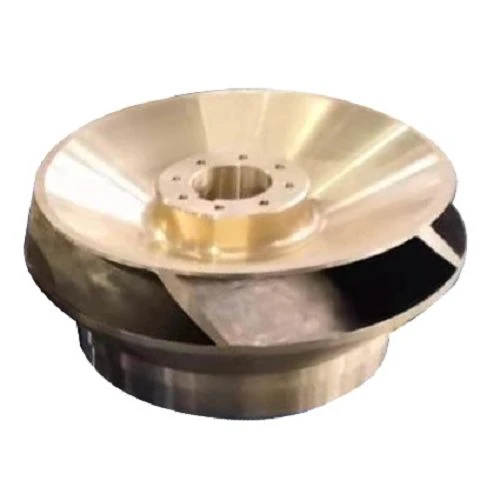
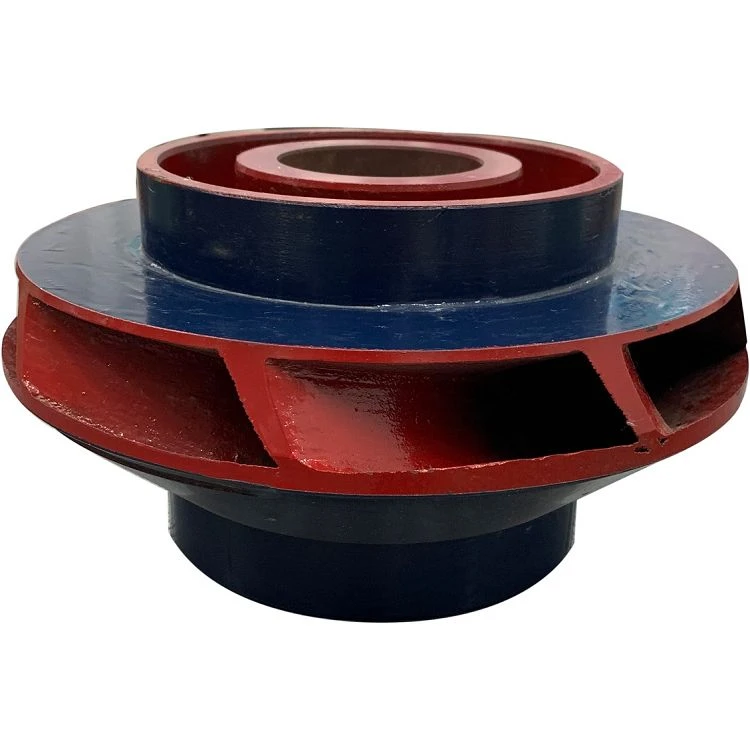
Now, how does the hydraulic efficiency of a bronze pump impeller stack up against other types of impellers? Let's take a quick look at some alternatives.
Stainless Steel Pump Impeller is another popular choice. Stainless steel is also corrosion - resistant and has a relatively smooth surface. However, it's often heavier than bronze. This extra weight can mean that the motor has to work a bit harder to turn the impeller, which might result in slightly lower overall efficiency in some cases.
Cast Iron Pump Impeller is a more traditional option. Cast iron is strong and durable, but it's not as corrosion - resistant as bronze or stainless steel. Over time, cast iron impellers can corrode and lose their efficiency. Additionally, the surface finish of cast iron is usually rougher than that of bronze, which can lead to more friction and lower hydraulic efficiency.
So, in many cases, bronze pump impellers offer a good balance of corrosion resistance, smooth surface finish, and efficient design, which can result in high hydraulic efficiency.
But it's important to note that the actual hydraulic efficiency of a bronze pump impeller can vary depending on a few factors. The size and shape of the impeller matter. Different applications require different impeller sizes and blade configurations. For example, a small - scale residential water pump will need a different impeller design than a large - scale industrial pump used in a chemical plant.
The type of fluid being pumped also has an impact. Viscous fluids, like thick oils, are harder to pump than thin fluids like water. The impeller may have to work harder to move a viscous fluid, which can reduce its hydraulic efficiency.
The speed at which the impeller rotates is another factor. If the impeller is spinning too fast or too slow, it may not be operating at its optimal efficiency. There's usually an ideal speed range for each impeller design where it can achieve the best hydraulic performance.
As a supplier of Bronze Pump Impellers, I understand the importance of getting the right impeller for your specific application. That's why we offer a wide range of bronze pump impellers in different sizes, shapes, and blade configurations. We work closely with our customers to understand their needs and recommend the best impeller for their pumping system.
If you're in the market for a pump impeller and you're looking for high hydraulic efficiency, bronze is definitely worth considering. Our team of experts can help you determine if a bronze pump impeller is the right choice for you. Whether you're a small business owner looking to upgrade your water pumping system or an engineer working on a large - scale industrial project, we've got the knowledge and the products to meet your needs.
So, if you're interested in learning more about our bronze pump impellers or want to discuss your specific pumping requirements, don't hesitate to reach out. We're here to help you get the most efficient and reliable pumping solution possible.
References:
- Fluid Mechanics textbooks for general principles of pump operation and hydraulic efficiency.
- Industry research papers on the performance of different pump impeller materials.