Hey there! As a pump impeller supplier, I've seen firsthand how a clogged pump impeller can mess with a pump's operation. Let's dig into what exactly happens when an impeller gets clogged and why it's such a big deal.
First off, what's a pump impeller? It's like the heart of a pump. It's a rotating part with vanes that spins inside the pump casing. When it spins, it creates a centrifugal force that moves the fluid through the pump. You can find different types of pump impellers on our website, like the Cast Iron Pump Impeller, Stainless Steel Pump Impeller, and Bronze Pump Impeller. Each type has its own advantages and is suitable for different applications.
So, what causes a pump impeller to get clogged? Well, there are a few reasons. One common cause is debris in the fluid. If the fluid you're pumping has dirt, sand, or other solid particles, they can get stuck in the impeller vanes. Another cause could be corrosion or scaling. Over time, the metal in the impeller can corrode, and minerals in the fluid can build up and form scale. This can narrow the passageways in the impeller and reduce its efficiency.
Now, let's talk about the impact of a clogged pump impeller on the pump's operation. The first and most obvious effect is a decrease in flow rate. When the impeller is clogged, it can't move the fluid as efficiently. The debris or scale restricts the flow of the fluid through the impeller, so less fluid gets pumped out. This can be a real problem in applications where a certain flow rate is required, like in a water supply system or an industrial process.
A clogged impeller also leads to a decrease in pressure. The centrifugal force created by the impeller is what generates the pressure in the pump. When the impeller is clogged, it can't spin as freely, and the centrifugal force is reduced. As a result, the pressure at the pump outlet drops. This can cause issues like low water pressure in a plumbing system or insufficient pressure in a hydraulic system.
Another significant impact is increased energy consumption. When a pump has to work harder to overcome the resistance caused by a clogged impeller, it uses more energy. The motor has to draw more power to keep the impeller spinning. This not only increases your electricity bill but also puts more stress on the motor. Over time, this can lead to motor failure, which is a costly repair.
In addition to the performance issues, a clogged impeller can also cause mechanical problems. The uneven flow of fluid through the clogged impeller can create vibrations. These vibrations can damage the pump bearings, seals, and other components. They can also cause the pump to become misaligned, which further reduces its efficiency and can lead to premature wear and tear.
Moreover, a clogged impeller can lead to cavitation. Cavitation occurs when the pressure in the fluid drops below its vapor pressure, causing bubbles to form. These bubbles then collapse when they reach a higher-pressure area, creating shock waves that can damage the impeller and other pump parts. Cavitation can cause pitting and erosion on the impeller surface, which can further degrade its performance.
So, how can you tell if your pump impeller is clogged? There are a few signs to look out for. If you notice a decrease in the flow rate or pressure of the pump, it could be a sign of a clogged impeller. You might also hear unusual noises coming from the pump, like rattling or vibrating sounds. These noises could indicate that there's something stuck in the impeller or that it's not spinning smoothly.
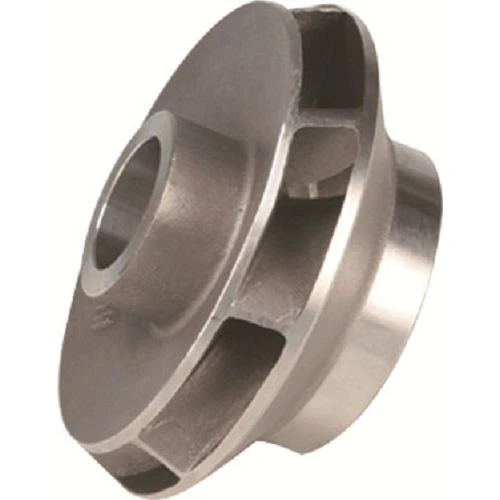
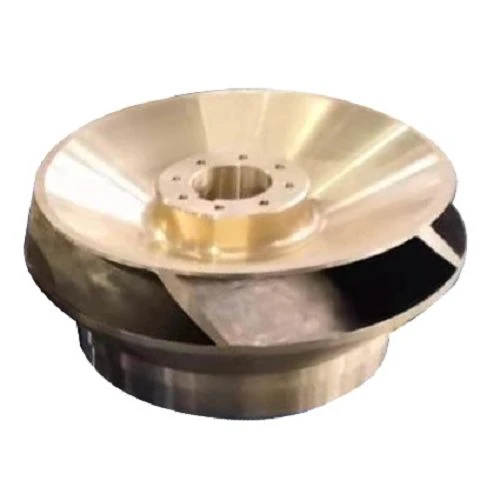
If you suspect that your pump impeller is clogged, the first step is to shut off the pump and disconnect it from the power source. Then, you can remove the pump casing and inspect the impeller. If you see debris or scale, you can try to clean it using a brush or a suitable cleaning solution. However, if the clog is severe or if there's significant damage to the impeller, you might need to replace it.
As a pump impeller supplier, we offer high-quality impellers that are designed to resist clogging and corrosion. Our impellers are made from durable materials and are precision-engineered to ensure optimal performance. Whether you need a cast iron, stainless steel, or bronze impeller, we've got you covered.
If you're experiencing problems with a clogged pump impeller or are looking for a reliable pump impeller for a new project, don't hesitate to get in touch. We can provide you with expert advice on the best impeller for your application and help you find a solution to your pump problems. Contact us to start a conversation about your pump impeller needs, and let's work together to keep your pumps running smoothly.
References
- [1] "Pump Handbook" by Igor Karassik et al.
- [2] "Centrifugal Pumps: Design and Application" by James P. Stepanoff.