What is the optimal speed for a pump impeller? This is a question that many of us in the pump industry grapple with on a regular basis. As a pump impeller supplier, I've had numerous conversations with clients who are seeking the best performance from their pumps, and the impeller speed often plays a crucial role in achieving that.
Understanding the Basics of Pump Impellers
Before we delve into the optimal speed, let's first understand what a pump impeller is. A pump impeller is a rotating component within a pump that transfers energy from the motor to the fluid being pumped. It consists of vanes or blades that are designed to increase the fluid's velocity and pressure as it passes through the impeller.
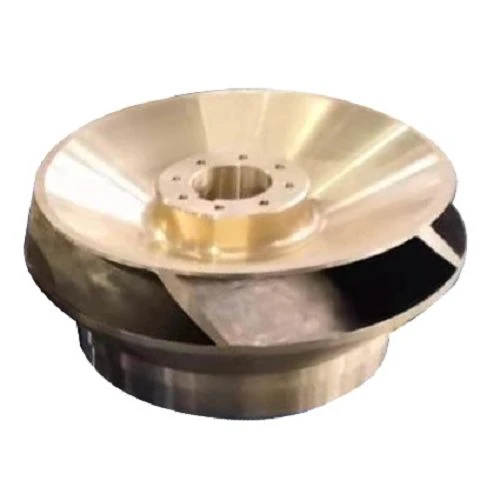
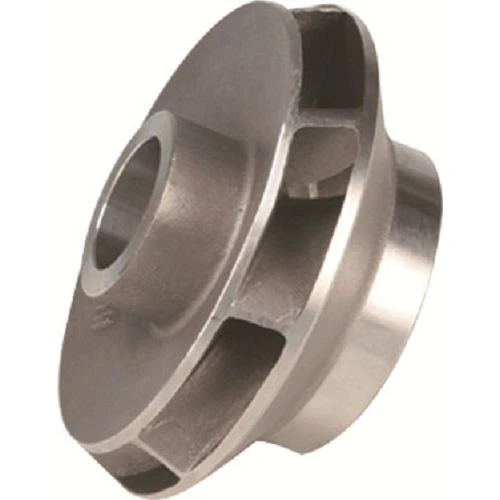
We offer a variety of pump impellers, including Bronze Pump Impeller, Stainless Steel Pump Impeller, and Cast Iron Pump Impeller. Each material has its own unique properties and is suitable for different applications.
Factors Affecting the Optimal Speed
The optimal speed of a pump impeller is not a one - size - fits - all value. It depends on several factors:
1. Pump Design
The design of the pump, including the type of pump (centrifugal, axial, etc.) and the specific geometry of the impeller, has a significant impact on the optimal speed. For example, centrifugal pumps are designed to work most efficiently within a certain speed range. The shape and number of vanes on the impeller also affect how the fluid is accelerated and the amount of energy transferred.
2. Fluid Properties
The properties of the fluid being pumped, such as viscosity, density, and temperature, play a crucial role. High - viscosity fluids require more energy to move, and the impeller may need to operate at a lower speed to avoid excessive power consumption and cavitation. On the other hand, low - viscosity fluids can often be pumped at higher speeds.
3. System Requirements
The requirements of the pumping system, such as the desired flow rate and pressure, also determine the optimal impeller speed. If a high flow rate is needed, the impeller may need to rotate at a higher speed. However, increasing the speed too much can lead to increased wear and tear on the pump components and reduced efficiency.
Calculating the Optimal Speed
There are several methods to calculate the optimal speed of a pump impeller. One common approach is to use the affinity laws. These laws relate the performance of a pump (flow rate, head, and power) to the speed of the impeller.
The affinity laws state that:
- The flow rate (Q) is proportional to the impeller speed (N): (Q_1/Q_2 = N_1/N_2)
- The head (H) is proportional to the square of the impeller speed: (H_1/H_2=(N_1/N_2)^2)
- The power (P) is proportional to the cube of the impeller speed: (P_1/P_2=(N_1/N_2)^3)
By knowing the performance of the pump at a certain speed and the desired performance, we can use these laws to calculate the optimal speed.
The Importance of Operating at the Optimal Speed
Operating a pump impeller at the optimal speed offers several benefits:
1. Energy Efficiency
When the impeller operates at the optimal speed, the pump consumes less energy to achieve the desired flow rate and pressure. This not only reduces operating costs but also has a positive impact on the environment.
2. Reduced Wear and Tear
Running the impeller at the correct speed minimizes the stress on the pump components, such as the bearings and seals. This reduces the likelihood of premature failure and extends the lifespan of the pump.
3. Improved Performance
Optimal speed ensures that the pump delivers the required flow rate and pressure consistently. This is crucial for applications where precise control of the fluid flow is necessary, such as in chemical processing and water treatment plants.
Challenges in Determining the Optimal Speed
Determining the optimal speed is not always straightforward. In some cases, the operating conditions may change over time, such as variations in the fluid properties or system requirements. This requires continuous monitoring and adjustment of the impeller speed.
Another challenge is the presence of cavitation. Cavitation occurs when the pressure in the pump drops below the vapor pressure of the fluid, causing the formation of vapor bubbles. These bubbles can collapse violently, causing damage to the impeller and reducing the pump's efficiency. Operating the impeller at an inappropriate speed can increase the risk of cavitation.
Case Studies
Let's look at a couple of case studies to illustrate the importance of the optimal impeller speed:
Case Study 1: Water Treatment Plant
A water treatment plant was experiencing high energy costs and frequent pump failures. After a detailed analysis, it was found that the impellers in the pumps were operating at a speed higher than the optimal value. By reducing the impeller speed based on the system requirements and fluid properties, the plant was able to reduce energy consumption by 20% and significantly extend the lifespan of the pumps.
Case Study 2: Chemical Processing Plant
In a chemical processing plant, a pump was not delivering the required flow rate of a high - viscosity chemical. The impeller was initially operating at a high speed, which was causing excessive power consumption and cavitation. By lowering the impeller speed and adjusting the pump design slightly, the plant was able to achieve the desired flow rate with improved efficiency and reduced maintenance costs.
Conclusion
In conclusion, the optimal speed of a pump impeller is a complex parameter that depends on multiple factors, including pump design, fluid properties, and system requirements. As a pump impeller supplier, we understand the importance of providing our customers with the right impellers that can operate at the optimal speed for their specific applications.
If you are in need of a pump impeller or have questions about the optimal speed for your pumping system, we are here to help. Our team of experts can assist you in selecting the right impeller material and design, and provide guidance on achieving the best performance from your pump. Contact us today to start a procurement discussion and take your pumping system to the next level.
References
- "Pump Handbook" by Igor J. Karassik, Joseph P. Messina, Paul Cooper, and Charles C. Heald.
- "Centrifugal Pumps: Design and Application" by Heinz P. Bloch and Allan R. Budris.
- "Fluid Mechanics" by Frank M. White.