Hey there! I'm a supplier of Bronze Pump Impellers, and today, I wanna chat about the power consumption of a pump with a bronze impeller. It's a topic that's super important, whether you're in the industrial world or just someone who's curious about how pumps work.
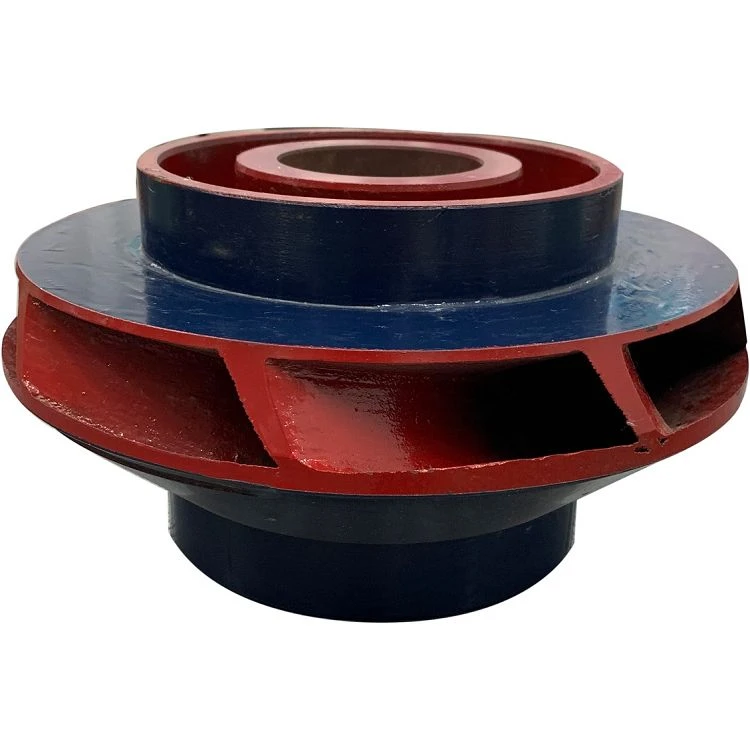
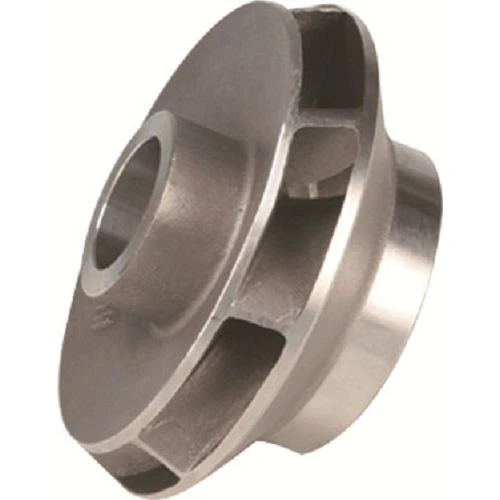
First off, let's understand what an impeller does. An impeller is a crucial part of a pump. It's the rotating component that increases the pressure and flow of a fluid. When it comes to impellers, there are different materials you can choose from, like Stainless Steel Pump Impeller and Cast Iron Pump Impeller. But in my line of work, I focus on Bronze Pump Impeller.
Bronze is a great material for impellers. It's corrosion - resistant, which means it can handle different types of fluids without getting damaged easily. This makes it suitable for a wide range of applications, from water treatment plants to marine environments.
Now, let's get into the power consumption part. The power consumption of a pump with a bronze impeller depends on several factors. One of the main factors is the size of the impeller. A larger impeller generally requires more power to rotate. This is because it has to move a greater volume of fluid. For example, if you have a small - scale water circulation system in a home garden, you can use a pump with a relatively small bronze impeller, and it won't consume a lot of power. On the other hand, in an industrial setting where large volumes of water or other fluids need to be pumped, a bigger impeller will be needed, and this will lead to higher power consumption.
The speed at which the impeller rotates also plays a huge role. The faster the impeller spins, the more power it needs. You can control the speed of the impeller using a variable - speed drive. This allows you to adjust the power consumption based on your actual needs. For instance, if you don't need a high - flow rate all the time, you can slow down the impeller, and thus save on power.
Another factor is the type of fluid being pumped. Different fluids have different viscosities. Viscosity is a measure of a fluid's resistance to flow. If you're pumping a thick, viscous fluid like oil, the pump will need to work harder, and therefore consume more power, compared to pumping water, which has a lower viscosity.
The efficiency of the pump itself is also important. A well - designed pump with a bronze impeller will convert more of the input power into useful work, like moving the fluid. If the pump is old or poorly maintained, it might have lower efficiency, and this will result in higher power consumption. Regular maintenance, such as cleaning the impeller and checking the pump's seals, can help keep the efficiency high.
Let's talk about how you can calculate the power consumption of a pump with a bronze impeller. There are some formulas that can give you a rough estimate. The power (P) required by a pump can be calculated using the formula:
[P=\frac{Q\times H}{\eta\times 367}]
where Q is the flow rate of the fluid (in cubic meters per hour), H is the head (the height the fluid needs to be pumped, in meters), and (\eta) is the efficiency of the pump.
However, this is a simplified formula, and in real - world situations, there are other factors to consider, like friction losses in the pipes and the characteristics of the specific pump model.
In terms of comparing bronze impellers with impellers made from other materials, bronze impellers can offer a good balance between power consumption and durability. Stainless steel impellers are also very durable and can handle corrosive fluids well, but they might be more expensive. Cast iron impellers are cheaper, but they're more prone to corrosion, which can affect the pump's efficiency over time.
If you're in the market for a pump with a bronze impeller, you need to consider your specific requirements. Think about the flow rate you need, the head, and the type of fluid you'll be pumping. You also need to think about the long - term costs, including power consumption and maintenance.
I know that choosing the right pump and impeller can be a bit overwhelming. That's where I come in. As a supplier of Bronze Pump Impeller, I have the knowledge and experience to help you make the right choice. I can provide you with high - quality bronze impellers that are designed to be efficient and durable.
If you're interested in learning more about bronze pump impellers or have questions about power consumption, feel free to reach out. We can have a chat about your specific needs, and I'll do my best to help you find the perfect solution for your pumping requirements. Whether you're a small - business owner or part of a large industrial operation, I'm here to assist you.
So, don't hesitate to get in touch if you're thinking about purchasing a bronze pump impeller. Let's work together to make your pumping system as efficient and cost - effective as possible.
References
- Fluid Mechanics textbooks
- Pump manufacturers' technical manuals