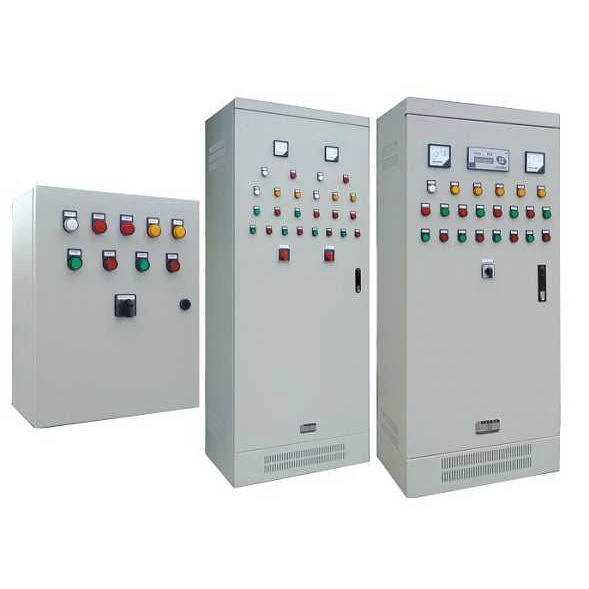
A pump control panel is an essential component in various pumping systems, responsible for managing and protecting the pump. Among its many components, the fuse plays a crucial role. As a Pump Control Panel supplier, I have witnessed firsthand how fuses safeguard the pump and the entire control panel system.
The Basics of a Fuse
A fuse is a simple yet highly effective electrical safety device. It consists of a metal strip or wire that melts when excessive current flows through it. This melting action breaks the electrical circuit, preventing further current flow and protecting the connected equipment from damage due to overcurrent.
In a pump control panel, fuses are typically installed in series with the electrical circuit. When the current in the circuit exceeds the rated capacity of the fuse, the fuse element heats up and eventually melts. This interruption of the circuit stops the flow of electricity, thereby preventing damage to the pump motor, control components, and other sensitive parts of the panel.
Protecting Against Overcurrent
One of the primary roles of a fuse in a pump control panel is to protect against overcurrent conditions. Overcurrent can occur due to several reasons, such as a short - circuit in the pump motor, a mechanical jam in the pump, or a malfunction in the control circuitry.
A short - circuit is a situation where there is an unintended low - resistance path in the electrical circuit. This can cause a sudden and significant increase in current flow. For example, if the insulation of the motor windings breaks down, a short - circuit can occur between the phases or between the winding and the motor frame. Without a fuse, this high - current flow can quickly overheat the motor windings, leading to insulation damage, motor failure, and even a fire hazard.
A mechanical jam in the pump can also cause overcurrent. When the pump impeller or other moving parts get stuck, the motor has to work harder to overcome the resistance. This increased load on the motor results in a higher current draw. If the current exceeds the safe operating limit for an extended period, it can damage the motor. A properly rated fuse will blow before the motor sustains serious damage, protecting the pump and the control panel.
Preventing Component Damage
In addition to protecting the pump motor, fuses also safeguard other components in the pump control panel. The control panel contains various electrical components such as relays, contactors, and circuit boards. These components are designed to operate within a specific current range. Excessive current can damage these components, leading to control malfunctions and system failures.
For instance, a relay is an electromechanical switch that is used to control the power supply to the pump. If a high - current surge occurs, it can damage the relay contacts, causing them to weld together or become pitted. This can lead to improper switching and control of the pump. A fuse in the circuit will prevent such damage by interrupting the current flow before it reaches a level that can harm the relay.
Selecting the Right Fuse
Selecting the appropriate fuse for a pump control panel is crucial. The fuse rating should be carefully chosen based on the electrical characteristics of the pump motor and the control panel. The rating of a fuse is specified in amperes (A). It represents the maximum current that the fuse can carry continuously without melting.
To determine the correct fuse rating, several factors need to be considered. First, the full - load current (FLC) of the pump motor should be known. The FLC is the current that the motor draws when it is operating at its rated power. The fuse rating should be slightly higher than the FLC to allow for normal motor starting currents. Motor starting currents are typically higher than the running currents, and a fuse that is too small may blow during normal motor startup.
However, the fuse rating should not be too high. If the fuse rating is significantly higher than the FLC, it may not blow in the event of an overcurrent condition, leaving the pump and the control panel unprotected. As a general rule, for a motor with a normal starting current, a fuse with a rating of 125% - 150% of the FLC is often recommended.
Types of Fuses Used in Pump Control Panels
There are several types of fuses that can be used in pump control panels. The most common types include fast - acting fuses and time - delay fuses.
Fast - acting fuses are designed to blow quickly when an overcurrent occurs. They are suitable for protecting sensitive electronic components in the control panel that can be damaged by even a short - duration overcurrent. For example, circuit boards and semiconductor devices are often protected by fast - acting fuses.
Time - delay fuses, on the other hand, are designed to tolerate short - term overcurrents, such as motor starting currents, without blowing. They have a built - in time delay feature that allows them to withstand high currents for a short period. This makes them ideal for protecting pump motors, which typically have high starting currents.
Maintenance and Replacement of Fuses
Regular maintenance and inspection of fuses in a pump control panel are essential. Fuses should be visually inspected periodically for signs of damage, such as a blown element or a cracked fuse body. If a fuse has blown, it should be replaced immediately with a fuse of the same rating and type.
It is important to note that a blown fuse is an indication of an underlying problem in the circuit. Simply replacing the fuse without identifying and fixing the cause of the overcurrent can lead to repeated fuse failures and potential damage to the pump and the control panel. Therefore, when a fuse blows, a thorough electrical inspection of the pump motor, control circuitry, and wiring should be carried out to determine the root cause of the problem.
Conclusion
In conclusion, the fuse is a vital component in a pump control panel. It plays a crucial role in protecting the pump motor, control components, and the entire system from overcurrent damage. As a Pump Control Panel supplier, I understand the importance of using high - quality fuses and ensuring proper fuse selection, installation, and maintenance.
If you are in the market for a reliable pump control panel or need advice on fuse selection and system protection, I encourage you to reach out for a procurement discussion. Our team of experts is ready to assist you in finding the best solutions for your pumping system needs.
References
- Electrical Safety Handbook, National Fire Protection Association
- Motor and Control Circuit Protection, IEEE Standards Association
- Pump Control Panel Design and Installation Guide, International Electrotechnical Commission