Hey there! As a supplier of Submersible Motors, I often get asked about the speed control methods of these motors. So, I thought I'd share some insights on this topic in this blog post.
First off, let's understand why speed control of a submersible motor is important. In many applications, you don't always need the motor to run at full speed. For example, in a water pumping system, you might need to adjust the flow rate according to the demand. By controlling the speed of the submersible motor, you can achieve better energy efficiency, reduce wear and tear on the motor and the connected equipment, and also improve the overall performance of the system.
Now, let's dive into the different speed control methods for submersible motors.
1. Variable Frequency Drives (VFDs)
One of the most popular and effective methods of speed control for submersible motors is using Variable Frequency Drives (VFDs). A VFD works by varying the frequency and voltage supplied to the motor. Since the speed of an AC motor is directly proportional to the frequency of the power supply, by changing the frequency, you can easily adjust the motor speed.
VFDs offer several advantages. They provide precise speed control over a wide range. You can set the motor to run at exactly the speed you need, whether it's a very low speed for delicate operations or a high speed for maximum output. This flexibility makes them suitable for a variety of applications.
Another great thing about VFDs is that they can improve energy efficiency. When the motor doesn't need to run at full speed, the VFD reduces the power consumption by adjusting the frequency and voltage. This can lead to significant cost savings in the long run.
However, VFDs also have some drawbacks. They are relatively expensive compared to other speed control methods. Installation and maintenance require some technical expertise. And in some cases, they can generate electrical noise, which might need to be addressed with additional filtering equipment.

2. Pole Changing Method
The pole changing method is another way to control the speed of a submersible motor. In an AC motor, the speed is determined by the number of poles and the frequency of the power supply. By changing the number of poles in the motor, you can change its speed.
This method is relatively simple and cost - effective. Motors designed for pole changing usually have two or more sets of windings that can be connected in different configurations to change the number of poles. For example, a motor might be able to operate at two different speeds: a high - speed setting with a lower number of poles and a low - speed setting with a higher number of poles.
But there are limitations to this method. The speed changes are discrete, meaning you can only select from a few pre - determined speeds. It's not as flexible as using a VFD, which can provide continuous speed control. Also, the motor needs to be specifically designed for pole changing, which might limit its application in some cases.
3. Voltage Control
Voltage control is a basic method of speed control for submersible motors. By reducing the voltage supplied to the motor, the speed of the motor can be decreased. This can be done using devices like autotransformers or voltage regulators.
The advantage of voltage control is its simplicity. It's relatively easy to implement and doesn't require complex equipment. However, it's not as precise as VFDs or pole changing methods. Reducing the voltage too much can cause the motor to overheat or lose torque, which can affect its performance and lifespan.

4. Slip Control (for Induction Motors)
In induction motors, slip control can be used to adjust the speed. Slip is the difference between the synchronous speed of the motor and its actual speed. By changing the rotor resistance or using external devices to control the slip, the speed of the motor can be adjusted.
This method is suitable for applications where a small amount of speed variation is required. But similar to voltage control, it has limitations. It can be inefficient, especially when the motor is operating at a high slip, as it results in increased power losses in the rotor.
So, which speed control method should you choose for your submersible motor? Well, it depends on several factors. If you need precise and continuous speed control over a wide range, a VFD is probably the best option. But if you're on a tight budget and only need a few discrete speed settings, the pole changing method might be more suitable.
As a supplier of Submersible Motor, I can help you choose the right speed control method for your specific application. Our submersible motors are designed to work well with different speed control techniques, ensuring optimal performance and efficiency.
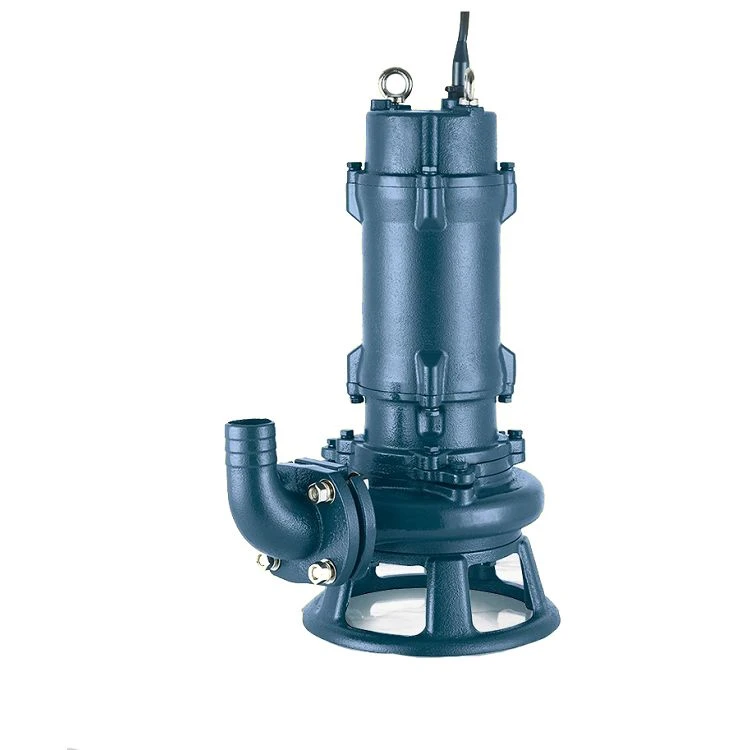
We offer a wide range of submersible motors that can be used in various applications. For example, our Submersible Sewage Pump is equipped with high - quality submersible motors that can be easily integrated with different speed control systems. Whether you need to adjust the flow rate of sewage or handle different levels of waste, our pumps and motors can get the job done.
Another product in our lineup is the Mine Flameproof Submersible Sand Pump. In mining applications, it's crucial to have a reliable motor with proper speed control. Our motors in these pumps are designed to operate in harsh environments and can be adjusted to meet the specific requirements of sand pumping operations.
If you're in the market for a submersible motor or need more information about speed control methods, don't hesitate to get in touch. We have a team of experts who can provide you with detailed advice and help you make the right choice for your project.
References
- Electric Motors and Drives: Fundamentals, Types and Applications by Austin Hughes
- Handbook of Electric Motors by Ira Sprague
- Variable Frequency Drives: Principles, Operation, and Application by David A. Tolle