As a supplier of Submersible Motors, I often encounter inquiries about the stator winding types of these motors. In this blog, I'll delve into the various stator winding types of submersible motors, their characteristics, applications, and how they play a crucial role in the overall performance of submersible motors.
Understanding the Basics of Stator Windings in Submersible Motors
Before we explore the different types of stator windings, it's essential to understand what stator windings are and their function in a submersible motor. The stator is the stationary part of an electric motor, and the stator windings are coils of wire that are wound around the stator core. When an electrical current is passed through these windings, they create a magnetic field. This magnetic field interacts with the magnetic field of the rotor (the rotating part of the motor), causing the rotor to turn and the motor to operate.
Types of Stator Windings in Submersible Motors
1. Single - Layer Winding
Single - layer winding is one of the simplest types of stator windings. In this configuration, each slot in the stator core contains only one coil side. The coils are usually uniformly distributed around the stator.
- Advantages:
- It is relatively easy to manufacture, which reduces the production cost. The simplicity of the winding process makes it suitable for mass - production.
- Single - layer windings have a lower copper loss compared to some other winding types. This is because the length of the end - connections (the part of the coil that extends beyond the stator core) is relatively short, resulting in less resistance and, therefore, less power loss.
- Disadvantages:
- The magnetic field distribution is not as sinusoidal as in some other winding types. This can lead to higher harmonic content in the motor's output, which may cause additional losses and vibrations.
- Single - layer windings may not be as efficient in terms of torque production as multi - layer windings.
- Applications: Single - layer windings are commonly used in small - power submersible motors, such as those used in domestic water pumps. They are also suitable for applications where cost is a major concern and the requirements for smooth operation are not extremely high.
2. Double - Layer Winding
Double - layer winding is more complex than single - layer winding. In a double - layer winding, each slot in the stator core contains two coil sides, one on top of the other.
- Advantages:
- It provides a more sinusoidal magnetic field distribution. This results in lower harmonic content in the motor's output, which reduces losses and vibrations. The motor can operate more smoothly and quietly.
- Double - layer windings offer better utilization of the stator slots. This means that more copper can be placed in the slots, which can increase the motor's power density and efficiency.
- Disadvantages:
- The manufacturing process is more complicated and time - consuming compared to single - layer winding. This increases the production cost.
- The end - connections are longer, which can lead to slightly higher copper losses.
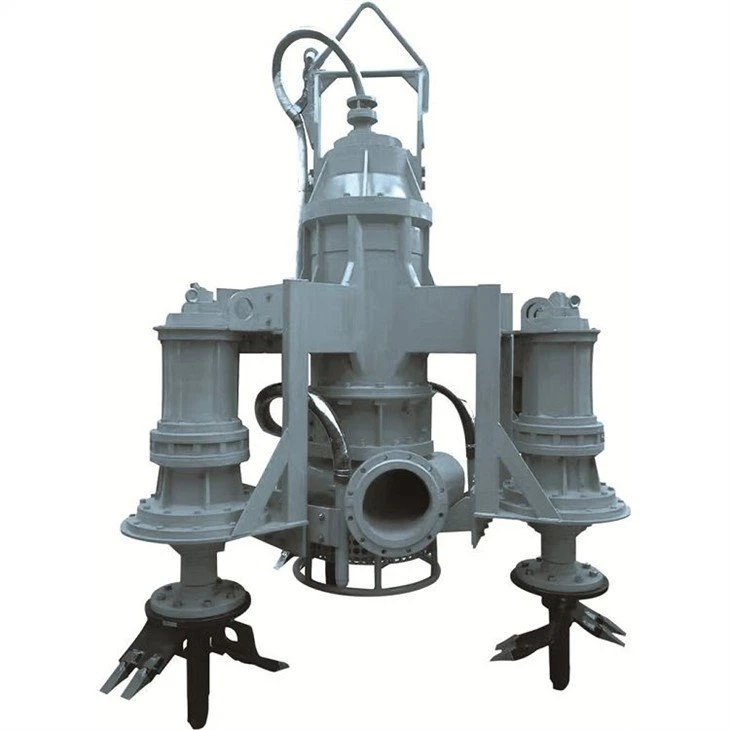
- Applications: Double - layer windings are widely used in medium - to large - power submersible motors, such as those used in industrial water supply systems, Submersible Slurry Pump, and Mine Flameproof Submersible Sand Pump. These applications require high efficiency, smooth operation, and reliable performance.
3. Concentrated Winding
Concentrated winding consists of coils that are wound around individual stator teeth. Each coil is concentrated on a single tooth, and there is no overlap between the coils.
- Advantages:
- It has a very short end - connection length. This reduces the copper loss and makes the motor more compact. The short end - connections also simplify the manufacturing process.
- Concentrated windings are suitable for high - speed motors. They can produce a relatively high magnetic field intensity in a small space.
- Disadvantages:
- The magnetic field distribution is highly non - sinusoidal. This leads to a high harmonic content in the motor's output, which can cause additional losses, heating, and electromagnetic interference.
- Concentrated windings may have lower torque density compared to distributed windings.
- Applications: Concentrated windings are often used in high - speed submersible motors, such as those used in some special - purpose pumps where compact size and high - speed operation are required.
4. Distributed Winding
Distributed winding is a type of winding where the coils are distributed over several stator slots. The coils are connected in such a way that the magnetic field produced is more sinusoidal.
- Advantages:
- It provides a very sinusoidal magnetic field distribution. This results in low harmonic content, which reduces losses, vibrations, and electromagnetic interference. The motor can operate more efficiently and quietly.
- Distributed windings can produce a higher torque density compared to concentrated windings. They are more suitable for applications that require high starting torque and smooth operation.
- Disadvantages:
- The manufacturing process is more complex, as it involves connecting a large number of coils in a specific pattern. This increases the production cost.
- The end - connections are longer, which can lead to slightly higher copper losses.
- Applications: Distributed windings are commonly used in high - power submersible motors, such as those used in large - scale water treatment plants and deep - well pumps.
Factors Affecting the Choice of Stator Winding Type
When choosing the stator winding type for a submersible motor, several factors need to be considered:
- Power Rating: For small - power motors, single - layer or concentrated windings may be sufficient. Medium - to large - power motors usually require double - layer or distributed windings to achieve high efficiency and performance.
- Speed Requirements: High - speed motors may benefit from concentrated windings due to their short end - connections. However, if smooth operation is also required, distributed windings may be a better choice.
- Cost: Single - layer and concentrated windings are generally more cost - effective to manufacture. If cost is a major concern, these winding types may be preferred.
- Operating Conditions: In harsh operating conditions, such as in mines or industrial environments, double - layer or distributed windings may be more suitable as they offer better reliability and performance.
Importance of Stator Winding Type in Submersible Motors
The stator winding type has a significant impact on the performance of a submersible motor. It affects the motor's efficiency, power density, torque production, and reliability. A well - chosen stator winding type can ensure that the motor operates smoothly, quietly, and efficiently, while minimizing losses and maintenance requirements.
As a supplier of Submersible Motor, we understand the importance of selecting the right stator winding type for each application. We offer a wide range of submersible motors with different stator winding types to meet the diverse needs of our customers. Whether you need a small - power motor for domestic use or a large - power motor for industrial applications, we can provide you with the most suitable solution.

If you are interested in our submersible motors or have any questions about stator winding types, please feel free to contact us for further discussion and procurement negotiation. We are committed to providing high - quality products and excellent service to our customers.
References
- Fitzgerald, A. E., Kingsley, C., & Umans, S. D. (2003). Electric Machinery. McGraw - Hill.
- Chapman, S. J. (2012). Electric Machinery Fundamentals. McGraw - Hill.