Hey there! As a supplier of Ductile Iron Casting, I often get asked about the thermal conductivity of ductile iron casting. Well, let's dig into this topic and break it down in a way that's easy to understand.
First off, let's quickly go over what ductile iron casting is. Ductile iron, also known as nodular cast iron or spheroidal graphite iron, is a type of cast iron. Unlike regular Cast Iron Casting, ductile iron has graphite in the form of tiny spheres rather than flakes. This gives it some pretty nifty properties like higher ductility, better toughness, and superior impact resistance.
Now, getting to the main point - thermal conductivity. Thermal conductivity is basically a measure of how well a material can conduct heat. In simpler terms, it tells us how fast heat can move through the material. For ductile iron casting, the thermal conductivity is influenced by several factors.
One of the key factors is the chemical composition. The amount of elements like carbon, silicon, and other alloying elements present in the ductile iron can have a big impact on its thermal conductivity. Carbon is a major player here. In general, a higher carbon content in the iron tends to lower the thermal conductivity. That's because carbon atoms can disrupt the regular lattice structure of the iron, making it harder for heat to be transferred through it.
Silicon, on the other hand, can have a bit of a mixed effect. In small amounts, silicon can improve the thermal conductivity of ductile iron. But if the silicon content gets too high, it can start to form compounds that may actually reduce the heat - conducting ability. Other alloying elements like nickel, chromium, and molybdenum are often added to ductile iron to enhance certain properties like strength and corrosion resistance. However, these elements can also affect the thermal conductivity. For example, nickel can increase the thermal conductivity of ductile iron to some extent, while chromium may have a more complex effect depending on its concentration and the overall composition of the alloy.
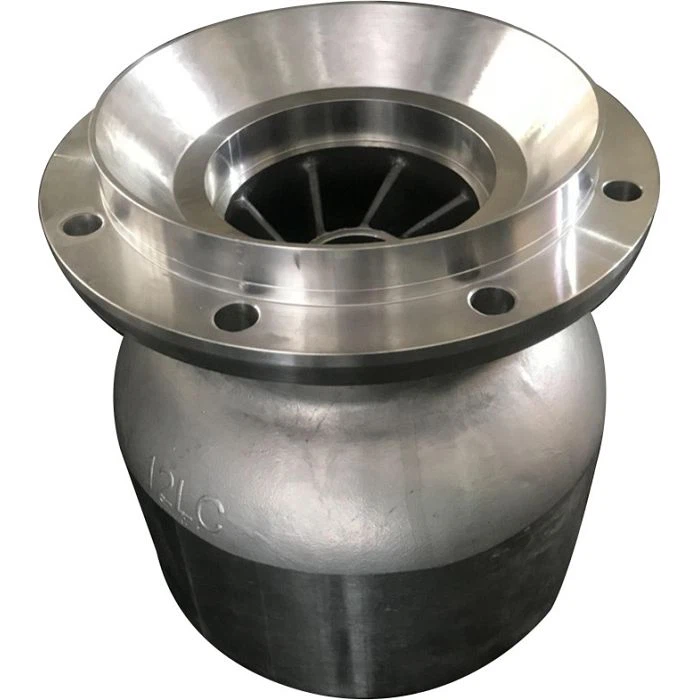
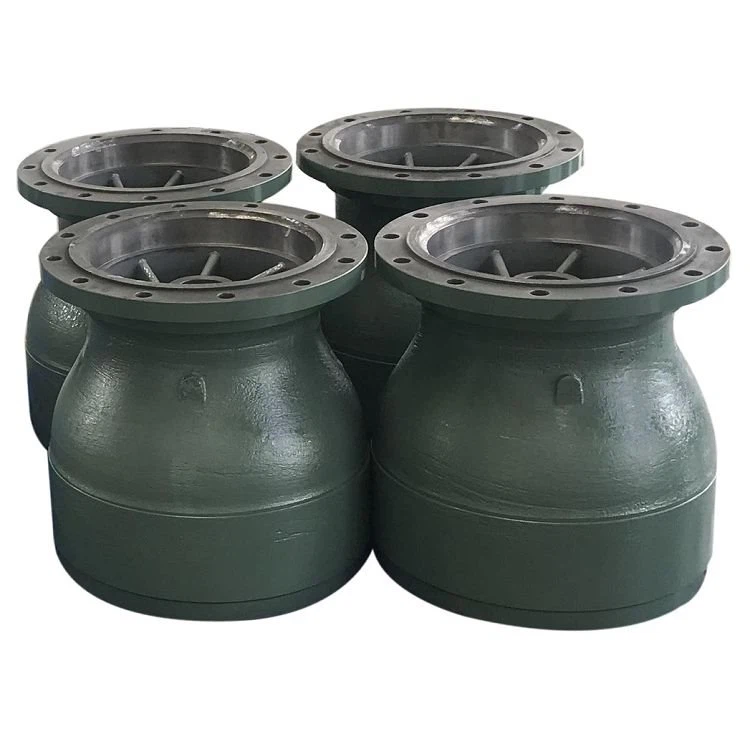
The microstructure of ductile iron also plays a crucial role. The size, shape, and distribution of the graphite nodules in the iron matrix matter a great deal. Larger and more uniformly distributed graphite nodules can provide more pathways for heat to flow, thus increasing the thermal conductivity. If the nodules are too small or clustered together, heat transfer can be hindered.
The manufacturing process of ductile iron casting can't be overlooked either. How the casting is made, the cooling rate, and any heat - treatment processes that are applied after casting can all influence the final thermal conductivity. A slow cooling rate during casting can result in a coarser microstructure, which might have a different thermal conductivity compared to a casting that's cooled rapidly. Heat - treatment processes like annealing or quenching can also alter the internal structure of the ductile iron, thereby affecting its ability to conduct heat.
Typically, the thermal conductivity of ductile iron casting ranges from about 30 to 50 W/(m·K) at room temperature. This is lower compared to some other metals like copper or aluminum, which have much higher thermal conductivities. But when compared to Stainless Steel Pump Casting, ductile iron's thermal conductivity is in a different ballpark. Stainless steel generally has a lower thermal conductivity than ductile iron, often in the range of 15 - 25 W/(m·K).
So, why does the thermal conductivity of ductile iron casting matter? Well, in a lot of applications, understanding how well a material can conduct heat is crucial. For example, in mechanical engineering, if you're using ductile iron castings in parts that are exposed to high temperatures, like engine components or heat exchangers, the thermal conductivity will determine how efficiently heat can be dissipated. This can prevent overheating and improve the overall performance and lifespan of the parts.
In the automotive industry, ductile iron castings are used in various parts like crankshafts and brake components. A good understanding of thermal conductivity can help engineers design these parts better. For brake components, heat dissipation is key to prevent brake fade and ensure reliable stopping power. If the thermal conductivity of the ductile iron used in the brake components is well - understood, it can lead to a more efficient design.
If you're in the market for ductile iron casting and you're concerned about thermal conductivity for your specific application, don't worry! We're here to help. We've got a team of experts who can work with you to understand your needs and provide you with ductile iron castings that meet your thermal conductivity requirements. Whether you're in the mechanical, automotive, or any other industry, we've got the experience and the know - how to supply you with top - quality ductile iron castings.
So, if you think we might be the right supplier for your ductile iron casting needs, we'd love to hear from you. Reach out to us to start a conversation about your project. We can discuss the details, answer any questions you have, and get you a quote. Let's work together to make your project a success!
References
- ASM Handbook Volume 1: Properties and Selection: Irons, Steels, and High - Performance Alloys
- Ductile Iron Society Technical Publications
- Journal of Materials Science and Engineering articles on Ductile Iron Casting Properties